

FiiO FG3 Over-ear Gaming Headset – HiFi technology for perfect gaming
FiiO Electronics Technology Co. Ltd. has built its reputation in portable audio rather than gaming peripherals. The FiiO FG3 applies that experience to a category often dominated by branding and effects, pairing coaxial dual drivers with its own DSP, DAC, headphone amplifier and virtual surround processing. Its significance lies not in any single specification, but in how much of the audio chain FiiO controls inside the headset itself.


- With the FiiO FG3, FiiO Electronics Technology Co. Ltd. enters gaming with its own audio architecture rather than relying on a generic headset formula. Coaxial drivers, onboard signal processing and browser-based tuning give this affordable model an unusually coherent technical proposition.
FiiO Electronics Technology Co. Ltd. has spent years establishing a formidable presence in personal audio, with a catalogue spanning portable HiFi components, DACs, headphone amplifiers, Digital Audio Players and In-ear headphones. The FiiO FG3 marks its first product conceived expressly for gaming, but this is more than a familiar gaming headset wearing a new badge. FiiO has instead carried several of its established audio principles into the category, including a coaxial driver arrangement, dedicated digital signal processing and control over conversion and amplification. The intention is clear: more accurate sound, more convincing spatial information, cleaner voice communication and broad platform compatibility, all within reach of a particularly wide audience.

Key Facts FiiO FG3 Over-ear Gaming Headset
- First dedicated gaming headset from FiiO
- Closed-back Over-ear gaming headset with a coaxial dual dynamic driver configuration comprising 50 mm and 16 mm drivers, plus an electronic two-way crossover
- Frequency response from 10 Hz to 40 kHz, 32 Ohm impedance and 100 dB/mW sensitivity
- Integrated dual-core DSP, DAC supporting up to 24 Bit and 192 kHz, and headphone amplifier delivering up to 80 mW
- Virtual 7.1 surround with Cinema Mode and Action Mode
- Detachable ENC microphone and hardware-based sidetone with adjustable level
- 10-band EQ through the browser-based FiiO Control WEB interface
- USB-C and USB-A, with UAC 1.0 and UAC 2.0 support
- Compatible with Microsoft Windows, smartphones, Sony PlayStation 4, Sony PlayStation 5, Microsoft Xbox Series and Nintendo Switch 2
- Foldable construction, stainless-steel headband and replaceable woven-fabric ear pads with memory foam
- Weight of approximately 315 g including microphone
- Price: € 69,99
FiiO FG3 – A Deliberate Entry into Gaming
There is a notable degree of intent behind the FiiO FG3. FiiO Electronics Technology Co. Ltd. has not merely taken an established entry-level headset platform and added its own branding. The underlying architecture bears a much closer resemblance to the company’s work in conventional headphones and personal audio, beginning with a coaxial arrangement of two dynamic drivers measuring 50 mm and 16 mm respectively.

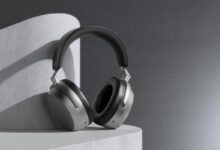



This matters because a gaming headset is asked to perform a rather more complicated job than its marketing sometimes suggests. It must reproduce dialogue, effects, music and ambient information, but it must also preserve the relationships between them. The direction of a footstep, the distance of a voice and the position of an environmental cue can be as important as outright impact. A presentation that is merely loud or spectacular may impress for a few minutes, yet prove surprisingly poor at conveying where events are taking place. FiiO’s approach is therefore built around spatial coherence as much as frequency extension.


Two Drivers, One Acoustic Centre
The coaxial layout places both drive units on a common axis, with the aim of making their output behave more like sound emanating from a single acoustic point. That is a meaningful distinction in a headset intended to reproduce positional information, since differences in arrival time and dispersion between separate drivers can interfere with the clarity of the stereo image. The larger 50 mm dynamic driver handles the lower and middle frequencies. Its composite diaphragm is intended to provide the necessary low-frequency weight and dynamic scale without surrendering control through the midrange.
A separate 16 mm dynamic driver, fitted with a titanium-plated diaphragm, is assigned to the upper frequencies. By relieving the larger driver of high-frequency duties, FiiO aims to retain more detail and definition in effects, speech and upper harmonics while preserving the authority expected from a full-size gaming headset. The concept is not simply about producing more bass and more treble. Its more important purpose is to allow each driver to operate across a range better suited to its physical properties.
An Electronic Two-Way Crossover
Rather than relying solely on the mechanical behaviour of the drivers, FiiO employs an electronically divided two-way system. The signal is distributed between the 50 mm and 16 mm drivers before reproduction, giving the manufacturer greater control over how their respective frequency ranges overlap.
That degree of control is significant in a coaxial design. Two drivers positioned on a shared axis can only behave convincingly as one source when their acoustic output is carefully integrated. An electronic crossover provides FiiO with the means to manage level, phase and transition behaviour more precisely than would be possible with an entirely passive arrangement at this price.
The published frequency response extends from 10 Hz to 40 kHz. Such figures do not, by themselves, guarantee a balanced headset, but they do reveal that the FG3 has not been designed merely as a communications device with exaggerated effects. FiiO intends it to serve as an all-purpose listening tool for games, films, music and everyday multimedia. That breadth is sensible. In this part of the market, a gaming headset is rarely used exclusively for gaming.
DSP, DAC and Headphone Amplifier Built In
One of the FG3’s more consequential features is that the essential signal-processing chain resides within the headset. An integrated dual-core DSP handles audio processing, equalisation and the available sound modes, rather than leaving these duties entirely to the connected computer, console or mobile device.
Digital-to-analogue conversion is also carried out internally. The integrated DAC supports signals at up to 24 Bit and 192 kHz, giving the FG3 a clearly defined digital input stage rather than forcing it to depend on whatever analogue headphone output happens to be available.
A dedicated headphone amplifier completes the chain, with FiiO specifying output of up to 80 mW. The practical advantage is not simply additional volume. By integrating conversion and amplification, FiiO can exercise considerably more control over the electrical conditions under which the drivers operate.
That should make performance more consistent when the FG3 is moved between platforms. A basic laptop output, a desktop computer and a games console need not share the same analogue audio quality, but the FG3 largely bypasses that variable by arriving with its own DAC and amplification. This is arguably the most characteristically FiiO aspect of the entire product. The company is not merely supplying the transducers; it is defining the path the digital signal takes before reaching them.
Virtual 7.1 Surround with Two Distinct Priorities
The FG3 also incorporates a specially tuned virtual 7.1 surround algorithm designed to create a more expansive 360-degree sound field. As with any virtual surround implementation, the objective is not to recreate seven physical loudspeakers inside the ear cups, but to use signal processing to provide stronger directional and depth cues through two channels. FiiO offers two operating modes. Cinema Mode is positioned as the broader and more atmospheric option, intended for films, story-led games and large-scale soundscapes in which a sense of space is central to the experience.
Action Mode places greater emphasis on immediacy, positional clarity and dynamic response. It is the more overtly gaming-oriented setting, intended for situations where locating an effect quickly may matter more than producing the largest possible acoustic environment.
The distinction is useful because no single surround treatment is equally convincing with every type of material. A setting that gives a film soundtrack welcome scale can make a competitive game feel diffuse, while an aggressively focused gaming mode may sound overly constrained with cinematic content. By offering two clearly defined options, FiiO avoids burying the user beneath an excess of vaguely named presets.


Detachable ENC Microphone and Adjustable Sidetone
Communication is no secondary consideration in a modern gaming headset. The FG3 is therefore supplied with a detachable microphone incorporating Environmental Noise Cancellation, or ENC. The system is intended to reduce intrusive environmental sounds such as keyboard strokes and mouse clicks, allowing speech to remain more intelligible during multiplayer sessions, voice chats and video calls. The microphone can also be removed when it is not required, avoiding the permanently attached boom found on many gaming models.
FiiO has additionally included hardware-based sidetone monitoring. This feeds the wearer’s own voice back into the headset with low latency, helping to counter the isolated sensation that often accompanies a closed-back design. Without sidetone, users frequently begin speaking more loudly than necessary because their own voice is acoustically attenuated by the ear pads. Adjustable monitoring provides a more natural sense of vocal level and makes extended communication less tiring. The function can be switched on or off through FiiO Control WEB, while its level can be adjusted to suit personal preference.
FiiO Control WEB – Tuning Without Software Baggage
The configuration system is one of the more practical aspects of the FG3. Rather than requiring users to install a conventional desktop application, FiiO provides access to the headset’s settings through the browser-based FiiO Control WEB interface. The platform includes a 10-band equaliser, allowing users to shape the tonal balance for different games, music or personal listening preferences. Custom profiles can be created and stored directly within the headset. That last point is particularly valuable. Settings retained in the FG3 remain available when the headset is connected to another compatible platform, rather than being tied to a specific computer and its locally installed software.
A user can therefore prepare a preferred profile on a PC and continue using it when moving to a console or mobile device. The headset carries its configuration with it. Gaming peripherals are often accompanied by large software packages whose usefulness varies considerably. FiiO’s browser-based approach is cleaner, less intrusive and better suited to a product intended to move between multiple systems.
From Microsoft Windows to Games Consoles
The FiiO FG3 has been designed as a Plug-and-play device and does not require a dedicated driver installation. It supports Microsoft Windows 7, Microsoft Windows 8, Microsoft Windows 10 and Microsoft Windows 11, along with smartphones using Google Android and Apple iOS. Adaptive support for UAC 1.0 and UAC 2.0 is intended to broaden compatibility across source devices with differing USB Audio implementations. FiiO also lists support for Sony PlayStation 4, Sony PlayStation 5, Microsoft Xbox Series and Nintendo Switch 2.
Connection is available through USB-C and USB-A. FiiO supplies cables measuring 1,5 m and 0,7 m, accommodating both conventional desktop installations and shorter connections to portable devices, controllers or console-based arrangements. The underlying philosophy is straightforward: the FG3 should behave as a self-contained USB audio system rather than a headset whose full functionality depends on one particular operating system.
Closed-Back, Foldable and Built for Regular Use
The FG3 uses a closed-back Over-ear construction. This provides a degree of passive attenuation from the surrounding environment while also reducing the amount of game audio escaping into the room or reaching the microphone. Replaceable ear pads are made from a woven mesh material and incorporate memory foam. Their replaceable design is worth noting, since ear pads are among the first components to show wear on a headset used for long and frequent sessions.
The headband is made from stainless steel, a comparatively substantial choice in this price class. FiiO has also made the headset foldable, improving portability and allowing it to occupy less space when stored. Weight is specified at approximately 315 g including the microphone. Clamping force is rated at 3,8 N ± 0,3 N, indicating that FiiO has defined this aspect of the mechanical design rather than leaving fit entirely to chance. Inline controls are provided on the cable for volume adjustment, microphone muting and sound-mode selection. Essential functions can therefore be reached without opening the browser interface or interrupting a game.
The Key Benefits at a Glance
- A more sophisticated driver architecture: The coaxial 50 mm and 16 mm dual-driver system gives the FG3 a technical foundation rarely encountered among entry-level gaming headsets.
- More intelligible positional information: A shared acoustic axis and virtual 7.1 processing are intended to make the direction, distance and placement of in-game sounds easier to follow.
- Consistent performance across source devices: With its own DSP, DAC and headphone amplifier, the FG3 is less dependent on the variable audio quality of computers, consoles and smartphones.
- Personal sound profiles without a compulsory application: FiiO Control WEB provides 10-band equalisation and onboard profile storage directly through a compatible browser.
- More natural voice communication: The detachable ENC microphone suppresses distracting environmental noise, while adjustable sidetone helps users regulate their speaking level.
- One headset for several systems: USB-C, USB-A, UAC 1.0 and UAC 2.0 support allow the FG3 to move between computers, mobile devices and compatible games consoles.
- Designed for sustained everyday use: Replaceable memory-foam ear pads, a stainless-steel headband and foldable construction address comfort, durability and portability rather than specification-sheet appeal alone.
Price and Availability
The FiiO FG3 Gaming Headset is available now in black. The recommended retail price is listed as £ 69,99, US$ 69,99 and € 69,99.
Conclusion
With the FG3, FiiO Electronics Technology Co. Ltd. enters a new market without abandoning the engineering habits that established its reputation in personal audio. The company has chosen not to compete through decoration, branding or a crowded catalogue of superficial presets, but through an unusually complete audio architecture for the price. Coaxial dual drivers, electronic frequency division, a dedicated DSP, integrated digital-to-analogue conversion, onboard amplification and browser-based tuning amount to far more than the usual entry-level checklist.
More importantly, these elements form a coherent system in which FiiO controls the signal from the USB input to the drivers. Whether that technical proposition translates into a decisive advantage against established gaming brands can only be determined in practice. On paper, however, the FG3 appears remarkably complete. It should hold particular appeal for players who care about tonal quality and spatial precision, but have no intention of entering a considerably more expensive class of headset.
| Product | FiiO FG3 Over-ear Gaming Headset |
|---|---|
| Price | € 69,99 |
Technical Data
| Product | FiiO FG3 Over-ear Gaming Headset |
|---|---|
| Description | Over-ear gaming headset with coaxial dual dynamic driver system, DSP, virtual 7.1 surround and USB Audio |
| Headphone type | Over-ear gaming headset |
| Design | Closed-back, foldable |
| Drivers | Coaxial dual dynamic driver configuration with 50 mm and 16 mm drivers |
| 50 mm driver | Composite Diaphragm |
| 16 mm driver | Titanium-plated Diaphragm |
| Frequency response | 10 Hz to 40 kHz |
| Impedance | 32 Ohm |
| Sensitivity | 100 dB/mW at 1 kHz, 115 dB/V at 1 kHz |
| DSP | Integrated dual-core DSP |
| Maximum sampling rate | Up to 24 Bit and 192 kHz |
| Amplifier output | Up to 80 mW |
| Equaliser | 10-band EQ |
| Surround | Virtual 7.1 surround, Cinema Mode and Action Mode |
| Microphone | Detachable ENC microphone |
| Microphone monitoring | Hardware-based sidetone with adjustable level |
| Software | FiiO Control WEB, browser-based |
| USB Audio | UAC 1.0 and UAC 2.0 |
| Compatibility | Windows 7, Windows 8, Windows 10, Windows 11, smartphones, laptops, PlayStation 4, PlayStation 5, Xbox Series, Nintendo Switch 2 |
| Connection | USB-C and USB-A |
| Ear pads | Replaceable ear pads made from woven mesh material with memory foam |
| Headband | Stainless steel |
| Cable length | 1,5 m and 0,7 m |
| Weight | Approx. 315 g including microphone |
| Clamping force | 3,8 N ± 0,3 N |
| Colour | Black |
| Brand | Guangzhou FiiO Electronics Technology Co. Ltd. |
|---|---|
| Manufacturer | FiiO |
| Distribution | NT Global Distribution GmbH |
| More about this manufacturer at HiFi BLOG |