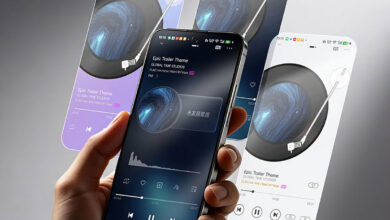


Roon 2.0 Review – Intelligent Music Management at an Audiophile Level
Roon 2.0 represents the evolution of a remarkable idea: to merge music and technology in a way that feels natural, elegant and inspiring. With bit-perfect playback via RAAT, multiroom streaming through AirPlay, Google Cast and Sonos, and deep Hi-Res integration for Qobuz and TIDAL, Roon combines the precision of high-end audio with one of the most sophisticated interfaces in the industry. In this review, it proves itself as a digital music environment that brings comfort, quality and knowledge together like no other.


- Roon 2.0 redefines digital music playback for audiophiles – seamless Hi-Res streaming, intelligent discovery through Valence and MUSE DSP, and mobile freedom with Roon ARC. Available for Apple macOS, Microsoft Windows, Linux, iOS and Android.
Digital music is everywhere – yet true musical engagement often gets lost between folders, apps and endless playlists. Roon Labs LLC., the company behind Roon, set out to change exactly that. Their goal: to build software that thinks like a music lover, not a database. With Roon 2.0, this philosophy has matured into a platform that merges audiophile performance, deep metadata and intuitive usability into one coherent experience.

Roon 2.0 isn’t just another player or streaming app. It’s a complete ecosystem – a musical operating system. It connects local libraries and streaming catalogues into a single, visually rich world where every album, artist, composer or label is just one click away from meaningful context. In a world where convenience often comes at the cost of quality, Roon 2.0 delivers both – uncompromising sound and effortless enjoyment.

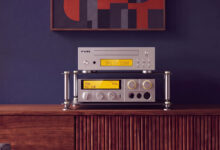

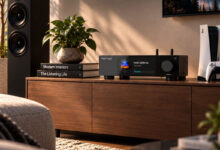
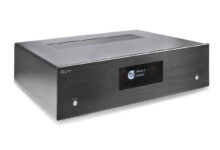
Key Facts – Roon 2.0
- Product & Version: Roon 2.0 (Build 1559, October 2025)
- Manufacturer: Roon Labs LLC., a Harman International Company
- System Architecture: Roon Server (Core), Roon (Desktop), Roon Remote (Mobile), Roon ARC (Mobile/Remote Access)
- Audio Transport: RAAT for bit-perfect, phase-accurate multiroom streaming; also supports Apple AirPlay 2, Google Cast and Sonos
- Supported Formats: Linear PCM up to 32 Bit / 384 kHz, DSD up to DSD512, MQA
- DSP Engine: MUSE – full suite including Parametric EQ, Headroom, Loudness, Crossfeed, Convolution and (Re-)Sampling
- Data & Intelligence Layer: Valence (AI-driven recommendations, Roon Radio, New Releases For You) and Fluency (multi-language metadata system)
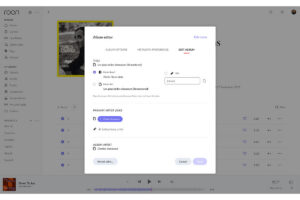
- Library & Features: Listen Later, Smart Playlists, Folder Browsing, Focus / Filter, Editions / Version handling
- Mobile & Automotive: Roon ARC with Apple CarPlay and Android Auto integration
- Ecosystem & Integration: Roon Ready and Roon Tested devices, plus Squeezebox and HQPlayer support
- Streaming Services: Qobuz (Hi-Res FLAC up to 24 / 192), TIDAL (Hi-Res FLAC and MQA catalogue in part)
- Supported Platforms: Apple iOS & macOS, Google Android, Microsoft Windows, Linux, Roon OS / ROCK (Nucleus and DIY servers)
- Subscription Plans: US$ 14,99 per month (monthly) or US$ 12,99 per month (annual billing)
- Target Audience: Audiophiles, multi-room users, collectors and advanced music-library enthusiasts
The Evolution of Roon – From pioneer to Harman company
Roon’s story began long before the brand existed. In the mid-2000s, the team of Enno Vandermeer, Danny Dulai and Brian Luczkiewicz created Sooloos, one of the first music servers that thought in musical relationships rather than folders. When Meridian Audio Ltd. acquired Sooloos in 2008, the concept entered the high-end market and helped define metadata-driven listening.
By 2015, the original founders launched Roon Labs LLC. as an independent spin-out from Meridian. The mission was clear: music should no longer be reduced to file browsing but understood as an interconnected network of artists, composers, sessions and stories. That vision became reality with the first version of Roon – accompanied by an unusually candid launch blog that still defines its tone.
In 2016, Roon introduced RAAT (Roon Advanced Audio Transport), its proprietary streaming protocol. Together with the Roon Ready and Roon Tested certification programmes, RAAT created a device ecosystem that guaranteed bit-perfect, synchronised playback across brands and operating systems – a level of control that UPnP or DLNA could never achieve.
A year later, the first hardware servers appeared: Nucleus and Nucleus Plus – silent, pre-configured Linux systems for users who wanted the performance of a dedicated Roon Server without PC maintenance. Later came Nucleus One and Nucleus Titan, built for different levels of DSP load and library size.
2019 brought a major milestone with Roon 1.7 and the introduction of Valence, an AI-driven data layer that analyses catalogues, listening behaviour and expert curation to deliver genuinely relevant recommendations. This was the birth of Roon’s “intelligent personality” – a learning system that understands your taste rather than following playlists.
The next revolution came in September 2022: Roon 2.0 with Roon ARC finally broke free from the home network. For the first time, users could access their personal libraries, playlists and metadata structure remotely – on the go, on mobile data, even in the car.
By 2023, Roon unified its terminology and refined its technology. The DSP suite became MUSE, complete with EQ, Headroom, Crossfeed, Convolution and (Re)-Sampling – all with visual signal-path transparency. The metadata engine Fluency brought consistent multilingual presentation across 21 languages. And importantly, the internal “Core” was officially renamed to Roon Server, reflecting its true role within the system architecture.
Then came the industry milestone: in November 2023, Harman International (a Samsung company) acquired Roon Labs. Roon remained an independent brand but gained the resources and global reach of a major group – a foundation for expanding the Roon Ready ecosystem and accelerating development cycles.
From late 2024 into 2025, Roon 2.0 matured further: Folder Browsing, long considered impossible within Roon’s paradigm, finally arrived. Smart Playlists introduced dynamic filtering, and Listen Later gave users a personal “to-do list” for albums and discoveries. Roon ARC evolved too – complete with Apple CarPlay and Android Auto integration.











What is Roon? – Architecture, Concept and Capabilities
Roon is not a player app. It’s an ecosystem – a distributed music infrastructure. At its centre is the Roon Server, formerly known as the “Core.” It manages the library, links metadata, integrates streaming services and coordinates playback across all connected devices. On the other end of the chain are the playback devices: Roon Ready or Roon Tested hardware that communicates directly with the server.
Control takes place through Roon (Desktop) or Roon Remote (Mobile) on the home network, and via Roon ARC when away from home. This architecture ensures that music, metadata and playback always remain in sync, no matter where you are.
The backbone of this entire system is RAAT (Roon Advanced Audio Transport) – Roon’s proprietary, lossless and time-accurate network protocol. It streams audio in Linear PCM up to 32 Bit and 384 kHz, and DSD up to DSD512, ensuring perfect synchronisation across multiple zones.
In practical terms, this means your high-end DAC or streaming amplifier receives the same data it would from a local file – untouched, uncoloured and bit-perfect.
But Roon doesn’t stop there. It also embraces everyday connectivity: Apple AirPlay 2, Google Cast, and even Sonosdevices can be grouped and controlled, making it remarkably flexible. For legacy enthusiasts, support for Logitech Squeezebox and HQPlayer adds further depth.
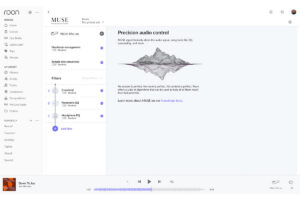
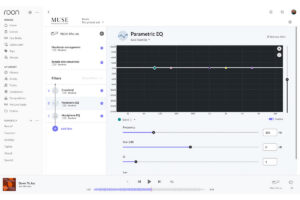
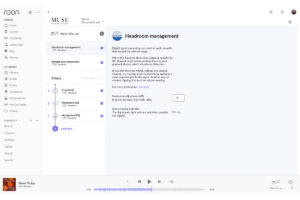
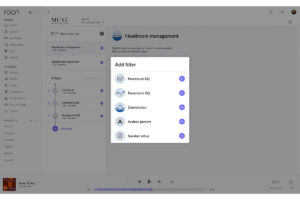
A major reason Roon Server requires real computing power lies in its MUSE Audio Engine. Introduced in 2023, MUSE unites advanced DSP features – parametric EQ, headroom management, loudness correction, crossfeed and high-quality (re)sampling – all displayed transparently through the “Signal Path” visualisation.
For intelligent discovery and personalisation, Roon relies on its data engines Valence and Fluency.
Valence is a vast cloud-based AI system that analyses your listening habits and library, connecting albums, artists, composers and genres across streaming services. It powers Roon Radio and personalised recommendations like New Releases for You.
Fluency, on the other hand, ensures a natural reading experience by translating artist names, credits and genres into 21 languages – bridging cultural gaps for international music collections.
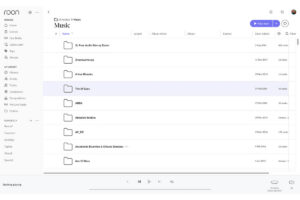
Recently, Roon introduced Listen Later, a kind of musical “bookmark” system, and Smart Playlists, which dynamically update based on user-defined filters such as “Tracks I’ve Never Heard” or “My High-Res Albums.” After years of resistance, Roon now allows classic folder navigation within both the desktop app and Roon ARC. Users can mark folders as favourites or play everything within them – a pragmatic nod to traditionalists who still structure their collections manually.
The Roon Server – The Essential Central Hub
Technically, any capable PC or Mac can serve as a Roon Server. However, Roon Labs strongly recommends a dedicated system. That’s where Roon Nucleus comes in – the official hardware designed exclusively for this role.
The current line-up includes the Nucleus One and the Nucleus Titan. The former suits medium-sized libraries and moderate DSP use, while the Titan is built for large collections, many simultaneous zones and full-scale MUSE processing.
Both devices are fanless, purpose-built mini PCs running Roon OS, a streamlined Linux distribution with Roon Server pre-installed. Functionally, these are descendants of Intel’s discontinued NUC series, but engineered for silent operation and reliability.
For advanced users, Roon also offers ROCK (Roon Optimized Core Kit) – a do-it-yourself installation package that lets you build your own dedicated server. Comprehensive guides and community support make it accessible even for moderately skilled users.
Alternatively, selected QNAP and Synology NAS systems can host Roon Server via official apps.
However, sufficient CPU power and RAM are crucial; lightweight NAS models will struggle, especially with DSP-heavy playback or large collections. In short: don’t economise on the heart of your Roon system – performance here defines the experience.
Roon Ready vs Roon Tested – What It Means in Practice
Roon distinguishes between devices that natively integrate its RAAT protocol and those that communicate through other interfaces.
Roon Ready devices – typically network streamers, all-in-one systems or active speakers – implement RAAT directly. They are automatically discovered, synchronised and controlled with precision: sample-rate changes, volume, multiroom grouping and standby behaviour all work seamlessly. Playback remains bit-perfect, with perfect timing across zones. For network audio, this is the gold standard – hardware and software speaking one common language.
Roon Tested devices, by contrast, lack RAAT integration but have been thoroughly profiled by Roon Labs. These include USB DACs, AV receivers or certain active speakers. Each model’s capabilities (sample rates, DSD handling, MQA behaviour, volume options) are pre-defined in Roon’s database to ensure correct setup and automatic recognition. Although limited by their respective protocols – USB, AirPlay, Cast or Sonos – Roon still ensures smooth operation and optimal settings.
One limitation remains: zone grouping only works within the same protocol family. RAAT zones can only be grouped with RAAT, AirPlay with AirPlay, and so on. For maximum resolution, tight synchronisation and full remote control, RAAT-based Roon Ready devices remain the reference choice.



Design and User Interface – Clarity with Character
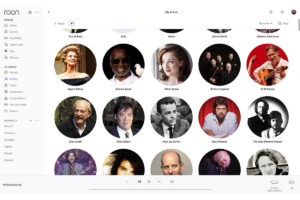
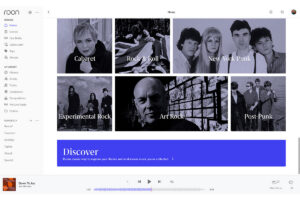
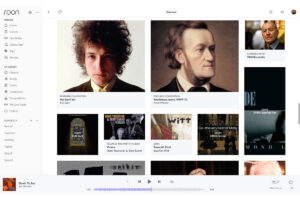
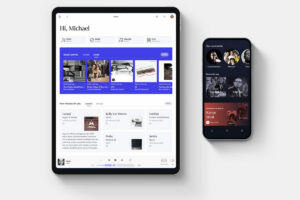
Roon’s interface is immediately striking. It looks more like a visual encyclopedia than a traditional player. Large album artwork, clean typography and contextual links define the experience.
Navigation follows a clear logic: Discover, Library and Search are interconnected, and the global search engine is semantically aware – it finds not just tracks or albums, but also performers, composers, instruments, labels, recording years and even approximate matches.
Playlists can be manually curated or automatically generated via Smart Playlists. The Listen Later section collects discoveries before they join the main library. Zone control is intuitive, displaying all RAAT, AirPlay, Cast and Sonos devices, allowing grouping and configuration directly from the interface.
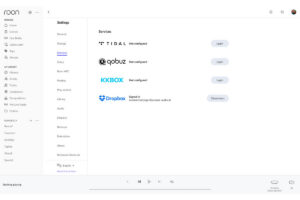
The settings panel gives access to the Device Manager, MUSE DSP, account management, streaming services and the new Folder Browsing option for purists.
Roon runs seamlessly across all major platforms: Apple iOS, Google Android, Apple macOS, Microsoft Windows and Linux. It feels equally at home on a high-end desktop setup or a tablet on the sofa – a rare combination of technical power and aesthetic grace.
Streaming in Hi-Res – Qobuz and TIDAL Integration
Roon currently integrates two streaming services – Qobuz and TIDAL – but does so in a way that makes them feel native. Albums from the cloud and local files appear unified within the same visual framework, complete with credits, versions and format details.
Qobuz delivers Hi-Res FLAC up to 24 Bit and 192 kHz, while TIDAL offers Hi-Res FLAC at the same resolution and, for now, partial MQA-encoded catalogues. All content is streamed and processed transparently through Roon’s signal path – no hidden resampling or compression.
The real magic lies in Valence: it analyses your combined local and streaming history, curating suggestions that genuinely reflect your taste rather than label marketing. Over time, it becomes sharper and more personal – a quietly powerful form of musical intelligence.
Roon ARC – Taking Your Music Everywhere
With Roon ARC, your entire library becomes mobile. The app mirrors the full Roon experience on your smartphone, including your playlists, MUSE controls and even Folder Browsing.
Since 2024, ARC has supported Apple CarPlay and Android Auto in full. This means search, browsing and playback integrate directly into your car’s interface – safely and intuitively.
Whether over Wi-Fi or mobile data, ARC keeps your listening experience continuous. Listen Later and Smart Playlistssynchronise automatically with your home system, ensuring every discovery on the road reappears when you return.
Sound and Performance
Roon doesn’t colour sound – it simply lets it breathe.
The RAAT protocol ensures the signal reaches your playback device exactly as it leaves the server: neutral, stable and unaltered. MUSE intervenes only when you ask it to, offering precise equalisation, transparent headroom management and natural crossfeed for headphone use.
When properly set up on a solid network, playback remains perfectly synchronised across multiple zones, without dropouts or jitter. The ultimate sound quality depends on the connected hardware – but Roon provides the ideal foundation for every component to perform at its best.
From the Field – Everyday Experience with Roon
At hifi.blog, Roon has been part of our reference setup for years. Our central server runs on a Roon Nucleus Plus, paired with a Synology NAS that mirrors several terabytes of music across a RAID array. Twice a week, an automated routine backs up the entire library to an external USB drive – a simple but effective safeguard.
The network backbone is a fully wired 2.5-Gbit infrastructure built around a Fritz!Box 6660 Cable router and 2.5-Gbit switches. Playback devices include a Naim Uniti Atom, Naim Mu-so (2nd Gen), Cambridge Audio EVO 150, Eversolo DMP-A8, Eversolo DMP-A6 Master Edition, and the Meridian Ellipse. Control is handled via Apple iPhone 12 Pro, iPad Air, MacBook Pro and MacBook Air, depending on who’s using which zone in the house.
Even with a large library – around 4.300 albums – Roon remains consistently fluid. Cover art appears instantly, searches are near-instantaneous, and zone switching happens with barely a flicker. It’s this sense of effortless consistency that defines Roon.
The more you use it, the more it reveals. Forgotten albums resurface, connections between artists emerge, and through the seamless integration of Qobuz and TIDAL the discovery never really stops. Valence makes your collection feel alive – it’s not just a static archive, but a space that constantly offers new pathways through familiar music.
Features like Listen Later and Smart Playlists prove genuinely practical: they transform browsing into exploration. Folder Browsing, meanwhile, reassures purists who prefer hands-on control without breaking Roon’s curated structure.
In terms of performance, RAAT and MUSE form the sonic backbone. They ensure every compatible device operates at its full potential – perfectly synchronised and bit-accurate. Where needed, Apple AirPlay or Google Cast serve as convenient fallbacks, ideal for casual zones such as kitchens or bathrooms.
Streaming remains stable and immediate, with no extended buffering or network hiccups. Even switching control between multiple users on the same device is seamless, a testament to Roon’s mature software engineering.
If Roon has weaknesses, they lie mainly in perception. For some users, its richness of metadata and constant suggestions can feel overwhelming. Others criticise the subscription model, considering the cost relatively high. But these are philosophical debates rather than technical flaws.
One practical shortcoming does remain: Roon’s backup system secures only the database, not the actual music files. For a platform that aims to hide technical complexity, it would be fitting if Roon Labs eventually added a simple, integrated backup tool for audio content itself – something like, “Here’s my music folder; please back it up twice a week.”
Price and Availability
Roon 2.0 is offered exclusively by subscription. Users can choose between US$ 14,99 per month (monthly billing) or US$ 12,99 per month when billed annually. The long-discontinued Lifetime Licence, once available for around US$ 500,-, was gradually phased out after proving unsustainable for Roon Labs in the long term.
The Roon ARC app is included at no additional cost, while Nucleus servers (Nucleus One and Nucleus Titan) are sold separately. Licences are not bundled with hardware and must always be purchased in addition.
Glossary – Key Terms in Roon 2.0
- Roon Server: The central system of the Roon ecosystem (formerly called “Core”); manages library content, metadata, devices and streaming services across the network.
- Roon / Roon Remote: Desktop and mobile apps used for browsing, control and playback management within the home network.
- Roon ARC: The mobile app that provides remote access to the full library and playlists, including Apple CarPlay and Android Auto support.
- RAAT (Roon Advanced Audio Transport): Proprietary protocol for bit-perfect, phase-accurate streaming and synchronised multi-room playback.
- Roon Ready / Roon Tested: Certification standards for device compatibility – Roon Ready with native RAAT integration; Roon Tested verified via USB, HDMI or legacy interfaces.
- MUSE: Roon’s DSP suite offering Parametric EQ, Headroom, Loudness, Crossfeed, Convolution and resampling with full signal-path transparency.
- Signal Path: Real-time display of all audio processing stages, showing bit depth, sample rate and DSP steps.
- Valence: AI-driven data layer delivering personalised recommendations such as Roon Radio and “New Releases For You”.
- Fluency: Multi-language metadata engine standardising artist names, roles and genres across 21 languages for natural browsing.
- Listen Later: A personal to-do list for albums, tracks or artists to explore later, synchronised across Roon and Roon ARC.
- Smart Playlists: Dynamic playlists built from Focus filters (e.g., “Never Heard Tracks”, “My Hi-Res Albums”) and updated automatically.
- Folder Browsing: Classic folder-based navigation for users who prefer direct access to file structures, available in Roon and Roon ARC.
- Zones: Individual playback endpoints or grouped devices for synchronised multi-room playback.
- Focus / Filter: Advanced search and sorting tools to refine results by year, format, label, composer, resolution and more.
- Convolution: DSP-based filter processing for room correction or speaker equalisation using impulse response files.
- HQPlayer Support: Integration for external upsampling and advanced processing pipelines via HQPlayer.
- Squeezebox Support: Legacy compatibility mode allowing older Logitech Squeezebox devices to function as Roon zones.
- Roon OS / ROCK: Lightweight Linux-based system optimised for dedicated Roon Server installations (Nucleus or DIY).
- Nucleus One / Nucleus Titan: Official fanless Roon Server hardware; One for medium libraries, Titan for large libraries and heavy DSP use.
Conclusion
Roon 2.0 is not merely software – it’s a cultural interface for music. It organises, connects and explains, while delivering studio-grade sound through RAAT, AirPlay or Cast endpoints. MUSE ensures total control over the audio chain; Valence curates intelligently; Fluency bridges languages; Listen Laterand Smart Playlists add genuine everyday utility; Folder Browsing caters to traditionalists; and Roon ARC opens the experience to the open road.
Roon 2.0 merges knowledge, comfort and fidelity at reference level. For those who don’t just want to hear music but to understand it, there’s simply nothing comparable today. It remains the benchmark in intelligent music management – and, for many, the digital home of their musical life.
| Product | Roon 2.0 (Build 1559) |
|---|---|
| Price | US$ 14,99 per month billed monthly US$ 12,99 per month billed annually |
Technical Data
| Product | Roon 2.0 |
|---|---|
| Manufacturer | Roon Labs LLC. |
| Version | Build 1559 (October 2025) |
| Supported OS | Windows, macOS, Linux, Roon OS |
| Core Systems | Nucleus One, Nucleus Titan or custom server |
| Protocol | RAAT (Roon Advanced Audio Transport) |
| Audio Formats | PCM up to 32 bit / 384 kHz, DSD up to DSD512, MQA |
| Streaming Services | Qobuz, TIDAL, Internet Radio (via last.fm) |
| Mobile Apps | Roon Remote, Roon ARC (iOS & Android) |
| DSP Engine | MUSE – EQ, Crossfeed, Headroom, Upsampling, Convolution |
| Multi-room | Yes, via RAAT (sync) |
| Standards | Apple AirPlay 2, Google Cast |
| Licence Model | Subscription – monthly or annual billing |

Roon 2.0 isn’t just a player; it’s the control center for modern music listening: bit-perfect playback via RAAT, precise control with MUSE, and an interface that explains content rather than just displays it. Valence and Fluency transform the library into a living reference work that provides recommendations and elegantly handles multilingualism. Qobuz and TIDAL are elegantly integrated as if their content were part of the local media library, with numerous features ensuring convenience and flexibility. Roon ARC—including Apple CarPlay and Google Android Auto—makes everything mobile, completing the idea of a universally accessible, audiophile music collection.
Positive
- Extremely intuitive operation
- Visually outstanding design
- RAAT streaming with high stability and precise synchronization
- Seamless integration of Qobuz and TIDAL and local libraries
- Powerful on NUCLEUS One and NUCLEUS Titan, ideal even for large music archives
- Extensive background information, artist links, and credits
- Roon ARC as a flexible remote streaming tool
Negative
- Subscription model could deter purists
- High resource requirements, especially for very large libraries, thus requiring a dedicated server
- No backup function for audio data, only for the database
Test Environment
- Roon 2.0 (Build 1359)
- Qobuz
- NUCLEUS Plus
- Synology NAS
- Fritz!Box 6660 Cable
- 2,5-GBit-Switches
- Naim Uniti Atom, Naim Mu-so 2nd Gen, Cambridge Audio EVO 150, Eversolo DMP-A8, Eversolo DMP-A6 Master Edition, Meridian Ellipse
- Apple iPhone 12 Pro
- Apple iPad Air
- Apple MacBook Pro
- Samsung 75 Zoll OLED
- Apple TV 4K
| Brand | Roon Labs LLC. |
|---|---|
| Manufacturer | Roon Labs LLC. |
| Distribution | Roon Labs LLC. |
| More about this manufacturer at HiFi BLOG |
Conclusion
Sound
Design
Handling
Price/Performance
Excellent
Anyone who wants to not just play music but also understand it will find Roon 2.0: a platform that cleverly combines sound fidelity, context, and convenience. The blend of RAAT streaming, MUSE DSP, and the informatively designed interface delivers reference-level performance both technically and content-wise. Discovery becomes a principle – thanks to Valence, Smart Playlists, and Listen Later, as well as the excellent integration of Qobuz and TIDAL. With Roon ARC and its integration with Apple CarPlay and Google Android Auto, as well as the open paths via AirPlay, Cast, and Sonos, Roon adapts to every lifestyle, whether at home or on the go.