

JBL Quantum 520, JBL Quantum 520X and JBL Quantum 120 – Three New Gaming Headsets with JBL Spatial Sound
JBL is refreshing key positions within its gaming portfolio with three closely related headsets. The JBL Quantum 520 and JBL Quantum 520X combine 2.4 GHz wireless, Bluetooth 5.3 and USB-C connectivity with battery life of up to 37 hours, while the JBL Quantum 120 provides a simpler and considerably less expensive wired alternative. An official Xbox certification gives the JBL Quantum 520X its own clearly defined place within the range.

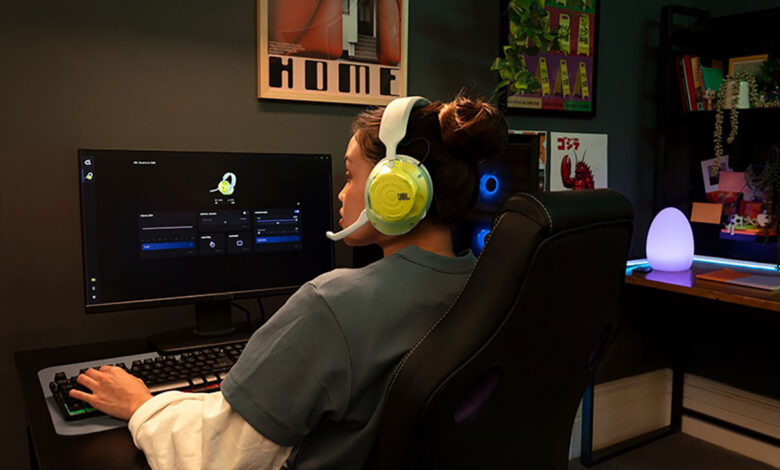
- Rather than developing three fundamentally different acoustic concepts, JBL has built the JBL Quantum 520, JBL Quantum 520X and JBL Quantum 120 around a common foundation of 50 mm carbon drivers, JBL Quantum Spatial Sound, Hi-res Audio and JBL QuantumENGINE. The decisive choice is therefore not primarily about sound technology, but about wireless flexibility, platform support and price. With prices ranging from € 44,99 to € 99,99, the trio spans the route from straightforward wired gaming to an Xbox-certified dual-wireless headset.
A gaming-headset family becomes easier to understand when the differences between its models answer practical questions. Do you need wireless operation? Is Microsoft Xbox part of the system? Or would a conventional cable be preferable to charging another battery?

Harman International Industries has structured its three latest JBL models precisely along these lines. The JBL Quantum 520 serves as the versatile wireless option, while the JBL Quantum 520X adapts much the same concept for players who also require official Xbox compatibility. The JBL Quantum 120 dispenses with wireless technology altogether and occupies the more affordable entry point.

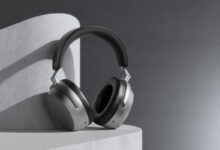
That division does not leave the wired model with a second-tier acoustic specification. JBL equips all three headsets with dynamic 50 mm carbon drivers, JBL Quantum Spatial Sound, Hi-res Audio certification and access to JBL QuantumENGINE. Connectivity may define the hierarchy, but the central audio and software features remain available throughout it.
Key Facts JBL Quantum 520, JBL Quantum 520X and JBL Quantum 120
- Dynamic 50 mm carbon drivers in all three models
- JBL Quantum Spatial Sound
- Hi-res Audio-certified
- JBL QuantumENGINE for sound, microphone and profile settings
- Detachable 6 mm cardioid boom microphone with noise cancelling
- JBL Quantum 520 and JBL Quantum 520X with 2.4 GHz wireless, Bluetooth 5.3 and USB-C
- Up to 37 hours of battery life for JBL Quantum 520 and JBL Quantum 520X
- Five-minute quick charge for up to one additional hour of use
- Official Xbox certification for JBL Quantum 520X
- Wired 3,5 mm stereo mini-jack connection for JBL Quantum 120
One Acoustic Foundation, Three Different Priorities
JBL differentiates the new models without fragmenting their core technology. Each headset uses a dynamic 50 mm carbon driver, providing a consistent basis across the range despite the considerable difference in price and connectivity.
JBL also specifies JBL Quantum Spatial Sound for the complete trio. According to the manufacturer, this spatial processing is intended to create an immersive presentation while making relevant in-game sounds easier to locate. Footsteps, movement and other directional cues should therefore occupy more clearly identifiable positions rather than merely adding to the general soundscape.
Hi-res Audio certification is likewise not reserved for either wireless model. The JBL Quantum 120 shares this feature with the JBL Quantum 520 and JBL Quantum 520X, reinforcing the impression that JBL has treated wired operation as an alternative form of access rather than as an excuse to remove the principal audio functions.


JBL Quantum 520 – The Wireless All-rounder
For players who want to move between different devices and connection methods, the JBL Quantum 520 is the most broadly positioned member of the trio. Its low-latency 2.4 GHz wireless connection operates through a USB dongle, while Bluetooth 5.3 offers an alternative for compatible mobile and general-purpose devices.
USB-C provides a third route. The headset can use a low-latency wired digital connection when wireless operation is unnecessary or unsuitable, giving the JBL Quantum 520 a useful balance between freedom of movement and conventional direct connectivity.
JBL quotes battery life of up to 37 hours. That should cover several extended gaming sessions before charging becomes necessary, although the actual duration will naturally depend on use. If the battery is close to empty, a five-minute quick charge is said to provide enough energy for up to one additional hour.
This combination makes the JBL Quantum 520 the neutral choice within the new line-up: it is not tied specifically to Xbox, yet it retains the full wireless feature set and the common acoustic platform.
JBL Quantum 520X – Wireless with Official Xbox Support
The letter “X” represents a precise distinction rather than an alternative sound configuration. The JBL Quantum 520X is officially Xbox-certified and consequently includes Microsoft Xbox among its stated compatible platforms.
Beyond that platform focus, it closely mirrors the connectivity of the JBL Quantum 520. A 2.4 GHz wireless link through a dongle handles low-latency gaming, Bluetooth 5.3 broadens the range of possible source devices, and USB-C allows a wired digital connection.
Battery specifications are also identical. JBL states a maximum operating time of 37 hours and the same five-minute quick-charge function for up to one further hour of play.
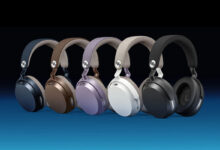
The other visible distinction concerns colour choice. JBL offers the JBL Quantum 520 in Black, Ice, Coral and Purple, whereas the JBL Quantum 520X is currently listed only in Black. The narrower selection keeps the Xbox-oriented model visually conventional, while the standard wireless version provides greater scope for personal preference.


JBL Quantum 120 – The Case for a Cable
Wireless freedom has obvious appeal, but it also brings a battery, a radio link and another charging routine. The JBL Quantum 120 is aimed at players who regard those elements as unnecessary.
Its 3.5 mm stereo mini-jack cable provides the connection, without a wireless dongle or Bluetooth. That makes the headset less adaptable than the JBL Quantum 520 and JBL Quantum 520X, but also simpler: connect it to a suitable socket and begin using it, with no pairing procedure and no battery status to monitor.
The price difference is substantial, yet JBL has retained the technologies that shape the character of the new series. The JBL Quantum 120 still includes its dynamic 50 mm carbon driver, JBL Quantum Spatial Sound, Hi-res Audio certification and JBL QuantumENGINE support.
This is an important aspect of the range. The JBL Quantum 120 is not merely the least expensive model because it uses a cable; it is the model for buyers who actively prefer a cable and would rather spend € 44,99 than pay for wireless functions they may never use.
One Microphone Concept Across the Range
Multiplayer communication is handled by the same basic microphone arrangement in all three headsets. JBL fits each model with a detachable 6 mm boom microphone featuring a cardioid pickup pattern and noise cancelling.
The cardioid characteristic is designed to concentrate primarily on the player’s voice while reducing unwanted sound arriving from other directions. Clear speech can be every bit as important as spatial reproduction during competitive or co-operative play, particularly when instructions have to be brief and immediately intelligible.
Because the microphone is detachable, it can also be removed when voice communication is not required. JBL therefore avoids making the lower-priced Quantum 120 accept an inferior communication system simply to create another point of separation from the wireless models.
JBL QuantumENGINE Connects the Three Models
Hardware connections determine how the three headsets fit into different gaming systems, but JBL QuantumENGINE provides their common software environment. According to JBL, the platform can be used to adjust sound, configure microphone parameters and create individual profiles.
Keeping that software support available across the range has a practical advantage: choosing the wired JBL Quantum 120 does not mean leaving the wider JBL Quantum environment. Players can retain access to the same central configuration platform even when their preferred connection method and budget differ.
This also makes the line-up more coherent. The three products are not isolated solutions that happen to carry similar names; they are variations built around shared acoustic processing, microphone functionality and software control.


Comfort and Colour Beyond Gaming Black
Long sessions place demands on a headset that cannot be addressed by driver specifications alone. For the JBL Quantum 520 and JBL Quantum 520X, JBL specifies a flexible silicone headband and breathable fabric ear cushions. Both elements are intended to address comfort over extended periods, when heat build-up and pressure can become as relevant as sound quality.
The colour palette also moves beyond the dark styling traditionally associated with gaming hardware. JBL Quantum 520 and JBL Quantum 120 are available in Black, Ice, Coral and Purple. The Xbox-certified JBL Quantum 520X is offered in Black.
The shared selection for the JBL Quantum 520 and JBL Quantum 120 again emphasises that the wired model belongs fully to this generation rather than appearing as a stripped-down remnant from an earlier range.
The Most Important Advantages at a Glance
- Consistent acoustic basis: All three headsets use dynamic 50 mm carbon drivers.
- Spatial orientation: JBL Quantum Spatial Sound is designed to position relevant in-game events more precisely.
- Hi-res Audio throughout the range: JBL retains Hi-res Audio certification even for the entry-level JBL Quantum 120.
- Choice of wireless connections: JBL Quantum 520 and JBL Quantum 520X support both 2.4 GHz wireless and Bluetooth 5.3.
- Useful battery endurance: The two wireless models offer up to 37 hours of operation.
- Dedicated Xbox option: Official certification makes the JBL Quantum 520X the appropriate version for Microsoft Xbox players.
- Simple wired alternative: JBL Quantum 120 requires neither wireless pairing nor battery charging.
- Shared configuration platform: JBL QuantumENGINE supports sound, microphone and profile adjustments across all three models.
Price & Availability
According to JBL, the JBL Quantum 520, JBL Quantum 520X and JBL Quantum 120 have been available since 26 August 2026.
The recommended retail price is € 99,99 for the JBL Quantum 520 and € 99,99 for the JBL Quantum 520X. The wired JBL Quantum 120 is priced at € 44,99.
JBL offers the JBL Quantum 520 and JBL Quantum 120 in Black, Ice, Coral and Purple. The JBL Quantum 520X is available in Black.
Conclusion
The most convincing aspect of this new JBL Quantum trio is the clarity of its structure. JBL does not ask customers to decipher three unrelated specifications; it establishes a common audio, microphone and software platform, then allows connectivity and console requirements to determine the right model.
The JBL Quantum 520 is the flexible wireless all-rounder. The JBL Quantum 520X offers a closely related package with the decisive addition of official Xbox certification. The JBL Quantum 120 removes wireless operation from the equation and lowers the price to € 44,99 without surrendering the 50 mm carbon drivers, JBL Quantum Spatial Sound, Hi-res Audio or JBL QuantumENGINE.
That makes the wired headset particularly noteworthy. It provides a genuine entry point into the current JBL Quantum Series rather than merely carrying the family name, while the two € 99,99 models address users who place greater value on wireless flexibility.
| Product | JBL Quantum 520, JBL Quantum 520X and JBL Quantum 120 |
|---|---|
| Price | JBL Quantum 520 € 99,99 JBL Quantum 520X € 99,99 JBL Quantum 120 € 44,99 |
Technical Specifications
| Product | JBL Quantum 520 | JBL Quantum 520X | JBL Quantum 120 |
|---|---|---|---|
| Characterisation | Wireless gaming headset with dual wireless and USB-C | Xbox-certified wireless gaming headset with dual wireless and USB-C | Wired gaming headset |
| Driver | Dynamic 50 mm carbon driver | Dynamic 50 mm carbon driver | Dynamic 50 mm carbon driver |
| Spatial audio | JBL Quantum Spatial Sound | JBL Quantum Spatial Sound | JBL Quantum Spatial Sound |
| Audio | Hi-res Audio | Hi-res Audio | Hi-res Audio |
| Software | JBL QuantumENGINE | JBL QuantumENGINE | JBL QuantumENGINE |
| Connectivity | 2.4 GHz wireless via dongle, Bluetooth 5.3, USB-C | 2.4 GHz wireless via dongle, Bluetooth 5.3, USB-C | 3,5 mm stereo mini-jack |
| Microphone | Detachable 6 mm boom microphone, cardioid pattern, noise cancelling | Detachable 6 mm boom microphone, cardioid pattern, noise cancelling | Detachable 6 mm boom microphone, cardioid pattern, noise cancelling |
| Battery life | Up to 37 hours | Up to 37 hours | – |
| Quick charging | 5 minutes for up to 1 additional hour | 5 minutes for up to 1 additional hour | – |
| Compatibility | Microsoft Windows, Apple macOS, Apple iOS, Apple iPadOS, Google Android, Sony PlayStation | Microsoft Windows, Apple macOS, Apple iOS, Apple iPadOS, Google Android, Microsoft Xbox, Sony PlayStation | Microsoft Windows, Apple macOS, Apple iOS, Apple iPadOS, Google Android and, according to the manufacturer, all gaming consoles |
| Colours | Black, Ice, Coral, Purple | Black | Black, Ice, Coral, Purple |
| Brand | JBL |
|---|---|
| Manufacturer | Harman International |
| Distribution | Harman Deutschland GmbH |
| More about this manufacturer at HiFi BLOG |