


Volumio 4 – A new technical base for Volumio OS, Motivo, Integro, Primo and Rivo
Volumio 4 is not merely a cosmetic update, nor is it a dramatic change of direction. Instead, Volumio s.r.l. has rebuilt the underlying platform around Debian Bookworm, aiming for greater speed, better stability and stronger hardware compatibility. The first system to receive the update is Volumio Motivo, with Integro, Primo, Primo Plus, Rivo and Rivo Plus to follow.


- Volumio 4 gives Volumio OS a more modern technical base, designed to make daily operation faster, smoother and more reliable. Its real value lies not in showy headline features, but in the kind of platform work that matters to demanding digital audio users.
Volumio OS has occupied an interesting place in digital audio for some time now. It is approachable enough for listeners who want a music system to behave like a finished product, yet sufficiently open for those who prefer to shape their streaming environment with more intent. That tension between convenience and configurability has always been part of Volumio’s appeal.

With Volumio 4, Volumio s.r.l. is now moving the platform onto a new footing. The company speaks of Volumio 4 in its current communication, yet the more precise reading is that this is the next generation of Volumio OS, the software layer underpinning the company’s own streaming products. The point here is not a flamboyant redesign of the user experience. It is a deeper technical renewal: faster operation, better stability, broader hardware support and a system architecture better prepared for what comes next.




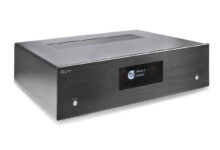

Key Facts
- Volumio 4 as the new generation of Volumio OS
- New technical foundation based on Debian Bookworm
- Staged rollout for Volumio Motivo, Integro, Primo, Primo Plus, Rivo and Rivo Plus
- Volumio Motivo is the first system in the update schedule
- Faster operation and smoother navigation through large music libraries
- Improved handling of collections exceeding 10.000 tracks
- Rebuilt Bluetooth stack with lower latency
- Expanded support for USB DACs and Direct DSD
- Optimised for the new Volumio App with more robust network connection
- Improved display handling for HDMI touchscreens and new plugin possibilities
Volumio 4 as the next generation of Volumio OS
Volumio 4 marks the next generation of Volumio OS, as already indicated during its initial presentation last year. That distinction matters, because Volumio has long since moved beyond the realm of classic Raspberry Pi experimentation and DIY digital audio projects. What began as a software platform has become an ecosystem that covers both open software use and dedicated hardware products.
That ecosystem now includes Volumio Motivo, Volumio Integro, Volumio Primo, Volumio Primo Plus, Volumio Rivo and Volumio Rivo Plus. With Volumio 4, the common foundation behind these devices is being modernised.
The new version is based on Debian Bookworm. On paper, that may sound like background engineering, yet in a music streamer this layer is anything but trivial. It affects driver support, storage handling, USB behaviour, networking, display integration, system security and the general responsiveness of the interface. In short, it is the layer that often determines whether a digital audio product feels properly finished in daily use.
Volumio s.r.l. is therefore not presenting Volumio 4 as a collection of isolated new features. The more important claim is broader and more structural. The platform is intended to become quicker, calmer under load, better with larger libraries, more capable with external DACs and more dependable when used through the new Volumio App. That is where the significance of Volumio 4 lies: not in reinventing Volumio OS, but in making it more durable.

Rollout begins with Volumio Motivo
The rollout of Volumio 4 begins with Volumio Motivo. Volumio Integro, Volumio Primo, Volumio Primo Plus, Volumio Rivo and Volumio Rivo Plus are scheduled to follow.
That staged approach is sensible for an update of this scale. Volumio 4 does not merely touch the visible interface. It reaches into the operating system, driver layer, display management, Bluetooth handling, USB-DAC recognition, storage performance, app connectivity and plugin infrastructure. For streaming systems expected to work quietly and reliably in the background, a controlled deployment is usually preferable to an overly aggressive release.
For owners of Volumio hardware, this means Volumio Motivo takes the lead, while the remaining systems follow according to the defined update path. Users should therefore pay close attention to the relevant image for their particular model and to the update instructions supplied by Volumio s.r.l.
More speed where it actually matters
Performance is one of the central themes of Volumio 4. The interface is intended to respond more directly, while browsing through menus, albums, artists, playlists and libraries should feel smoother.
That may sound like a straightforward comfort improvement, but in digital audio it is often the difference between a system that is used every day and one that slowly becomes irritating. Streaming platforms rarely fail because one dramatic feature is missing. They tend to disappoint through small delays, sluggish search, unstable discovery, inconsistent app behaviour or music libraries that become awkward once they grow beyond modest scale.
Volumio 4 addresses precisely this point. The new version is intended to manage large music collections more effectively and to remain stable and responsive even with libraries containing more than 10.000 tracks.
This is particularly relevant for listeners who do not regard streaming services as a replacement for their own collection. Many HiFi enthusiasts maintain carefully built music archives on NAS systems, USB storage or internal drives. A serious platform has to do more than index those files. It must allow the user to browse, search, rediscover and play music without the software getting in the way.
Volumio 4 is designed to bring more composure to this part of the experience. Faster browsing, improved response times and better library management may not be spectacular in a marketing sense, but they have a much greater effect on daily use than many flashier additions.
Debian Bookworm as the new foundation
The move to Debian Bookworm is one of the most important technical changes in Volumio 4. It gives Volumio OS a more current system base, intended to improve security, stability and driver support.
For many users, this kind of change remains invisible as long as everything works. Yet that is exactly why it matters. A network audio platform has to manage network connections, recognise USB devices, access storage reliably, integrate displays, maintain app communication and deliver audio playback with as little disturbance as possible. A modern operating system base is not decorative; it is fundamental.
Volumio 4 should therefore also be read as an investment in future readiness. The platform is intended not only to meet current requirements, but to accommodate future development more easily. That includes new hardware, new app functions, extended plugin options and ongoing maintenance across the Volumio environment.
Lower-latency Bluetooth
One of the more practical changes concerns Bluetooth. Volumio s.r.l. refers to a complete rebuild of the Bluetooth stack. Playback should now operate with lower latency, start more quickly and feel more immediate overall.
Bluetooth is not the reference route for ultimate sound quality in a serious HiFi system, but it remains highly useful. It is the quick connection for guests, the convenient bridge for mobile devices, the pragmatic option for secondary rooms and a simple way to bring televisions, tablets or notebooks into the system without elaborate setup.
Lower latency is especially relevant in contemporary living spaces. Where a Volumio system is used not only for music but also with a television or other source, it is not enough for audio to arrive; it must arrive with minimal delay. Volumio 4 addresses this scenario through its rebuilt Bluetooth stack.
Volumio 4 also adds support for Bluetooth remote controls. This expands control beyond smartphone, tablet and web interface, allowing more conventional operation from the sofa without always reaching for a mobile device.
Adjustable CD read speed
Volumio 4 also introduces the option to adjust CD read speed. At first glance, this may seem like a small detail. In practice, it says a fair amount about the kind of software maturity that matters in daily use.
Optical drives can become audible at higher speed. In an office, workshop or secondary-room installation, that may hardly matter. In a quiet listening room, on a desk or in a compact system close to the listener, drive noise can be far more noticeable.
Giving users the option to choose the preferred read speed provides more control over the balance between speed, quietness and use case. It is not a grandstanding feature, but it is exactly the kind of practical adjustment that makes sense in a considered audio system.
Expanded USB-DAC support and Direct DSD
Volumio’s strength has always depended in part on its ability to work beyond a single closed hardware concept. The platform is intended to support different configurations, from compact streamers to more ambitious digital chains using external DACs. USB-DAC compatibility is therefore central.
Volumio 4 expands the USB quirks database, according to the company. Behind that rather technical phrase lies a very practical reality. USB Audio may be standardised, but DACs do not always behave identically in detail. Some require particular handling if they are to be recognised correctly or if specific playback modes are to work as intended.
The expanded database should allow more DACs to be supported directly. Volumio 4 also brings Direct DSD to additional USB DACs. For users who want native DSD playback, that can be an important improvement. The less manual configuration required, the more naturally an external DAC fits into the Volumio environment.
For HiFi enthusiasts, this remains a key point. A music streamer is rarely an isolated device. It sits inside a chain made up of network, storage, software, app, DAC, amplifier and loudspeakers. Volumio 4 improves several of the contact points where such systems meet in real use.
NVMe, displays and the new Volumio App
Storage support also moves forward with Volumio 4. Native NVMe support with optimised read performance is intended to help local storage operate more quickly and efficiently. This fits a platform that does not treat streaming services and local libraries as opposing worlds, but keeps both routes open.
For systems with displays, Volumio 4 improves the management of HDMI touchscreen panels. This is relevant not only for self-built projects, but also for devices such as Volumio Motivo, where direct operation, display feedback and app control form part of the overall experience. A more fluid touchscreen interface makes such products feel more independent and reduces reliance on a phone or tablet.
Volumio 4 has also been optimised for the new Volumio App. The focus here is a more robust network connection. Devices should be easier to discover and more stable once connected. Again, this is a practical matter with large consequences. A streaming platform can be technically versatile, but if the app fails to find the device reliably or the connection feels fragile, the entire experience suffers.
More scope for plugins and developers
Volumio 4 also introduces an expanded plugin API. This gives developers more room to integrate functions into Volumio or make existing extensions more capable.
That is not a side issue for this platform. Volumio has always been shaped by extensibility. Plugins allow additional services, integrations and functions that go beyond the standard scope of the system. A stronger interface therefore benefits not only developers, but also users who want to adapt Volumio to their own requirements.
In this respect, Volumio OS remains a flexible software platform, while Volumio 4 gathers the current improvements into a clearly defined new generation. The balance between ready-to-use operation and an expandable system remains one of its most important distinctions from entirely closed streaming ecosystems.
All benefits at a glance
- A more modern technical base for Volumio OS
- Debian Bookworm foundation for improved stability, security and driver support
- Faster day-to-day operation
- Smoother browsing through albums, artists, playlists and libraries
- Better handling of large music collections from 10.000 tracks upwards
- Rebuilt Bluetooth stack with lower latency
- Faster Bluetooth playback for televisions and mobile sources
- Support for Bluetooth remote controls
- Selectable CD read speed for quieter operation where required
- Expanded USB-DAC compatibility
- Direct DSD support for additional USB DACs
- Native NVMe support with optimised read performance
- Improved management of HDMI touchscreen panels
- Optimisation for the new Volumio App
- More robust network connection between app and device
- Expanded plugin API for developers
- Staged rollout for Volumio Motivo, Integro, Primo, Primo Plus, Rivo and Rivo Plus
Price and availability
Volumio 4 will be made available step by step for the dedicated streaming solutions from Volumio s.r.l. The rollout begins with Volumio Motivo, followed by Volumio Integro, Volumio Primo, Volumio Primo Plus, Volumio Rivo and Volumio Rivo Plus.
Because Volumio 4 is based on a new technical foundation, this should not be treated as a minor maintenance update. Users should follow the relevant update notes from Volumio s.r.l. and check when the correct image for their specific device becomes available.
Conclusion
Volumio 4 should not be judged solely by a list of individual new features. Its real importance lies in the revised foundation. Debian Bookworm, improved performance, stronger app connectivity, a rebuilt Bluetooth stack, better library management and expanded DAC support are not separate talking points so much as parts of the same larger move.
For Volumio s.r.l., this is also a strategically important step. The platform now sits between open digital audio software, a community-driven ecosystem and the company’s own hardware solutions. In that position, what matters is not only what Volumio 4 can do, but how reliably it does it in everyday use.
Provided the rollout proceeds cleanly, Volumio 4 should make the platform notably stronger. Not through theatrical reinvention, but through improvements in the areas that count most for a streaming system: response speed, stability, compatibility and ease of operation.
| Product | Volumio 7 |
|---|---|
| Price | free update |
| Brand | Volumio srl. |
|---|---|
| Manufacturer | Volumio Srl |
| Distribution | audioNEXT GmbH |
| More about this manufacturer at HiFi BLOG |