


Shanling SM1.3R – a streamer with a different voice
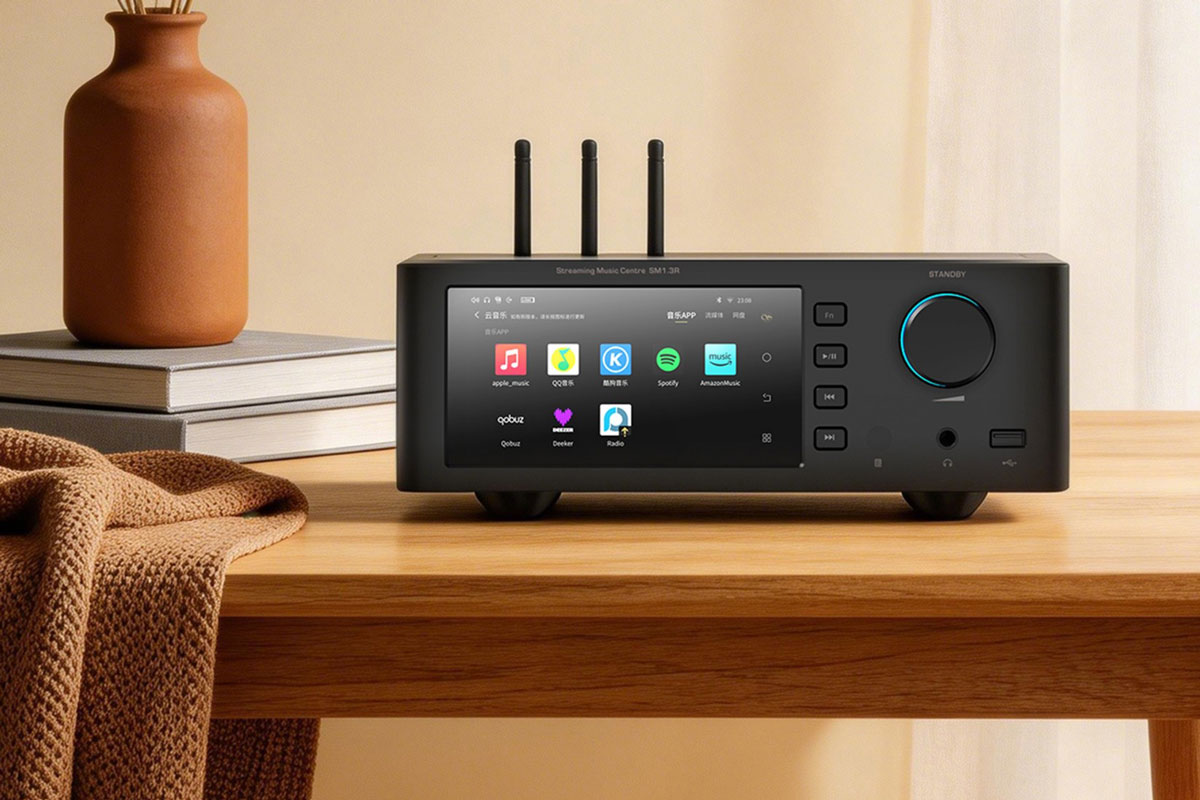
At first glance, the Shanling SM1.3R looks like a contemporary compact streamer built for today’s music platforms. Look closer, though, and its real appeal lies elsewhere: this machine is shaped around a proprietary R2R DAC design that gives it a far more deliberate identity than most products in its class. It is not simply trying to make streaming easier, but to make it feel more like serious HiFi.

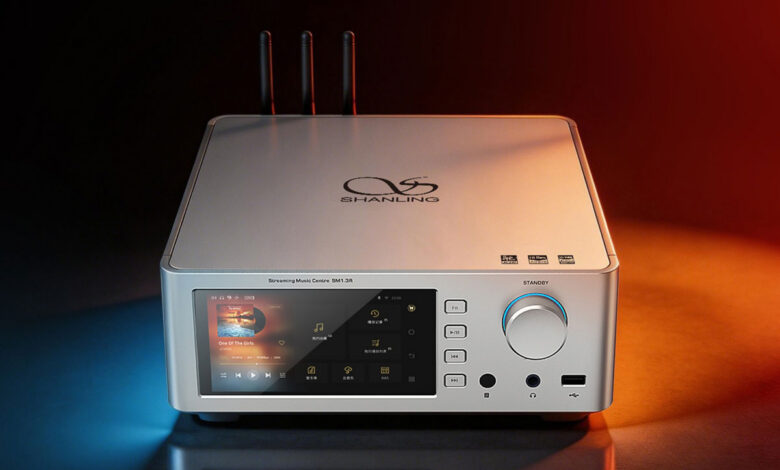
- The Shanling SM1.3R is interesting because it refuses to treat digital streaming as a solved problem. Instead, it argues that the DAC stage still matters profoundly, and that convenience does not have to come at the expense of tonal individuality.
There is no shortage of network players that promise the same thing: more services, more app integration, more digital flexibility. The Shanling SM1.3R enters that crowded field with a noticeably different emphasis. Its pitch is not built around feature overload alone, but around the claim that the quality and character of digital conversion still deserve centre stage.

That matters, because the Shanling SM1.3R is not presented merely as a transport for streaming ecosystems. It is intended as a source component in its own right, one that seeks to marry the ease of modern platform-based listening with a sonic presentation many enthusiasts continue to associate with more traditional HiFi values. In other words, Shanling is not just selling access to music services here. It is selling a viewpoint on how streamed music ought to be rendered.



Key Facts
- Characterisation: Compact network player with proprietary R2R DAC for demanding streaming systems
- DAC concept: 24 Bit R2R DAC with 212 precision resistors
- Streaming: Roon Ready, TIDAL Connect and Qobuz Connect
- Music services: Apple Music, Amazon Music and Spotify integrated
- Storage: internal SSD slot for local lossless music playback, USB-A for external storage media
- S/PDIF optical and coaxial, HDMI with I2S as digital outputs, S/PDIF optical and coaxial as well as USB-C as digital inputs
- Cinch and XLR as analogue outputs (unbalanced, balanced)
- Platform: closed Android system
- Additional features: dedicated headphone output and 31 Watt split power supply
- Availability: second half of April
- Price: € 1.799,-
A streamer with a more deliberate agenda
The Shanling SM1.3R clearly builds on the thinking behind the Shanling SM1.3, but it shifts the conversation in a more focused direction. Many products in this category are defined first and foremost by how many platforms they support, how polished their control apps are, or how densely packed their rear panels may be. Shanling does not ignore those things, but with the SM1.3R it places far greater weight on the conversion stage itself.
That is not a theoretical distinction. For listeners who regard a network player as a genuine source rather than a mere delivery mechanism, the DAC architecture remains central. It is the stage that gives digital playback shape, tone, texture and composure. Shanling appears to understand that its audience is not only asking whether a streamer can access music, but how convincingly it can turn that access into an involving listening experience.
At the core of the machine sits a proprietary 24 Bit R2R DAC. Shanling specifies 212 resistors with 0,01 percent precision, and that alone tells you where the company wants the discussion to go. Ladder DAC concepts have long retained a special place among listeners who favour a denser, calmer and more corporeal presentation than is often associated with standard DAC topologies. Voices, acoustic instruments and low-level spatial information are often where such designs either justify their reputation or fail to do so. The promise here is that the Shanling SM1.3R will not simply sound clean and efficient, but more grounded, more fluid and more tonally assured than one might expect from a compact streaming platform.
Streaming done properly, not superficially
None of that would matter if Shanling had compromised on modern usability, but the SM1.3R appears fully aware of contemporary expectations. Roon Ready is onboard, as are TIDAL Connect and Qobuz Connect, which immediately places the unit in the mainstream of current premium streaming practice. That gives it enough flexibility to slot into established digital households while remaining attractive to users who prefer controlling playback directly from their streaming apps.
Apple Music, Amazon Music and Spotify are integrated as well, covering a broad section of what people actually use day to day. That is important because too many products still confuse feature lists with real-world convenience. In practical use, what matters is whether a component reduces friction. The Shanling SM1.3R seems designed to do exactly that: one box, a broad spread of relevant services, and no obvious need for supplementary bridges or companion devices to unlock the essentials.
For compact but ambitious systems, that matters more than spec-sheet theatre. A streamlined chain is often easier to live with, easier to place, and easier to trust. When a source component consolidates the critical functions without feeling compromised, it earns its place far more convincingly.
A closed platform with a clear purpose
Shanling opts for a closed Android system here, and that decision deserves to be read properly. Some buyers will always prefer maximum openness, but dedicated audio hardware often benefits from the opposite approach. A closed platform can make more sense when the goal is operational stability, cleaner interaction and a user experience that feels built around music rather than adapted from a general-purpose device.
That seems to be the thinking behind the Shanling SM1.3R. Instead of presenting itself as a tablet in HiFi clothing, it aims to behave like a dedicated source component. That is a subtle but important distinction. Good audio products should not constantly remind the user of the computing layer beneath them. They should disappear into the listening routine and leave behind the impression of focus and purpose.
The inclusion of an internal SSD slot reinforces that idea. This allows the Shanling SM1.3R to move beyond the role of a purely online streamer and into the territory of self-contained local playback. For users with carefully assembled lossless libraries, that is more than a convenience feature. It can reduce reliance on external drives or separate network storage, simplify system architecture and keep a compact high-quality setup genuinely compact. Shanling also allows the use of external storage via USB-A ports, so the unit is not locked into a single method of managing a music collection.

More than a streamer, more than a transport
The Shanling SM1.3R also makes sense as an external DAC for additional digital sources. Optical and coaxial S/PDIF connections are not limited to output duties, but are offered as inputs too. That broadens the machine’s usefulness considerably, especially for listeners who want one stable digital hub rather than a stack of narrowly specialised boxes.
USB-A and USB-C expand that versatility further. External storage can be attached, but portable devices, a DAP, a PC or a Mac can also be integrated into the same front end. In that respect, the Shanling SM1.3R becomes more than a streamer. It turns into a flexible digital control point that can anchor a modern system in a very practical way.
That is a point worth stressing, because one of the recurring problems in contemporary audio is overlap without integration. Many users accumulate boxes that each do one thing well, but together become cumbersome. The Shanling SM1.3R seems aimed at precisely that frustration. It offers streaming, digital conversion, local playback and wider connectivity in a form that still feels like a coherent HiFi component rather than a compromise device.
Greater freedom in everyday listening
The dedicated headphone output is another detail that should not be dismissed as a footnote. It broadens the Shanling SM1.3R’s appeal far beyond a fixed loudspeaker-based stereo setup. Late-night listening, desktop use, private sessions in a study or smaller room, and system building around headphones all become more plausible with a proper output already included.
That flexibility is increasingly relevant. Many listeners no longer separate their audio life into rigid categories. They want a source that can move between different contexts without losing coherence. The Shanling SM1.3R appears well positioned for exactly that kind of use, serving either as the front end of a loudspeaker system or as a more personal listening device when circumstances demand it.
The 31 Watt split power supply is equally noteworthy, even if such details are often skimmed over too quickly. In digital audio, power supply design still matters, sometimes decisively. Stable operating conditions, lower interference potential and better overall circuit discipline are not academic concerns. They influence the degree of calm, transparency and fine dynamic control a digital source can maintain. Anyone who sees a streamer as a serious HiFi product rather than a lifestyle accessory will pay close attention to precisely this sort of engineering choice.
Price and availability
Shanling states that the Shanling SM1.3R is scheduled to reach the market in the second half of April. The recommended retail price is listed as € 1.799,-. That places it in a segment where broad functionality alone is no longer enough. What matters at this level is whether a component brings a recognisable identity to the system, and whether its convenience is matched by a sonic proposition strong enough to justify its existence.
Conclusion
What makes the Shanling SM1.3R compelling is not that it ticks the usual streamer boxes, although it plainly does. Its real attraction lies in the fact that Shanling is trying to give the unit a more specific personality through its proprietary R2R DAC architecture. That shifts the conversation away from streaming as a convenience layer and towards streaming as a source discipline.
The service support is current, the platform looks purpose-built, and the inclusion of local storage options, digital inputs and a headphone output gives the component real breadth in daily use. But the decisive point is simpler than that: the Shanling SM1.3R is aimed at listeners who want modern streaming convenience without surrendering the expectation that a digital front end should still sound like a thoughtfully voiced piece of HiFi.
| Product | Shanling SM1.3R Streaming Music Centre |
|---|---|
| Price | € 1.799,- |
Technical Specifications
| Product | Shanling SM1.3R Streaming Music Centre |
|---|---|
| Characterisation | Compact network player with proprietary R2R DAC for modern HiFi systems, designed for convenient streaming and a sonically distinctive digital front end |
| Product | Shanling SM1.3R |
| Device class | Network player |
| DAC | 24 Bit R2R DAC |
| DAC architecture | 212 precision resistors with 0,01 percent accuracy, designed for refined, stable and characteristically organic R2R playback |
| Streaming protocols | Roon Ready, TIDAL Connect, Qobuz Connect |
| Integrated music services | Apple Music, Amazon Music, Spotify |
| Platform | Closed Android system for focused and stable audio use |
| Local storage | Internal SSD slot for locally stored lossless music libraries |
| Headphones | Dedicated headphone output for direct connection and flexible everyday use |
| Power supply | 31 Watt split power supply, designed for stable supply and low interference |
| Brand | Shenzhen Shanling Digital Techno |
|---|---|
| Manufacturer | Shanling Audio |
| Distribution | NT Global Distribution GmbH |
| More about this manufacturer at HiFi BLOG |