

QUAD Platina CDT for Modern HiFi Systems
Physical media never truly disappeared for serious music lovers, but dedicated digital sources have become increasingly rare. With the QUAD Platina CDT, QUAD HiFi now introduces a component that focuses entirely on accurate disc reading, stable signal delivery, and practical system integration. It is a product aimed squarely at listeners who still value their Compact Disc collection and want to use it in a refined contemporary setup.

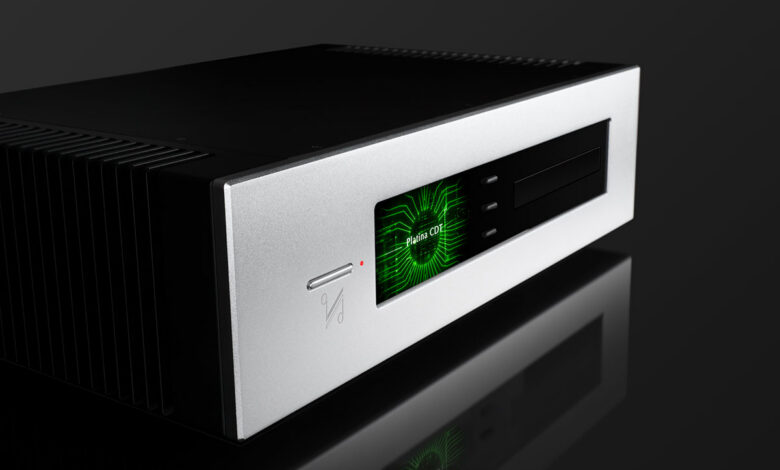
- The QUAD Platina CDT does not try to be everything at once, and that is exactly what makes it interesting. By concentrating on clean digital extraction, clock stability, and low-noise design, it speaks directly to HiFi enthusiasts who still take CD playback seriously.
For many music lovers, the Compact Disc never vanished. It simply lost visibility in a market increasingly shaped by streaming platforms, multifunction devices, and universal playback solutions. With the QUAD Platina CDT, QUAD HiFi addresses precisely that shift and presents a component that does one job with intent: reading digital music data from disc as accurately and as consistently as possible, then passing that signal on to an external converter or a suitably equipped amplifier.

This positions the QUAD Platina CDT as a highly focused source component for modern HiFi systems. Rather than combining multiple digital stages in one chassis, it concentrates on the first link in the chain, namely the secure retrieval of data and the reliable handoff of a clean digital signal. For users who already own an ambitious DAC or an amplifier with digital inputs, that makes the product especially relevant. It is not about convenience through feature overload, but about preserving the integrity of the playback process where it begins.

Key Facts
- QUAD expands the Platina Series with the QUAD Platina CDT CD transport
- Designed as a pure CD transport without integrated D/A conversion
- Engineered for precise, stable, and low-interference CD reading
- TCXO master clock with temperature-compensated crystal oscillator
- Isolated low-noise power supply architecture
- USB playback for music files from external storage
- 4,3 inch IPS display with CD Text support
- Available from April 2026 in black and silver
- Price: € 1.699,-
A specialist component by design
There is something refreshing about a product that resists the temptation to do more than necessary. The QUAD Platina CDT does not attempt to be a network player, a DAC, or a universal digital hub. It is conceived as a pure CD transport, and that discipline is central to its appeal. By omitting integrated D/A conversion, QUAD HiFi separates disc reading from signal conversion and leaves the latter to whichever downstream component the user considers best suited to the task.
In practical terms, that creates a very clear advantage. A dedicated transport does not need to divide its internal resources across additional analogue stages or conversion circuitry. Instead, it can focus entirely on reading the disc accurately, maintaining signal stability, and delivering the data stream in the cleanest possible form. For listeners with a carefully assembled system, that matters. The quality of a digital source is not only defined by what happens at the DAC stage, but also by how confidently and consistently the data is retrieved beforehand.
For collectors who continue to regard Compact Disc as more than a legacy format, this is an important distinction. A well-made CD transport is not an exercise in nostalgia. It is a statement that physical media still deserves serious treatment when used as part of a high-quality playback chain.
Why clock precision and power design matter
Inside the QUAD Platina CDT, the technical concept follows that philosophy closely. QUAD HiFi relies on a purpose-developed transport mechanism intended to ensure calm disc loading, stable reading behaviour, and effective error correction. These may sound like purely technical virtues, but they are fundamental in real-world use. The more controlled the reading process is at the source, the more reliable the digital stream becomes before it ever reaches a converter.
A major role is also played by the integrated TCXO master clock with its temperature-compensated crystal oscillator. This solution is intended to reduce timing instability by maintaining a more consistent clock frequency even when operating conditions fluctuate. In practical terms, that is about preserving order in the signal path. Measures like this rarely make headlines because they are spectacular, but serious digital playback often depends on exactly these details being handled with care.
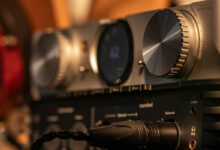
The same applies to the isolated power supply architecture. When individual circuit sections are supplied with carefully controlled, low-noise power, unwanted interaction within the device can be reduced. For the user, the benefit is not some abstract technical promise, but the prospect of a source that behaves with greater composure and delivers music data with more stability and cleanliness. Especially in more revealing systems, such qualities tend to matter not because they create artificial drama, but because they remove distraction.


Not limited to Compact Disc alone
Interestingly, QUAD HiFi does not restrict the QUAD Platina CDT exclusively to optical disc playback. The unit also supports music playback from external USB storage devices, including files in WAV, MP3, WMA, AAC, FLAC, and APE formats. Supported file systems include FAT16, FAT32, and exFAT, which adds a welcome degree of flexibility without undermining the device’s identity as a dedicated digital source.
That broader capability makes considerable sense in daily use. Many collections today exist across more than one medium. Some albums remain on Compact Disc, others have been archived to external drives, and many listeners prefer a system that can bridge both worlds without forcing them into a network-based ecosystem. The QUAD Platina CDT does not turn into a streaming player by offering USB playback, but it becomes more versatile in a way that feels practical rather than opportunistic.
This makes the product more relevant for users who favour a classic component-based HiFi system, yet still want to access file-based music playback from local storage. In that respect, the QUAD Platina CDT acknowledges how music collections have evolved while staying true to the values of traditional system building.


Designed to fit the QUAD Platina Series
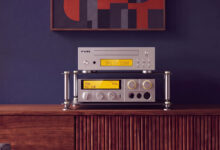
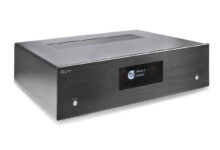
Visually, the QUAD Platina CDT is meant to integrate seamlessly into the wider QUAD Platina Series. Its design language is deliberately restrained, with a clean and ordered appearance that aligns with the rest of the family. A 4,3 inch IPS display with CD Text support contributes to a more contemporary user experience, while aluminium control elements and a fully featured remote control reinforce the sense of a premium, system-oriented component.
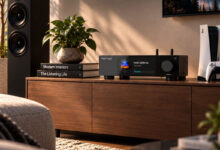
That system context is especially important. Used alongside products such as the QUAD Platina Integrated or the QUAD Platina Stream, the new transport forms part of a clearly structured platform rather than standing as an isolated niche solution. This is very much in keeping with classical HiFi thinking: separate components, each with a clearly defined role, working together both functionally and visually.
For readers interested in well-matched source and amplification combinations, that approach will likely be one of the strongest arguments in favour of the QUAD Platina CDT. It fits not only physically into an existing product range, but also conceptually into a way of building a system that values clarity, modularity, and long-term relevance.
Price and availability
The QUAD Platina CDT is scheduled to arrive at authorised specialist retailers from April 2026. The recommended retail price is € 1.699,-, and the unit will be offered in black and silver finishes.
Conclusion
With the QUAD Platina CDT, QUAD HiFi makes a compelling case for the dedicated CD transport in 2026. By focusing on accurate data extraction, clock stability, low-noise architecture, and straightforward integration into a serious component system, it presents itself as a digital source for listeners who still view Compact Disc as a format worth preserving properly. The QUAD Platina CDT is not about doing more, but about doing the essential job with greater care, and that is precisely why it stands out.
| Product | QUAD Platina CDT |
|---|---|
| Price | € 1.699,- |
Technical Data
| Product | QUAD Platina CDT |
|---|---|
| Characterisation | CD transport for classic Compact Discs, CD-R, CD-RW, data CDs, and USB storage, designed as a specialised digital source for HiFi systems with external D/A conversion or amplifiers with digital inputs |
| Product type | CD transport |
| Compatible disc formats | CD, CD-R, CD-RW, data CD |
| Playback functions | CD Text, gapless playback, playback from USB HDD storage |
| Supported audio formats | WAV, MP3, WMA, AAC, FLAC, APE |
| Supported file systems | FAT16, FAT32, exFAT |
| Display | 4,3 inch IPS display with a resolution of 800 x 480 pixels |
| Remote control | Fully featured remote control included |
| Sampling rate | 44,1 kHz for CD, CD-R, and CD-RW; 44,1 kHz to 96 kHz for data CD and USB HDD |
| Digital outputs | 1 x S/PDIF coaxial, 1 x S/PDIF optical |
| Standby power consumption | < 0,5 Watt |
| Power supply | Depending on region, 220 to 240 Volt at 50/60 Hz or 100 to 120 Volt at 50/60 Hz |
| Dimensions | 445 x 135 x 310 mm |
| Net weight | 10,9 kg |
| Finishes | Black, silver |