

dCS MCD 16 – 16 Channel Digital-to-Analogue Converter debuts at High End 2026 Vienna
Data Conversion Systems Limited has built its reputation on digital precision, clocking, upsampling and conversion of a distinctly uncompromising kind. With the dCS MCD 16 – 16 Channel Digital-to-Analogue Converter, that expertise is now being taken beyond stereo and into serious multichannel audio. Its public debut at HIGH END Vienna 2026 places it exactly where it belongs: inside a reference-scale immersive audio demonstration with Trinnov Audio, Perlisten Audio and Audio Reference GmbH.


- The dCS MCD 16 is not an AV processor, nor a conventional Home Cinema component, but a dedicated 16-channel Digital-to-Analogue Converter built around the proprietary dCS Ring DAC architecture. Its arrival suggests that in the upper reaches of immersive audio, conversion quality may become just as decisive as processing power, loudspeaker layout and room correction.
For decades, Data Conversion Systems Limited has occupied a very particular place in High-end digital audio. The British company is associated not with feature-chasing or rapid product churn, but with a more exacting discipline: digital conversion, upsampling, clocking and streaming architectures developed for music systems where precision is not a marketing word but a design requirement. With the new dCS MCD 16 – 16 Channel Digital-to-Analogue Converter, that discipline now moves into new territory. For the first time, Data Conversion Systems Limited is presenting a solution conceived expressly for multichannel audio, and therefore for serious Home Cinema and immersive audio installations.

Key Facts
- First multichannel DAC from Data Conversion Systems Limited
- 16 channels for high-quality immersive audio and Home Cinema systems
- Proprietary dCS Ring DAC Design used for multichannel audio for the first time
- Eight dCS Ring DACs for 16 channels
- Discrete Class A output stage per channel
- Switchable output voltage with 2 V or 6 V
- Premiere at HIGH END Vienna 2026
- Joint demonstration with Trinnov Audio, Perlisten Audio and Audio Reference GmbH
- Market launch planned for autumn 2026
A new move from dCS
The arrival of the dCS MCD 16 is notable because it is not an obvious sideways extension of an existing product line. Data Conversion Systems Limited has, until now, been almost entirely associated with High-end stereo music systems, where its work in digital-to-analogue conversion, clocking and digital signal handling has shaped some of the most ambitious playback chains in contemporary HiFi.

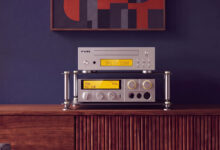
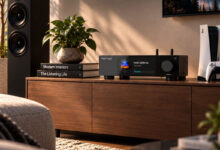
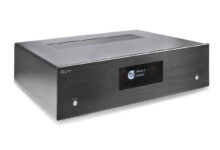
That context matters. The dCS MCD 16 is not being presented as a conventional AV processor, nor as a lifestyle-oriented multichannel hub. It is a specialised 16-channel Digital-to-Analogue Converter aimed at installations where the spatial ambition of modern immersive audio should not come at the cost of conversion quality. In other words, Data Conversion Systems Limited appears to be addressing a question that the very top tier of Home Cinema increasingly has to face: if every loudspeaker in the room is part of the performance, why should only the front left and right channels receive true audiophile attention?
The move also says something about the changing centre of gravity in premium listening rooms. Stereo remains the reference format for many music lovers, but immersive audio is no longer confined to spectacular film effects or broad-brush surround sound. It is now part of concert recordings, spatial music production, private screening rooms and highly engineered residential systems. That is exactly the sort of territory where a dedicated multichannel DAC begins to make sense.
dCS Ring DAC Design, now across 16 channels
At the centre of the dCS MCD 16 is the proprietary dCS Ring DAC Design, long regarded as the technological heart of the company’s digital converters. In the MCD 16, that architecture is applied to a multichannel platform for the first time. Eight dCS Ring DACs handle digital-to-analogue conversion for a total of 16 channels.
This is not merely a question of channel count. The more interesting point is consistency. In an immersive audio system, the credibility of the soundfield depends on more than spectacular overhead effects or sheer scale. It relies on stable localisation, coherent movement between loudspeakers, properly rendered ambience and a sense that every channel belongs to the same acoustic fabric. If the conversion stage varies in character, resolution or dynamic composure across the system, spatial precision can become blurred before the signal ever reaches the amplifiers.
That is where the dCS approach becomes particularly relevant. The company is attempting to carry the low-distortion, high-stability, finely resolved character associated with its stereo converters into a far more complex playback environment. A properly executed 16-channel converter of this kind is therefore not simply a technical curiosity. It is an argument for treating immersive audio with the same seriousness that High-end stereo has demanded for decades.
The dCS Ring DAC Design is supported by a discrete Class A output stage for each channel. Output voltage can be switched between 2 V and 6 V, allowing the dCS MCD 16 to be adapted to different amplifier chains and installation requirements. That detail may sound prosaic, but in large-scale private cinema and listening rooms, gain structure and system matching are rarely trivial matters.
Why a 16-channel DAC matters in High-end Home Cinema
High-end Home Cinema has changed. For a long time, much of the conversation revolved around channel numbers, decoding formats, processor capability and loudspeaker layout. Those things still matter, of course. Yet at the upper end of the market, another question has become harder to ignore: how good is each individual channel once the processing is done?
The dCS MCD 16 addresses precisely that question. A 16-channel DAC with dCS Ring DAC Design and discrete output stages per channel is aimed at users and integrators who do not want the multichannel part of a system to feel like a compromise beside a serious stereo chain. That applies to film soundtracks, certainly, but also to immersive music, live recordings and rooms where stereo and multichannel playback are expected to coexist at a genuinely high level.
There is also a wider market signal here. Immersive audio is maturing. The best systems are no longer judged only by impact, dynamics and bass management, but by how convincingly they preserve space, texture, instrumental placement and tonal continuity. In such systems, the DAC is not simply a utility stage. It becomes part of the artistic and technical integrity of the entire room.
HIGH END Vienna 2026 – A grand premiere at Audio Reference GmbH
The dCS MCD 16 will make its public debut at HIGH END Vienna 2026, taking place from 4 to 7 June 2026 at the Austria Center Vienna. Data Conversion Systems Limited will not present the unit as a static exhibit or isolated technical showcase. Instead, the dCS MCD 16 will appear as part of a joint immersive audio demonstration with Trinnov Audio, Perlisten Audio and Audio Reference GmbH.
That context is well chosen. Trinnov Audio is closely associated with advanced processor and room correction technology for demanding Home Cinema installations. Perlisten Audio brings loudspeaker systems designed around controlled, dynamic and installation-friendly performance at reference level. Audio Reference GmbH, meanwhile, has long been one of the defining distributors in the elevated HiFi and Home Cinema market.
Mansour Mamaghani, Managing Director of Audio Reference GmbH, is once again expected to stage one of the more ambitious demonstrations of the show. The planned system is described as a large-scale 15.8.8 immersive audio installation. That is not merely a headline-grabbing channel layout. In the right hands, such a configuration can demonstrate whether immersive sound is being used for theatrical exaggeration or for spatial authority, coherence and believable scale.
For the dCS MCD 16, this is an important distinction. A converter of this class needs to be heard in a system where the rest of the chain is capable of revealing what it is doing. A compromised demonstration would reduce it to numbers. A properly assembled room should show why conversion quality across all channels can matter.
Immersive Music with Justin Gray
A further point of interest will be the daily sessions with Grammy-winning producer Justin Gray. Gray is known for his work with immersive music and for exploring both its creative and technical possibilities.
The planned sessions are not intended merely as playback demonstrations. Selected material will be presented, explained and analysed, giving visitors a better understanding of how immersive music productions are built, which artistic choices shape them, and what a playback system must do if it is to reproduce them with conviction. That makes the dCS MCD 16 more than an engineering exhibit. It places the product inside the broader conversation about how music may be produced, distributed and experienced in spatial formats.
The sessions are expected to be available through a booking system and open to visitors of High End 2026 Vienna.
All benefits at a glance
- The dCS MCD 16 transfers the converter philosophy of Data Conversion Systems Limited to multichannel audio for the first time.
- The 16-channel architecture opens up new possibilities for high-quality immersive audio systems.
- The proprietary dCS Ring DAC Design is intended to provide high precision even in complex multichannel setups.
- Eight dCS Ring DACs form the basis for uniformly high-quality conversion across all 16 channels.
- Discrete Class A output stages per channel underline the High-end ambition.
- The switchable output voltage makes integration into different installations easier.
Price and availability
According to current information, the dCS MCD 16 is scheduled to become available in autumn 2026. Data Conversion Systems Limited has not yet announced pricing. Full technical specifications are also expected to be released at a later date.
Conclusion
With the dCS MCD 16, Data Conversion Systems Limited is opening a genuinely new chapter. This is not a minor portfolio extension, but a clear statement that ambitious immersive audio and High-end Home Cinema should not be defined solely by processors, loudspeaker arrays and room correction. Digital-to-analogue conversion remains fundamental, especially when 16 channels are expected to behave as one coherent acoustic system.
The choice of High End Vienna 2026 for the public premiere is astute. In a demonstration with Trinnov Audio, Perlisten Audio and Audio Reference GmbH, the dCS MCD 16 should be heard in precisely the kind of environment for which it has been conceived: large in scale, technically controlled, spatially demanding and unapologetically ambitious. For Data Conversion Systems Limited, it is the beginning of a new product category. For the High-end Home Cinema sector, it may prove to be a quietly important shift in emphasis.
| Product | dCS MCD 16 |
|---|---|
| Price | N/Ak |
Technical Specifications
| Product | dCS MCD 16 |
|---|---|
| Characterisation | 16-channel Digital-to-Analogue Converter |
| Full product designation | dCS MCD 16 – 16 Channel Digital-to-Analogue Converter |
| Manufacturer | Data Conversion Systems Limited |
| Product category | Multichannel Audio, Immersive Audio, Home Cinema |
| Converter architecture | Proprietary dCS Ring DAC Design |
| DAC configuration | Eight dCS Ring DACs |
| Channels | 16 analogue output channels |
| Output stage | Discrete Class A output stage per channel |
| Output voltage | Switchable between 2 V and 6 V |
| Brand | dCS Audio |
|---|---|
| Manufacturer | Data Conversion Systems Ltd. |
| Distribution | Audio Reference GmbH |
| More about this manufacturer at HiFi BLOG |