

Métronome DSAS Music Server – High-end Streaming without the Computer stress
Computer audio has long promised superb sound, yet too often it drags the listener into networking, file paths, software maintenance and system housekeeping. The Métronome DSAS Music Server takes a different view: it places Audirvāna inside a dedicated High-end audio component and lets the listener deal with music rather than machinery. It is not a streamer trying to do everything, but a sharply focused server and digital transport for systems built around a serious external DAC.


- The Métronome DSAS Music Server is at its best because it does not behave like a computer in the listening room. Its strength lies in the way Métronome Technologie and Audirvāna SAS turn a complex digital playback chain into something that feels calm, coherent and properly engineered.
Digital playback has moved from audiophile sideline to central source category. For many serious systems, streaming services, local libraries, NAS storage, app control, network stability and software updates are no longer peripheral matters. They are the infrastructure behind the music. The difficulty is that a great deal of computer audio still feels like computer audio.

Table of Contents
That is precisely the problem the Métronome DSAS Music Server sets out to solve. Developed by the French High-end specialist Métronome Technologie in close cooperation with Audirvāna SAS, it is designed not as a tweaked computer for audiophiles, but as a dedicated music server and digital transport. It is configured, filled with music, controlled via Audirvāna Remote and used as a source component. No keyboard in the rack, no monitor beside the amplifier, no operating-system tinkering as part of the listening ritual.

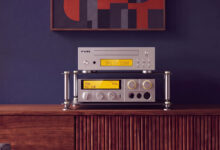
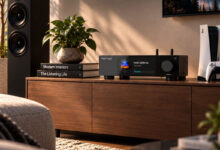
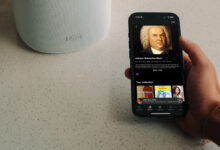
Its appeal is not merely convenience. The DSAS is interesting because it treats convenience and sonic seriousness as parts of the same argument. Métronome Technologie supplies the hardware platform, enclosure, storage architecture, power supply thinking and digital output stage. Audirvāna SAS provides the playback environment, library management, streaming integration, control app and extensive audio-processing options.
The result is a source component that behaves with unusual discretion in daily use, yet makes a strong case for how carefully designed digital playback can influence the quality and confidence of a High-end system.
Key Facts
- Product: Métronome DSAS Digital Sharing Audio Server
- Manufacturer: Métronome Technologie
- Concept: Music Server and digital transport with integrated Audirvāna platform
- Software: Audirvāna Studio including 3-year licence, plus Audirvāna Origin as an offline solution
- Storage: 2 TByte internal SSD, expandable to 4 TByte
- Control: Audirvāna Remote App for Apple iOS and Google Android
- System access: Web interface for initial setup, network, storage, updates and diagnostics
- File transfer: SAMBA network share for PC and Mac
- Digital output: USB to external DAC, plus UPnP/DLNA and Chromecast
- Resolution: Linear PCM up to 32 Bit and 384 kHz, DSD up to DSD512
- Streaming: Qobuz, TIDAL, Highresaudio, Presto Music, Internet Radio and Podcasts
- Network: Ethernet and WiFi Dual Band with 2,4 GHz and 5 GHz
- Special feature: turnkey High-end server solution without computer operation in everyday use
Why the Métronome DSAS Music Server matters
The market for digital sources has become crowded. There are streamers, servers, network bridges, Roon Cores, NAS systems, optimised computers, USB transports and numerous All-in-One devices. Many of them are capable, and some are excellent. Yet many still ask the listener to accept a certain amount of IT involvement as the price of modern digital replay.
The Métronome DSAS Music Server takes a more traditional HiFi stance. It uses modern computer and network technology in the background, but it presents itself as a source component. That distinction matters. A listener should not have to feel like a system administrator simply because he or she wants to play a local DSD file, access Qobuz, assemble a playlist or send a properly managed USB signal to a DAC.
This is where the DSAS finds its purpose. It does not pretend the technical layer does not exist. Music storage, network recognition, app control, database indexing, streaming credentials, USB output configuration, backups and software updates all remain part of digital playback. What the DSAS does well is to contain these elements inside a controlled, readable structure. The user sees enough to remain in command, but not so much that the listening room becomes an office.
That makes the Métronome DSAS Music Server especially relevant for listeners who want the benefits of advanced digital playback without turning computer audio into a second hobby.


Métronome Technologie and Audirvāna SAS – two French specialists, one system
Métronome Technologie has long occupied a particular place in digital High-end audio. Its products tend not to shout. They are usually built around a clear idea: digital playback should be mechanically sound, electrically considered and sonically self-assured. Audirvāna SAS, for its part, has become one of the more serious names in audiophile playback software, valued not simply for library management but for the way it structures the digital audio path.
The Métronome DSAS Music Server brings these two approaches together in a more fundamental way than a simple software bundle. This is not merely a generic server that happens to run Audirvāna, nor is it an ordinary appliance dressed up with an audiophile logo. It is conceived as a complete system in which hardware and software have a defined relationship.
That matters because a music server may sound like a plain category on paper. It stores data, serves music, stays online and keeps quiet. In practice, however, digital playback is influenced by processing load, storage access, network behaviour, USB implementation, electrical noise, power supply quality, software pipeline and output configuration. A server that looks simple from the sofa may have to be rather carefully judged inside the box.
The DSAS therefore feels less like a convenience product and more like an attempt to discipline the digital front end.
Design and build
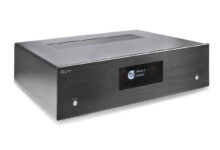
The Métronome DSAS Music Server follows the visual language of the Métronome Digital Sharing Range. It is compact, cleanly proportioned and deliberately restrained. The front panel, the Audirvāna accent and the discreet Métronome signature give it its own identity without turning it into an object that demands attention.
At 250 x 70 x 250 mm, it is far easier to accommodate than a conventional full-width component. At 4,8 kg, however, it does not feel like computer paraphernalia. It feels like a small but serious HiFi component, which is precisely the right impression for this product.
The device itself is not intended to be heavily operated from the front panel. That is a virtue, not a limitation. A server of this type should not try to become a computer with a display. Library navigation, search, playlists and streaming belong on a phone or tablet. System configuration belongs in a browser interface. The equipment rack should remain calm.
Hardware and architecture – a dedicated platform, not a general-purpose computer
Inside the Métronome DSAS Digital Sharing Audio Server is a Linux-based platform designed as the dedicated host for Audirvāna Studio. The important point is not the Linux label itself, but the fact that the platform is not presented as an open-ended computer. It is built for music playback, storage access, network operation and digital audio output.
A 2 TByte PCIe Gen 4 NVMe SSD is installed as standard. This drive does more than store music. It also holds the Audirvāna database, library indexes, local playlists, favourites, system cache and temporary files. It is therefore part of the operational core of the DSAS and should not be casually removed or replaced.
Expansion is possible via a second M.2 NVMe slot accepting standard M.2 2280 NVMe SSDs. Métronome Technologie specifies officially tested drives up to 2 TByte for this slot, allowing internal storage capacity of up to 4 TByte.
External storage can also be connected via USB-A 3.0 and USB-C 3.0. These drives are mounted in read-only mode by default, a sensible choice for stability and data safety. The DSAS can access their contents or copy music to internal storage without modifying the external drive itself. NAS shares can also be added to the library via Audirvāna Remote. As a result, internal SSD storage, optional expansion, USB media, NAS libraries and streaming services can be gathered into a single music interface.
For digital audio output, Métronome Technologie makes a clear choice. The DSAS focuses on USB output to an external DAC. It supports Linear PCM up to 32 Bit and 384 kHz and DSD up to DSD512. Compatible network renderers can be addressed via UPnP/DLNA, and Chromecast is also available. For the classic High-end system built around a dedicated DAC, however, USB is the central route.
This absence of numerous alternative digital outputs is not an oversight. It is part of the product’s discipline. The DSAS is not trying to be an all-purpose digital switching hub. It is a music server and digital transport with a clearly defined job.
Audirvāna as the decisive layer
There is always a difficult question around music servers: can a server itself have a sound? If the idealised task is simply to deliver data to a DAC, the answer may appear obvious. But that view becomes too narrow when the software does more than catalogue files and pass packets along.
In the Métronome DSAS Music Server, Audirvāna is not just the interface. It is the playback engine, library manager, streaming gateway, control environment, output configuration layer and, if desired, a set of tools for serious sonic adjustment.
Even before one touches any DSP functions, the priorities are clear: stable playback, careful memory handling, controlled buffering, clean signal routing and the avoidance of unnecessary system intervention. These are not cosmetic details in a digital source.
Audirvāna also gives the DSAS considerable depth. Upsampling via SoX or R8brain, a 10-band parametric EQ, convolution, Crossfeed, Balance, Audio Scan, Folder View, mixed playlists combining local and streaming content, Internet Radio, Podcasts and support for Qobuz, TIDAL, Highresaudio and Presto Music make this a very complete music platform.
The point is not that the DSAS sounds convincing because a server somehow has a magical sonic signature. It convinces because Métronome Technologie supplies a controlled hardware platform and Audirvāna provides a playback environment that treats the digital signal path with seriousness.
Everyday handling – High-end server operation without computer stress
The most important practical question is not how much computer technology sits inside the Métronome DSAS Digital Sharing Audio Server. It is how little of it the listener has to deal with. Here the DSAS separates itself from many music servers, Mini PCs and NAS-based self-build arrangements. In the listening room, it behaves like a specialised HiFi component rather than a computer that has been persuaded to play music.
Setup via Ethernet
Initial setup is most straightforward via Ethernet. The Métronome DSAS Digital Sharing Audio Server is connected to a router or switch, powered on and allowed to establish its network connection. DHCP handles the connection automatically, and Ethernet always takes priority over WiFi.
This is also the preferred method for serious use. A wired Gigabit connection offers greater bandwidth, lower latency and superior stability, especially when working with large music libraries or Hi-res Audio streaming.
Setup via WiFi
If Ethernet is not used, the DSAS can be configured via WiFi. The WiFi antenna must first be fitted at the rear. If the server does not find a known network during startup, it creates a temporary access point named DSAS_XXXX. A smartphone, tablet or computer can connect to this network, after which the address dsas.local is opened in a browser. The desired home network and password are then selected. The DSAS closes the temporary connection and joins the configured WiFi network.
The status indicator on the front panel shows whether the server is still searching or already connected. Particularly sensible is the way Ethernet and WiFi are not treated as mutually exclusive. A user can run the DSAS normally via Ethernet while keeping WiFi configured as a fallback. If the wired connection disappears, the server can switch to WiFi. In daily use, that is a small but worthwhile safeguard.
Web interface for system matters
System configuration is handled through an integrated web interface, available on the local network via dsas.local. WiFi settings, storage status, Audirvāna status, updates, system information and diagnostics can all be checked there.
This is not the music interface, and it should not be. It is the administrative layer. Daily listening is handled by Audirvāna Remote. That separation is one of the reasons the DSAS feels so orderly.
Connection with Audirvāna Remote
Once the network setup is complete, the DSAS is paired with Audirvāna Remote. The app for Apple iOS and Google Android detects the Métronome DSAS Digital Sharing Audio Server automatically on the local network.
At first launch, the user connects an Audirvāna account or creates a new one, then activates the included 3-year Audirvāna Studio licence. Once this is done, Audirvāna Remote becomes the main interface for playback, library browsing, streaming, playlists and favourites.
Copying music to the DSAS
Loading music onto the internal storage is handled sensibly. The Métronome DSAS Digital Sharing Audio Server provides a SAMBA network share. On a PC, Windows Explorer is used to connect to \dsas or to the unit’s IP address. On a Mac, Finder’s “Connect to Server” function is used with smb://dsas or smb:// followed by the IP address. The username and password are both “dsas”.
The available storage areas then appear, such as disk1 for the main internal storage, disk2 for an optional additional drive, and usb0 or usb1 for attached USB media.
From there, copying music is as simple as moving folders or files to a network drive. For regular library updates, this is entirely adequate. For very large collections, a wired Gigabit connection and staged transfers are advisable. For initial population of a large library, it may also be practical to prepare a USB drive, connect it to the DSAS and copy the content internally via the SAMBA interface to disk1 or disk2.
Playlists, favourites and library management
Once music is on the server, Audirvāna takes over. Local files, optional NAS shares, USB media and streaming services are brought together inside the Audirvāna environment. Playlists and favourites can be created and managed directly in Audirvāna Remote.
The ability to create mixed playlists from local files and streaming content is especially valuable. The listener is not forced to move between apps, devices or separate libraries. This is where the DSAS stops feeling like a server and starts feeling like a proper music centre.
Backups for settings and playlists
Data safety should not be treated casually. The primary drive of the Métronome DSAS Digital Sharing Audio Server stores not only music, but also the Audirvāna database, library indexes, local playlists, favourites and settings.
Audirvāna includes a backup function for manually saving playlists and favourites. In Audirvāna Remote, this is found in the settings under the local section, where Backup and Restore are available. The resulting backup file should then be copied to a computer or external storage medium.
Data backup is a duty, not an optional extra
More important still is the music library itself. The DSAS is a server, but it is not an automatic backup system. Anyone storing music on disk1 or disk2 should therefore establish a separate backup routine. This can be done manually by copying music folders to an external drive or NAS, but it should be planned and repeated.
For large libraries built over many years, this is essential. Convenient playback does not replace a backup strategy. The DSAS makes copying over network shares simple enough that regular backups do not require specialist knowledge. That is all the more reason to do them properly.
In use – why the DSAS works so well
In daily operation, the Métronome DSAS Music Server quickly stops feeling like a device under test. It becomes part of the system. It starts reliably, remains visible on the network, responds cleanly through Audirvāna Remote and handles both local files and streaming content without creating the sense of an experimental setup.
That is a considerable compliment. Many digital components demand attention through app irritations, recognition delays, network uncertainty or configuration quirks. The DSAS did not. The combination of Métronome Technologie hardware and Audirvāna SAS software feels mature, integrated and unusually composed.
Its strongest practical quality is the balance between simplicity and depth. A listener who simply wants to play music need not spend time in menus. A more experienced user, however, will find ample control inside Audirvāna. This dual character is central to the DSAS. It does not patronise the expert, but it does not punish the newcomer either.
In a serious system, that matters. The better the system, the less one wants to be distracted by technology. The DSAS brings digital music into the system with a degree of calm and assurance that quickly becomes difficult to give up.
Test system
The Métronome DSAS Music Server was used in a deliberately high-quality yet realistic HiFi chain. Amplification was handled by the Technics SU-R1000 Stereo Integrated Amplifier, a unit with sufficient precision, control and transparency to make meaningful judgements about digital source quality. Loudspeakers were Sonus faber Amati futura, whose cultivated tonal balance and fine resolution make them well suited to exposing changes in source performance.
The Métronome DSAS Digital Sharing Audio Server acted as the central digital source. Initial installation and system configuration were carried out via the integrated browser-based web interface, while daily playback and library management were handled through Audirvāna Remote on an Apple iPhone Pro 14. This is exactly the usage model for which the DSAS is designed: system matters remain in the background, while listening is controlled through a mobile device.
Signal cabling came from Wireworld Series 10 interconnects, with Wireworld Series 10 speaker cables used for the loudspeakers. A KECES IQRP-1500 Isolated Quantum Resonance Power Conditioner supplied the system.
Sound in the test
The question of the sound of the Métronome DSAS Music Server is particularly interesting because it cannot be answered according to a classic template. A Music Server is not an amplifier, not a DAC, not a loudspeaker. Nevertheless, the influence of this solution was clearly traceable in the test, less as a tonal signature in the narrow sense, but rather as a gain in order, calm, contour and musical coherence.
The DSAS did not play spectacularly in a superficial sense. It did not make the music bigger, brighter, warmer or artificially more analytical. Its strength lay in organising the musical flow with exceptional cleanliness. Voices stood more stably in the room, transients seemed freer from digital hardness, bass lines were more clearly structured, and fine reverb information emerged more naturally. At the same time, the reproduction remained rhythmically lively and emotionally immediate.
It was above all this combination of precision and natural ease that impressed in the test. The Métronome DSAS Music Server does not sound like an IT solution. It sounds like a high-quality digital source that supplies the DAC with a signal with which it can work excellently. Audirvāna plays an audibly central role here, because playback seemed not only stable and clean, but also musically extraordinarily coherent.
Zaz – On ira
“On ira” by Zaz is a wonderful test for timing, voice and playing enjoyment. The song lives from its springy movement, the slightly rough timbre of the voice and a production that can quickly sound flat if the digital source does not structure it cleanly. Via the Métronome DSAS Music Server, the song remained open, buoyant and rhythmically precise. The voice stood clearly in front of the band without being artificially detached. The accompaniment sounded lively, but never restless. Exactly this natural ease suited the character of the piece superbly.
Zucchero – Un soffio caldo
With Zucchero, the DSAS showed its ability to preserve warmth and control at the same time. “Un soffio caldo” needs a source that does not thin out the sonorous character of the voice, yet also prevents the song from dissolving into soft comfort. The Métronome DSAS Music Server delivered a very fine balance here. The voice had body, the accompaniment remained transparent, and the spatial layering seemed credible. The small dynamic shifts in the arrangement came across particularly convincingly.
Willie Nelson – Last Man Standing
Willie Nelson’s “Last Man Standing” is not an audiophile gloss track, but that is precisely what makes it interesting. The recording lives from character, timing and voice. Via the DSAS, Willie Nelson sounded present, dry, direct and wonderfully human. The guitar had bite without becoming sharp, the rhythm came across relaxed and precise. The server did not place any beautifying veil over the recording, but left its aged wisdom, humour and directness intact.
Van Morrison – Pay the Devil
With Van Morrison, it is about groove, voice and a certain earthy authority. “Pay the Devil” came through the Métronome DSAS Music Server with plenty of body and very good overview. The band sounded cohesive, the rhythm had drive, and Morrison’s voice stood in the room with the right mixture of roughness and sovereignty. What was striking was how stable the reproduction remained even when arrangement and voice moved closer together. The DSAS preserved order without dissecting the music.
Us3 – Cantaloop
“Cantaloop” by Us3 is an ideal test for timing, bass control and the clean interlocking of samples, groove and rap. The Métronome DSAS Music Server showed impressive rhythmic precision here. The bass came across contoured, not bloated, the brass samples had shine and attack, and the beats sat exactly. At the same time, the piece remained laid-back. That is crucial: with music like this, precision must not tip into stiffness. The DSAS achieved this balance superbly.
Tori Amos – Winter (Gold Dust Album)
With “Winter” in the version from the Gold Dust Album, an entirely different quality came to the fore: space, piano, voice, strings, emotional tension. The Métronome DSAS Music Server opened up the recording very finely without enlarging it excessively. Tori Amos’ voice seemed close, but not exaggerated, the piano had attack, body and decay, and the orchestral elements integrated organically. Especially beautiful was the calm between the notes. Here the DSAS conveyed not only details, but relationships.
Thorbjørn Risager – Come on In
Blues, soul, pressure and playing enjoyment: “Come on In” needs energy. The Métronome DSAS Music Server delivered it emphatically, but without coarseness. The guitar had grit, the voice presence, the rhythm stood stable. The reproduction sounded physical, but not ponderous. With music of this kind in particular, it became clear that the DSAS is not only suitable for finely chiselled audiophile fare, but also convinces when music demands grip, drive and grounding.
The Highwomen – Highwomen
“Highwomen” lives from voices, harmony and the special tension between intimacy and grand narrative. The Métronome DSAS Music Server worked out the individual voices clearly without pulling the ensemble apart. That was strong. The recording gained readability, yet remained emotionally cohesive. One could follow the individual character of the voices and at the same time experience the shared dramaturgy of the piece. This was precisely where the fine order that the DSAS brings to playback became apparent.
Alan Parsons – Eye in the Sky
“Eye in the Sky” is a classic test for soundstage, arrangement and production culture. Via the DSAS, the recording appeared cleanly fanned out, with a stable centre and very good definition in the accompaniment. The voice stood freely, guitars and synthesisers had space, and the bass remained controlled. Particularly convincing was the fact that the Métronome DSAS Music Server did not make the polished production sound sterile. The recording sounded precise, but not museum-like. It had shine, flow and a very pleasant coherence.
Midge Ure – Breathe
“Breathe” by Midge Ure is a piece that depends strongly on atmosphere and vocal presence. Here the DSAS showed an exceptionally fine ability to convey calm. The music built organically, the voice seemed sculptural, and the space remained traceable. Nothing pushed itself forward, nothing was covered up. This controlled composure is one of the great qualities of the Métronome DSAS Music Server. It can let music breathe without losing tension.
Yo-Yo Ma – The Good, The Bad And The Ugly: Ecstasy Of Gold
With Yo-Yo Ma and “The Ecstasy Of Gold”, it quickly becomes clear whether a digital source merely claims scale or can truly portray it. The Métronome DSAS Music Server showed an impressive combination of dynamics, space and tonal finesse here. The cello had substance, the orchestral dramaturgy opened out widely, the crescendos sounded powerful but controlled. The DSAS remained sovereign even in the grand moments. No hardness, no disorder, no collapse of the stage. This was cinematic in the best sense, but without any showmanship.
Audirvāna and the option to shape the sound
One of the more interesting aspects of the DSAS is the point at which one stops considering it as a pure source and starts considering Audirvāna as an active part of the sonic toolset. In its basic mode, the goal is clean, well-organised, bit-accurate playback. But Audirvāna can go much further.
High-quality upsampling allows the user to adapt the output to the connected DAC and to personal preference. Depending on the system, this may influence treble smoothness, flow, spatial definition or tonal balance. The 10-band parametric EQ allows targeted correction, whether for room effects or preference-based adjustment. Convolution goes further still, making more complex filtering possible. Crossfeed can be useful with headphones, while Balance helps with asymmetrical systems or acoustic conditions.
The important point is that none of this is mandatory. The Métronome DSAS Music Server performs at a high level without intervention. But for listeners who know Audirvāna or wish to explore careful system tuning, the DSAS offers a level of flexibility that many streamers simply do not.
It therefore speaks to two audiences at once: the listener who wants digital playback to be simple and excellent, and the experienced user who wants control, adjustment and library depth without building a computer-audio system from scratch.
From practice – strengths and weaknesses
The greatest strength of the Métronome DSAS Music Server is its coherence. It does not feel like third-party software placed on arbitrary hardware. It feels like a finished High-end product. From setup to daily operation and sonic performance, there is no obvious break in the concept.
Its simplicity is equally important. Anyone who has avoided music servers because of NAS setup, network configuration and software installation will find the DSAS much closer to classic HiFi thinking. Set it up, choose music, listen.
Audirvāna is the second major asset. It makes the DSAS not only more comfortable, but functionally and sonically more interesting. Library, streaming, local music, Internet Radio, Podcasts, playlists, upsampling and advanced audio features all sit inside one environment. It is powerful without feeling forbidding.
The limitations are mostly conceptual. The Métronome DSAS Music Server has no integrated DAC, no analogue outputs, no front-panel display operation, no CD-ripping function and no wide range of conventional digital outputs such as S/PDIF optical, S/PDIF coaxial or I2S. Yet these omissions are part of the discipline of the product. The DSAS aims to be an excellent server and transport, not a Swiss Army knife.
Listeners looking for a heavily integrated All-in-One solution will need to plan differently. Those who already own a high-quality DAC, or intend to build around one, are more likely to appreciate the DSAS precisely because of its focus.
All advantages at a glance
- Exceptionally simple setup and operation
- Turnkey High-end solution without computer operation in everyday use
- Perfect combination of Métronome hardware and Audirvāna software
- Very high sound quality with striking calm, order and musicality
- Audirvāna Studio including 3-year licence
- Audirvāna Origin additionally included (“lifetime” licence)
- 2 TByte internal SSD storage
- Expandable to 4 TByte
- USB output with Linear PCM up to 32 Bit and 384 kHz as well as DSD up to DSD512
- UPnP/DLNA and Google Cast for flexible network playback
- Integration of Qobuz, TIDAL, Highresaudio, Presto Music, Internet Radio and Podcasts
- Powerful library management including Folder View, Playlists and Favourites
- Sound adjustment options via upsampling, parametric EQ, Convolution, Crossfeed and Balance
- Web interface for system configuration, storage management, updates and diagnostics
- SAMBA network share for simple file transfer from PC and Mac
- Compact, high-quality enclosure in the style of the Métronome Digital Sharing Range
- Very stable, practical app control via Apple iOS and Google Android
Who is the Métronome DSAS Music Server ideal for?
The Métronome DSAS Music Server is ideal for music lovers who want to use digital playback at a very high level, but have no appetite for classic computer-audio tinkering. It is aimed at users who want to bring local music libraries and streaming services together in a high-quality, stable and comfortable solution.
It is particularly interesting for owners of high-quality DACs. Anyone who already owns a very good D/A converter receives, with the DSAS, a source that supplies this DAC with a cleanly prepared digital signal while also offering a modern software environment.
The DSAS is equally compelling for listeners who already know and appreciate Audirvāna, but no longer want to run a computer in the listening room for it. The Métronome DSAS Music Server turns Audirvāna into an audiophile appliance, a specialised device that feels like HiFi rather than IT.
FAQ on the Métronome DSAS Music Server
What is the Métronome DSAS Music Server?
The Métronome DSAS Music Server is a High-end Music Server from Métronome Technologie that brings together local music files, streaming services and Audirvāna Studio in a turnkey solution. It serves as a digital source for external DACs and is controlled via the Audirvāna Remote App.
Does the Métronome DSAS Music Server require an external DAC?
Yes, the Métronome DSAS Music Server is designed as a digital transport and Music Server. It does not have an integrated D/A converter and is preferably connected to an external DAC via USB.
What role does Audirvāna play in the Métronome DSAS Music Server?
Audirvāna is the central software platform of the Métronome DSAS Music Server. It handles library management, streaming integration, playback engine, app control and, if desired, sound-related functions such as upsampling, EQ, Convolution, Crossfeed and Balance.
How is the Métronome DSAS Music Server set up?
Setup is carried out either via Ethernet or WiFi. A web interface in the local network is available for basic system configuration. Daily music playback and library management are then handled via Audirvāna Remote.
How are music files copied to the Métronome DSAS Music Server?
The Métronome DSAS Music Server provides SAMBA network shares. On a PC or Mac, music folders can therefore be copied as if to a network drive. Optionally, large amounts of data can also be transferred to the internal storage via connected USB drives.
Can playlists and favourites be backed up?
Yes, Audirvāna offers a backup function for playlists and favourites. These backups should be created regularly and additionally stored on an external drive or computer.
Do the music files also need to be backed up separately?
Yes, absolutely. The DSAS does not replace an independent backup strategy. Anyone storing their music library on the internal storage of the DSAS should regularly plan manual data backups to external drives or a NAS.
Which streaming services does the Métronome DSAS Music Server support?
Via Audirvāna, the Métronome DSAS Music Server supports, among others, Qobuz, TIDAL, Highresaudio and Presto Music. Internet Radio and Podcasts are also available.
Which resolutions does the Métronome DSAS Music Server support?
The Métronome DSAS Music Server supports Linear PCM up to 32 Bit and 384 kHz as well as DSD up to DSD512 via USB. Actual playback also depends on the DAC used.
Can the Métronome DSAS Music Server also be used via UPnP/DLNA?
Yes, the Métronome DSAS Music Server can address compatible UPnP/DLNA renderers in the network. Chromecast is also supported. For the best possible direct connection to a high-quality DAC, however, USB is recommended.
How is the Métronome DSAS Music Server operated?
Operation is via the Audirvāna Remote App for Apple iOS and Google Android. A screen, keyboard or mouse is not required in everyday use.
How much storage does the Métronome DSAS Music Server offer?
As standard, the Métronome DSAS Music Server offers 2 TByte of internal SSD storage. Via an additional M.2 NVMe slot, storage capacity can be expanded to 4 TByte.
Can the Métronome DSAS Music Server rip CDs?
No, the Métronome DSAS Music Server is not designed as a CD ripper. CDs should be ripped on a computer using suitable software and then transferred to the DSAS.
Who is the Métronome DSAS Music Server particularly suitable for?
The Métronome DSAS Music Server is particularly suitable for music lovers with a high-quality DAC who are looking for a sonically excellent, stable and easy-to-use server solution. It is ideal for users who want to use Audirvāna without having to operate a computer in the listening room.
Price and availability
The Métronome DSAS Music Server is offered through specialist retailers at a recommended retail price of € 5.990,-. Given the combination of dedicated hardware, integrated Audirvāna platform, 2 TByte internal storage, expansion capability, 3 years of Audirvāna Studio and a notably coherent operating concept, the price is firmly High-end, but understandable.
This is not a replacement for a basic NAS and a budget streaming bridge. It is a complete server and software solution designed for serious systems.
Conclusion
The Métronome DSAS Music Server is one of the most convincing digital source components we have encountered in this category. Not because it tries to impress with a long list of scattered features, but because it solves a difficult problem with unusual clarity: it brings modern music-server technology, local libraries, streaming services and an audiophile playback engine into a form that can be used without turning the listening room into a computer workstation.
The cooperation between Métronome Technologie and Audirvāna SAS is not decorative. It is the core of the product. Métronome Technologie provides the calm, well-integrated hardware platform. Audirvāna SAS supplies the powerful and sonically serious software environment. Together, they produce a music server that feels almost disarmingly simple in use, yet demonstrates how much care still matters in digital replay.
Sonically, the Métronome DSAS Music Server impressed with quiet authority, precision, spatial stability, control and a musical ease that never felt technically forced. What is particularly persuasive is that this quality is not bought at the expense of comfort. Quite the opposite: the DSAS makes High-end streaming and local music playback easier, not more complicated.
For listeners with a serious external DAC, for committed Audirvāna users, and for anyone who wants digital music replay at a high level without the irritations of computer audio, the Métronome DSAS Music Server deserves close attention.
| Product | Métronome DSAS Digital Sharing Audio Server |
|---|---|
| Price | € 5.990,- |
Technical specifications
| Product | Métronome DSAS Digital Sharing Audio Server |
|---|---|
| Manufacturer | Métronome Technologie |
| Characterisation | High-end Music Server and digital transport |
| Series | Métronome Digital Sharing Range |
| Software platform | Audirvāna Studio, Audirvāna Origin |
| Licence scope | Audirvāna Studio for 3 years, Audirvāna Origin permanently |
| Operating system | Linux-based platform |
| Control | Audirvāna Remote App for Apple iOS and Google Android |
| System access | Web interface via browser |
| File transfer | SAMBA network share for PC and Mac |
| Internal storage | 2 TByte SSD |
| Storage expansion | 1 x M.2 NVMe SSD slot |
| Maximum internal storage capacity | up to 4 TByte |
| External storage | USB-A 3.0, USB-C 3.0 |
| Network | Ethernet 10/100/1000 Mbit, WiFi Dual Band 2,4 GHz and 5 GHz |
| Digital output | USB to external DAC |
| Network output | UPnP/DLNA, Google Cast |
| Supported USB resolution | Linear PCM up to 32 Bit and 384 kHz, DSD up to DSD512 |
| Supported UPnP/DLNA resolution | Linear PCM up to 32 Bit and 384 kHz, DSD up to DSD512, depending on renderer |
| Streaming services | Qobuz, TIDAL, HIGHRESAUDIO, Presto Music |
| Further services | Internet Radio, Podcasts |
| Audirvāna functions | Library management, Folder View, Playlists, Favourites, online metadata, Audio Scan |
| Sound functions | Upsampling with SoX and R8brain, 10-band parametric EQ, Convolution, Crossfeed, Balance |
| Power consumption | 21 W |
| Operating temperature | +5 °C to +35 °C |
| Operating humidity | 5 % to 90 % |
| Dimensions | 250 x 70 x 250 mm |
| Weight | 4,8 kg |

The Métronome DSAS Music Server is an exceptionally successful combination of high-end hardware and Audirvāna software. It delivers top-notch sound quality, is surprisingly easy to use, and is currently one of the most compelling music servers on the market.
Positive
- Outstanding sound quality
- Extremely easy setup
- Very convenient operation via Audirvāna Remote
- Web interface for system configuration and maintenance
- SAMBA network sharing for easy file transfer
- Audirvāna Studio included for 3 years
- Audirvāna Origin also included
- UPnP/DLNA and Google Cast
- Integration of major hi-res audio streaming services
- Excellent library management
- Fine sound adjustments possible via Audirvāna
- Compact, high-quality housing
- Turnkey solution without computer operation in everyday use
Negative
- No CD ripping function
- No audio data backup function
Test Environment
- Technics SU-R1000 Stereo Integrated Amplifier
- Sonus faber Amati futura
- Apple iPhone Pro 14 with Audirvāna Remote App
- Wireworld Series 10 signal cable
- Wireworld Series 10 speaker cable
- KECES IQRP-1500 Isolated Quantum Resonance Power Conditioner
| Brand | Métronome Technologie |
|---|---|
| Manufacturer | Métronome Technologie |
| Distribution Austria | Audio Exclusive GmbH |
| Distribution Germany | H.E.A.R. GmbH |
| Distribution Switzerland | Portier Hi-Fi |
| More about this manufacturer at HiFi BLOG |
Conclusion
Sound
Design
Handling
Price/Performance
Reference
Métronome Technologie and Audirvāna SAS demonstrate with the Métronome DSAS Music Server what modern digital music playback in the high-end HiFi environment should look like: uncompromisingly high quality, enormously flexible, sonically excellent and completely uncomplicated in everyday use.