

Shanling SM50 HiFi Music Streamer – Compact Network Player with ESS DAC, TIDAL Connect, Qobuz Connect and Headphone Amplifier
The Shanling SM50 HiFi Music Streamer is a Linux-based network player built around an ESS Sabre ES9039Q2M DAC, with TIDAL Connect, Qobuz Connect and Roon Ready support. Balanced XLR and RCA outputs, a 4,4 mm Pentaconn headphone socket and a 4.5-inch touchscreen sit in an aluminium-and-glass case barely wider than a sheet of A5 paper. We look at how much a single compact box can reasonably be asked to do, and where the trade-offs lie.

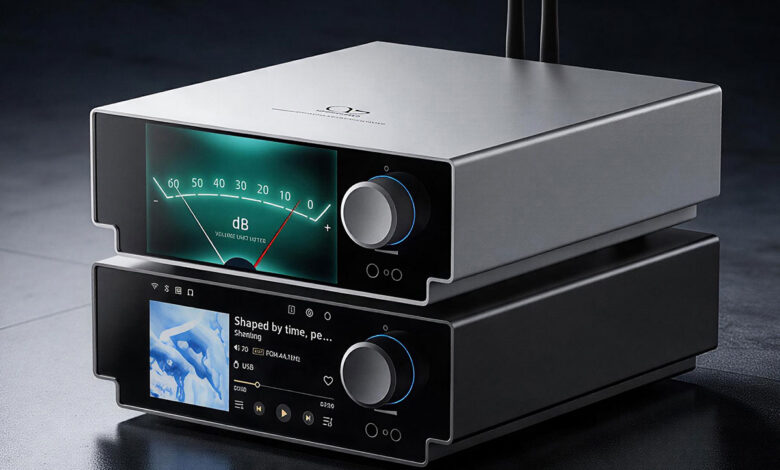
- The Shanling SM50 HiFi Music Streamer is a compact Linux-based network player that packs an ESS Sabre ES9039Q2M DAC, switchable line-out and pre-out modes on RCA and XLR, and a headphone amplifier delivering up to 700 mW into 32 ohms from its balanced output. With TIDAL Connect, Qobuz Connect, Roon Ready, Apple AirPlay 2 and Bluetooth 5.2 on board, it is already shipping to international distributors and carries a recommended price of € 559,- in Europe.
Shenzhen Shanling Digital Technology Development Co. Ltd. has added another streaming product to its catalogue, and this one is defined by three things: its dimensions, its breadth of features and its price. The new Shanling SM50 HiFi Music Streamer is intended to work either as the digital source in a conventional hi-fi chain or as the hub of a compact desktop audio setup. It is the latest addition to Shanling’s Desktop Line.

It is not one headline specification that stands out here, but the sheer amount the company has fitted into a case just 20,5 cm wide. Network streaming, a quality DAC, analogue outputs including balanced XLR, digital interfaces and a dedicated headphone amplifier are all present. In many systems, that means fewer separate boxes.





Key Facts: Shanling SM50 HiFi Music Streamer
- Compact network player with built-in DAC, preamplifier and headphone amplifier
- Lean, Linux-based streaming system
- ESS Sabre ES9039Q2M DAC
- TIDAL Connect, Qobuz Connect and Roon Ready
- Apple AirPlay 2, DLNA, Squeezelite and NAS support
- Local playback from USB storage devices
- 4.5-inch Full HD touchscreen
- Analogue RCA and balanced XLR outputs
- Headphone outputs: 3,5 mm stereo mini-jack and 4,4 mm Pentaconn
- Up to 700 mW output into 32 ohms from the balanced headphone output
- Bluetooth 5.2 with LDAC and aptX HD
- LAN and dual-band WiFi
- Controlled via the Shanling Eddict Controller app
- Aluminium chassis with glass elements
Starting at the back: how the SM50 connects to a system
The SM50’s usefulness is easiest to judge from its outputs. Digital-to-analogue conversion is handled by an ESS Sabre ES9039Q2M, which Shanling says is responsible for translating high-resolution audio data accurately. Two separate crystal oscillators, running at 90 MHz and 98 MHz, form part of the clocking design and are meant to give the digital stages a steady timing reference.
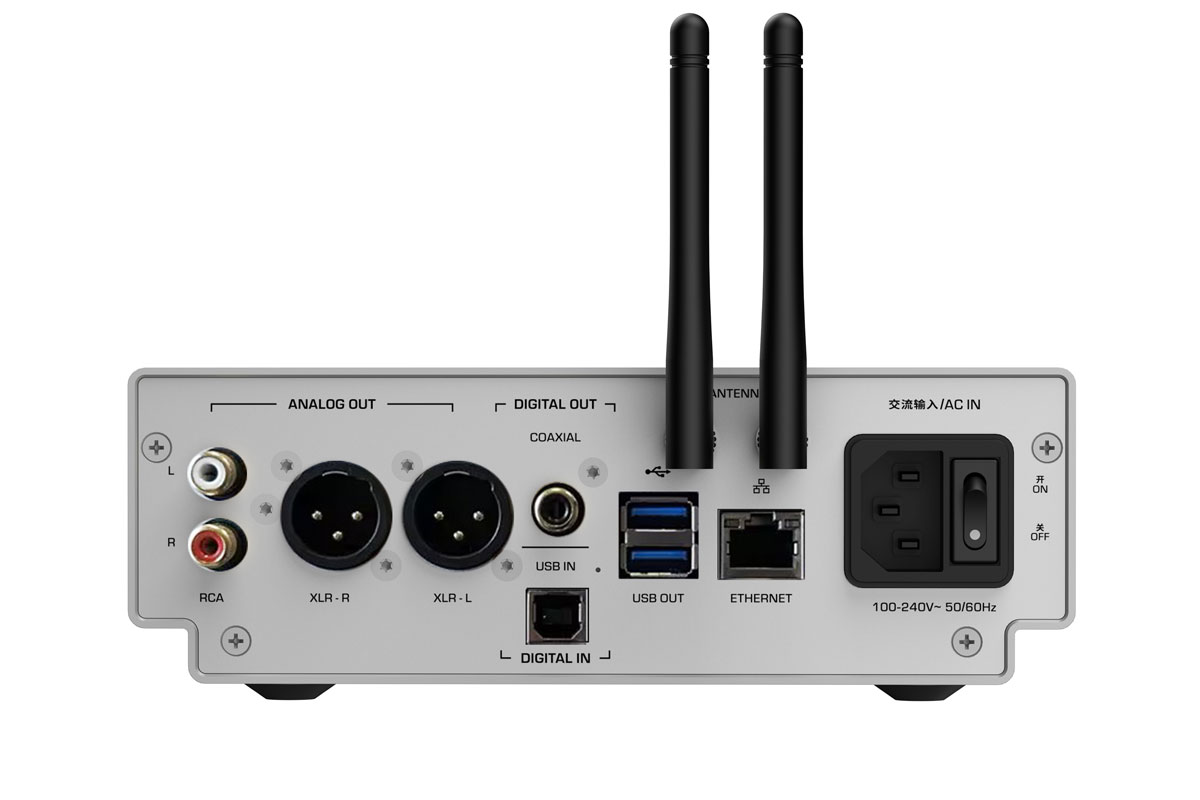
On the analogue side, the player offers unbalanced RCA sockets and balanced XLR connections. Either pair can be set to line-out, with a fixed output level, or to pre-out, with variable volume control. That choice matters in practice. In the first mode, the SM50 feeds a conventional integrated amplifier. In the second, it can drive a power amplifier or a pair of active loudspeakers directly and take over the preamplifier’s duties in the process.
Digital outputs are covered too. A coaxial S/PDIF output and a USB audio output pass the signal on to an external DAC, should you prefer to use one. The route also runs the other way: a dedicated USB DAC mode lets the SM50’s converter serve a computer, provided the two are linked over USB.
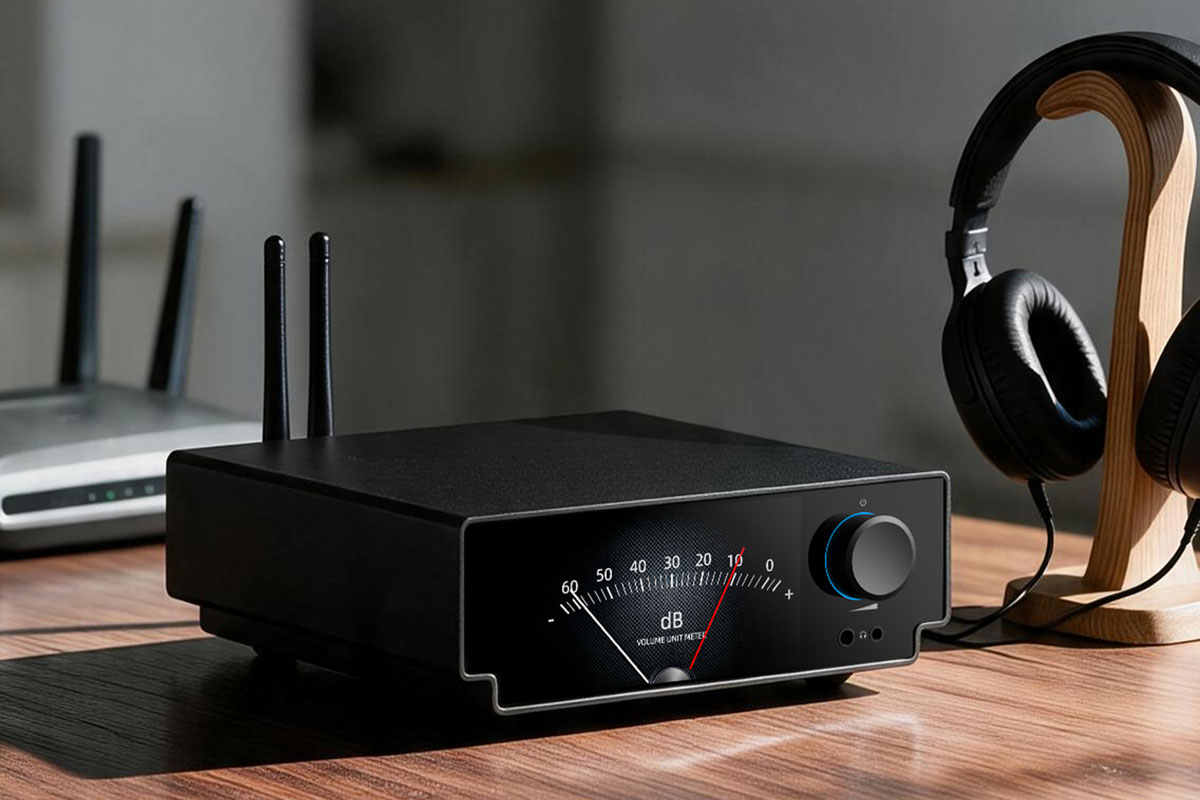
A headphone amplifier on the front panel
The front of the case carries two headphone sockets, a standard 3,5 mm stereo mini-jack and a balanced 4.4 mm Pentaconn. Shanling quotes up to 700 mW into 32 ohms from the balanced output and 182 mW into 32 ohms from the unbalanced one. Two selectable gain settings allow the amplifier to be matched to different headphones.
For listeners who split their time between loudspeakers and headphones, this is a sensible arrangement. The SM50 can act as the single, compact source for both, and wired headphones do not call for an additional amplifier.
Why Linux rather than Android
Shanling’s other network players run on an adapted version of Google’s Android. For the SM50, the company has taken a different route and installed a Linux-based system designed specifically for music playback. According to Shanling, it makes lower demands on resources and responds quickly.
The reasoning is easy to follow. A dedicated network player does not need the full scope of a general-purpose operating system, provided the music services and playback functions people want are available and work reliably. The flip side is a closer dependence on whatever Shanling chooses to build into the platform itself.
Streaming services, protocols and local files
On the streaming side, the SM50 is well equipped. TIDAL Connect and Qobuz Connect let you send music from the services’ own apps straight to the player. You keep the familiar interface of the service, while the SM50 does the actual playback.
The player is also certified as Roon Ready and supports Apple AirPlay 2 and DLNA. Squeezelite is included as well, so the SM50 can be slotted into setups that rely on it. Anyone with a large personal collection can also reach files held on a NAS.
If you would rather play files from a local drive, a USB storage device can be plugged in. The SM50 is therefore not limited to commercial streaming and works equally well with a digital library you have assembled yourself.
Networking and Bluetooth
For connecting to the home network, there is a wired LAN port as well as dual-band WiFi on 2.4 GHz and 5 GHz. Bluetooth 5.2 is also fitted, supporting the LDAC and aptX HD codecs. This allows the SM50 to be used as a Bluetooth receiver for compatible smartphones, tablets and other source devices.
Touchscreen, app and chassis
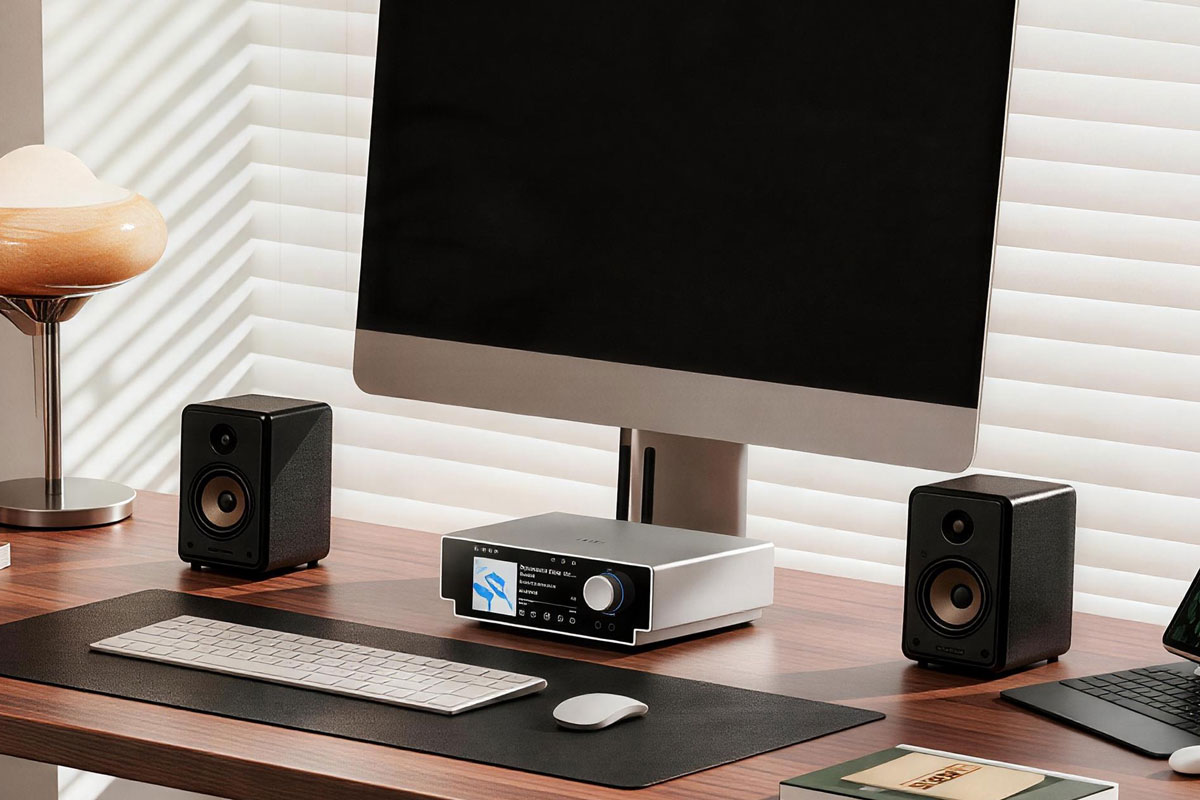
Despite its modest size, the SM50 has a 4.5-inch touchscreen with a resolution of 1.080 × 1.920 pixels. The main functions can be operated at the unit itself, and the screen shows information about what is playing. When you are sitting at a distance, the Shanling Eddict Controller app takes over, putting many of the player’s functions on a smartphone or tablet.
The case is made of aluminium combined with glass elements. At 205 × 188 × 53 mm, it follows the compact form factor of the Shanling 50 Series and takes up little room on a hi-fi rack or a desk.
All benefits at a glance
- Many routes to your music: TIDAL Connect, Qobuz Connect, Roon Ready and Apple AirPlay 2 give you several ways to start playback.
- Quick, uncluttered operation: the specialised Linux platform is intended to keep the interface fast and easy to navigate.
- Serious conversion: an ESS Sabre ES9039Q2M handles the digital audio signal.
- Fits different systems: RCA and XLR outputs, each usable as line-out or pre-out, suit a range of hi-fi configurations.
- No separate headphone amp needed: balanced and unbalanced sockets are built in for direct headphone listening.
- Plenty of connections: USB audio, coaxial S/PDIF, Bluetooth, LAN and WiFi add flexibility.
- Easy handling: a high-resolution touchscreen and the Shanling Eddict Controller app speed up access to music and settings.
- Small footprint: the compact case works in a traditional hi-fi system and on a desktop alike.
Price and availability
Shenzhen Shanling Digital Technology Development Co. Ltd. is already shipping the new Shanling SM50 HiFi Music Streamer to its international distribution partners. The recommended retail price for the European market is € 559,-.
Getting to the point
The Shanling SM50 shows how much a modern network player can offer, even at a comparatively modest price. We find the combination of TIDAL Connect, Qobuz Connect, Roon Ready, balanced outputs and a capable headphone amplifier particularly appealing. Shenzhen Shanling Digital Technology Development Co. Ltd. has opted for a lean Linux platform, a consistent approach whose everyday appeal will, admittedly, depend on how well the software is maintained over the long term. At € 559,-, the SM50 nonetheless looks like a remarkably versatile answer for compact, demanding hi-fi systems.
| Product | Shanling SM50 HiFi Music Streamer |
|---|---|
| Price | € 599,- |
Technical Specifications
| Product | Shanling SM50 HiFi Music Streamer |
|---|---|
| Product type | Network player, DAC, preamplifier, headphone amplifier |
| Operating system | Linux-based streaming platform |
| D/A converter | ESS Sabre ES9039Q2M |
| Clock architecture | Dual crystal oscillators, 90 MHz and 98 MHz |
| Streaming services | TIDAL Connect, Qobuz Connect |
| Streaming protocols | Roon Ready, Apple AirPlay 2, DLNA, Squeezelite |
| Local playback | USB storage devices, NAS |
| Analogue outputs | Stereo RCA, balanced XLR |
| Output modes | Line-out, pre-out |
| Headphone outputs | 3,5 mm stereo mini-jack, 4,4 mm Pentaconn |
| Headphone output power | 182 mW / 700 mW into 32 ohms |
| Digital outputs | USB audio, coaxial S/PDIF |
| USB DAC | Yes |
| Network | LAN, dual-band WiFi 2.4/5 GHz |
| Bluetooth | Bluetooth 5.2, LDAC, aptX HD |
| Display | 4.5-inch touchscreen, 1.080 × 1.920 pixels |
| App control | Shanling Eddict Controller |
| Chassis | Aluminium with glass elements |
| Dimensions | 205 × 188 × 53 mm |
| Weight | approx. 1,7 kg |
| Finishes | Black, silver |
| Brand | Shenzhen Shanling Digital Techno |
|---|---|
| Manufacturer | Shanling Audio |
| Distribution | NT Global Distribution GmbH |
| More about this manufacturer at HiFi BLOG |