

The Modern Stereo System Explained
A contemporary stereo system need not occupy an equipment rack or demand a collection of remote controls. It may consist of separate components, one highly integrated amplifier and passive loudspeakers, or little more than a pair of active loudspeakers. The relevant question is therefore no longer whether stereo belongs in a modern home, but whether the system fits the way its owners actually listen.

- Stereo has outlived the familiar tower of amplifier, tuner, cassette deck and CD player because it was never defined by that tower. Today, streaming services, Connect technologies, active loudspeakers and HDMI ARC or HDMI eARC allow two-channel listening to become simpler and more closely integrated with everyday life. Vinyl and CD can remain part of the system, while modular HiFi continues to offer freedom for enthusiasts who value careful selection and future upgrades.
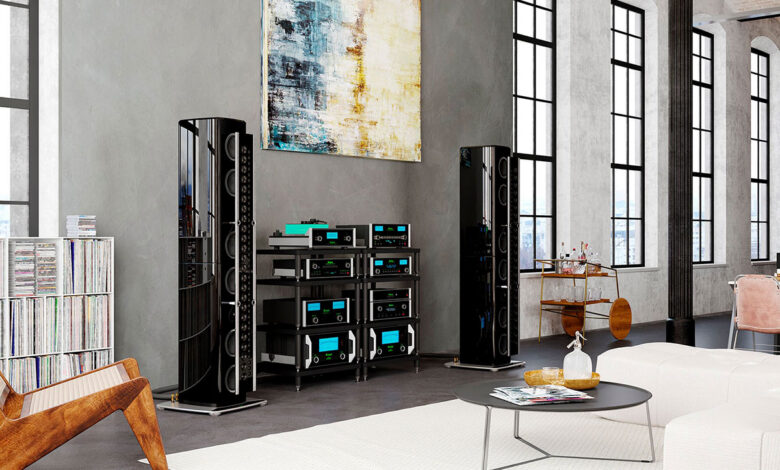
A record player above an amplifier, tuner, cassette deck and CD player, with two unmistakably substantial loudspeakers standing to either side: for decades, nobody needed an explanation of what constituted a stereo system. It was equipment, furniture and statement in equal measure, often occupying the visual as well as the musical centre of a home.

That clarity has disappeared. Music now follows us on smartphones and headphones, wireless speakers distribute it around the house, and the television has become the principal entertainment source in many living rooms. The old collection of boxes can therefore appear strangely detached from contemporary habits.



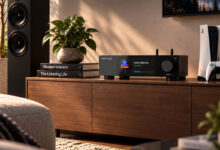
Yet the apparent conflict is based on a misleading assumption. Stereo is not a prescribed arrangement of equipment. It is the reproduction of music through two high-quality channels, capable of turning sound from something merely present into something worth actively hearing. The enduring idea is remarkably simple; the technology, operation and physical footprint surrounding it are what have changed.
Key Facts
- Contemporary stereo systems range from traditional separates and integrated Just add speakers products to fully active loudspeaker systems.
- A Just add speakers component can combine a streaming client, D/A converter, pre-amplifier and power amplifier in one enclosure.
- Spotify Connect, TIDAL Connect and Qobuz Connect allow compatible systems to be selected directly from the respective streaming service’s app.
- Audio and video streaming accounted for 84.4 per cent of German recorded-music revenue in 2025, compared with 7,2 per cent for CD and 6.3 per cent for vinyl.
- Austrian streaming revenue reached € 202,9 million in 2025, representing 87,1 per cent of the music-format market.
- Vinyl generated € 13,3 million and a 5,8 per cent share in Austria, while CD reached € 12,4 million and 5,3 per cent.
- HDMI ARC and HDMI eARC allow a modern stereo system to handle television sound directly.
Table of Contents
The Music System No Longer Has a Standard Shape
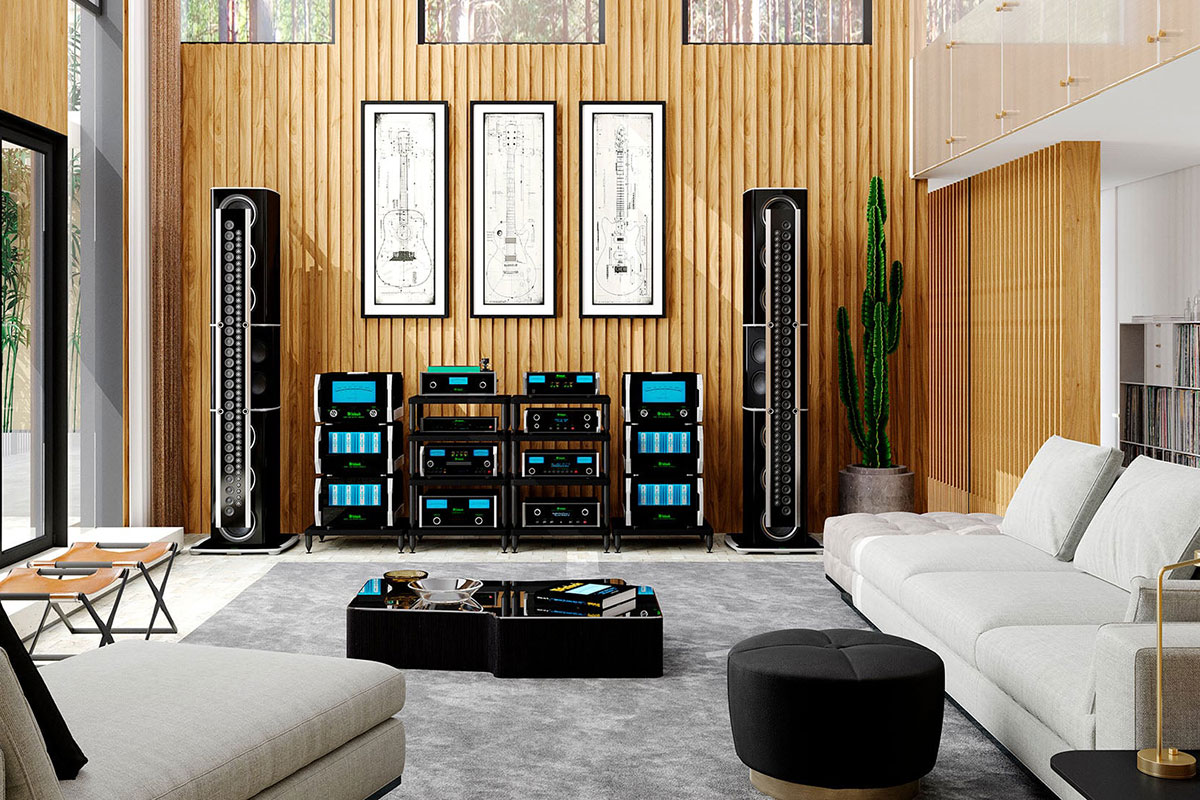
Looking for a modern stereo system by counting its components is unlikely to be helpful. One listener may still prefer an equipment rack filled with individually selected devices. Another may use a single network amplifier connected to passive loudspeakers. Elsewhere, the streaming electronics, signal processing and amplification may already be built into the loudspeakers themselves.
All three are legitimate stereo systems.
Traditional separates continue to provide freedoms that integrated products cannot always offer to the same degree. Sources, conversion, amplification and control can be chosen individually. A component can be replaced when requirements change, an existing system can be upgraded gradually, and different combinations can be explored. For an enthusiast, this process may form an important part of the attraction of HiFi.
It should not, however, become the admission price for good sound. An interest in music does not automatically imply an interest in equipment, and listeners should not need to understand every stage of an audio chain before they can enjoy high-quality reproduction. Technical sophistication and uncomplicated use can coexist.
The question is therefore no longer whether separates or integrated systems represent the correct form of stereo. It is whether the chosen system serves its owner’s priorities without imposing unnecessary obstacles.
Streaming Is Now the Starting Point
The primary music carrier of the present day is no longer a physical carrier at all. Streaming has moved from optional addition to everyday foundation, and the market figures leave little room for ambiguity.
According to Bundesverband Musikindustrie, audio and video streaming generated 84.4 per cent of German recorded-music revenue in 2025. In Austria, IFPI Austria reported streaming revenue of € 202,9 million for the same year, equivalent to 87.1 per cent of the market for music formats.
These figures change the practical expectations placed on a stereo system. Supporting streaming is no longer sufficient in itself. Access must feel immediate, familiar and reliable.
Spotify Connect, TIDAL Connect and Qobuz Connect have made an important contribution here. Listeners remain within the app of their preferred service, select a compatible audio system and continue browsing through an interface they already know. The system then obtains the stream directly from the network; the smartphone controls playback instead of acting as a potentially limiting part of the audio path.
This also removes a boundary between listening away from home and using the main system. Music heard through a smartphone and Bluetooth headphones while travelling can be transferred to the living-room system by choosing a different playback destination in the same app. A technically elaborate network process is reduced to a simple everyday action.
That ease is not incidental to the future of HiFi. A stereo system cannot remain an isolated destination that requires a deliberate change of habits before it can be used. It should be the best playback option within a continuous listening experience. In that role, the smartphone is not an opponent of serious music reproduction. It may be the most practical remote control HiFi has ever had.
Fewer Components Can Still Mean Serious HiFi
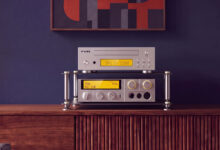
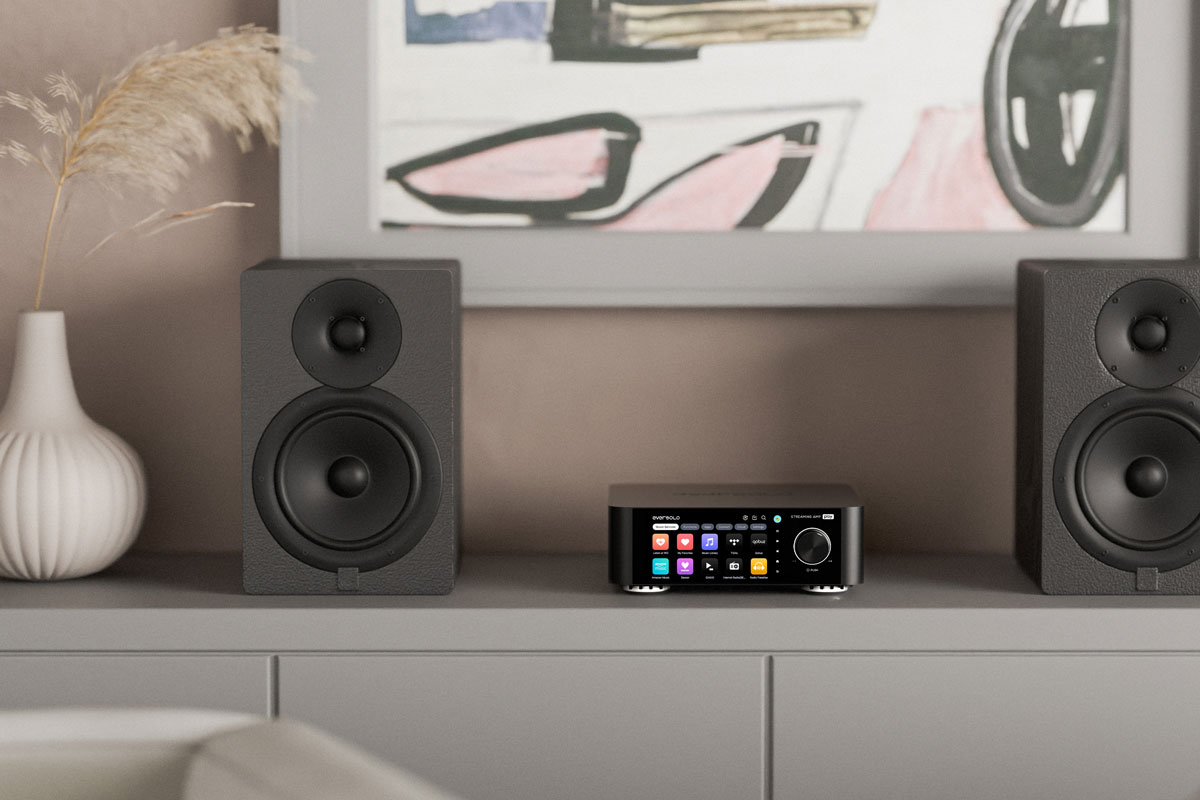
The phrase Just add speakers neatly captures one of the most significant shifts in stereo design. A streaming client, D/A converter, pre-amplifier and power amplifier are consolidated in a single component; the user adds a suitable pair of passive loudspeakers and has a complete system.
This category now extends far beyond entry-level convenience products. Sophisticated High-end designs apply considerable engineering effort to power supplies, digital processing, conversion, amplification and mechanical construction. Integration need not mean that quality has been traded for compactness.
It can deliver practical and technical advantages of its own. Internal sections can be designed as one system, signal paths may be kept short, and the interaction between hardware and operating software can be planned from the outset. The complexity remains, but the listener is not required to manage it.
For the living room, the benefit is obvious: fewer enclosures, fewer cables and less furniture dedicated solely to electronics. For the committed music listener, the same product can still constitute an ambitious audio solution. The number of boxes has never been a reliable unit of sound quality.
Active loudspeakers take this concentration a stage further. When amplification, signal processing and perhaps streaming are incorporated into the loudspeaker system, the visible installation can be reduced to two loudspeakers and their power connections. The category stretches from straightforward wireless models to technically advanced active systems that belong unequivocally in the High-end sector.
Such products do not invalidate separates. They broaden the range of credible answers available to people who want excellent sound but have different preferences concerning space, appearance, operation and future flexibility.
The Television Is Already Part of the Listening Room
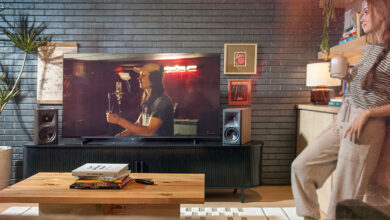
Music is no longer the only source competing for the best loudspeakers in the home. In many rooms, those loudspeakers already stand to the left and right of a television, yet TV sound has often been treated as a separate technical problem.
The reasons were usually practical rather than acoustic. Switching inputs could be inconvenient, volume control might require another remote, and the audio system did not always respond automatically when the television was turned on. Even a worthwhile improvement in sound could feel like unnecessary effort during daily use.
HDMI ARC and HDMI eARC provide a far more coherent approach. Combined with automatic source selection and control through the television remote, they allow the stereo system to reproduce films, series, concerts and games without creating a second operating routine.
A multichannel installation is not essential in every living room. Properly positioned stereo loudspeakers can reproduce dialogue clearly, present a broad soundstage and give television sound an authority that the small transducers built into modern screens can rarely provide.
This does not compromise a system’s musical purpose. It makes the same investment useful more often. Once the stereo system also serves the source used every day by the household, it ceases to be specialist equipment reserved for occasional listening sessions and becomes part of the room’s normal operation.
HiFi Must Earn Its Place in the Home
The traditional advice surrounding loudspeaker placement and equipment installation often assumes that the room should accommodate the system. Loudspeakers are brought well away from walls, cables remain visible, and a dedicated rack occupies valuable space. There are sound acoustic reasons for many such recommendations, but they do not describe a realistic domestic arrangement for every listener.
Contemporary HiFi must negotiate with architecture, furniture and shared use. Dimensions, finish, cable routing, placement and control are not secondary matters to be solved after purchase. They influence whether a system is accepted into the room and how frequently it will be used.
There is no single visual answer. Audio equipment may be deliberately prominent and treated as part of the interior. It may also be discreetly incorporated into a carefully planned space. What matters is that the relationship between sound and the room is considered as part of the system rather than as an inconvenience surrounding it.
Integration can help at several levels. Active loudspeakers remove external amplifiers, streaming reduces the need for separate source components, and HDMI ARC or HDMI eARC connects the television. A well-designed app can gather music selection and system control into one place.
Room measurement and correction technologies can also help when the acoustically ideal loudspeaker position is incompatible with daily life. They cannot rescue fundamentally poor placement, but they may reduce the penalty imposed by necessary domestic compromises.
This is why the challenge facing audio manufacturers extends beyond improving performance in isolation. Source selection, start-up and ordinary operation must be sufficiently intuitive that the engineering is not concealed behind frustration. Ease of use is not a cosmetic feature. It determines whether the system becomes part of everyday listening.
The growing relationship between premium audio, architecture, interior design and connected living is also central to the LUXURY HOME guide. Its perspective extends from visually distinctive All-in-One products and active loudspeakers to discreet Custom Installation systems conceived as part of a complete residential, hospitality or commercial environment.

Physical Formats Survive Beside the Stream
Streaming dominates the market, but dominance is not exclusivity. The continued presence of vinyl and CD demonstrates that contemporary listening habits are layered rather than uniform.
Vinyl has a visibility far greater than its market share. That is understandable. A record restores physical form to music: the sleeve is handled, the disc is placed on the turntable, and an album is normally heard one side at a time. Artwork, mechanics and a deliberate sequence of actions become part of listening. Against the invisible abundance of digital media, that ritual carries considerable appeal.
Its importance should neither be dismissed nor exaggerated. Vinyl has grown over many years and remains relevant to record shops, the music industry and the HiFi market. It nevertheless accounted for 6.3 per cent of German recorded-music revenue in 2025, compared with streaming’s 84.4 per cent. In Austria, vinyl generated € 13,3 million and represented 5.8 per cent of the music-format market.
That is a meaningful business and a committed audience, but not a return to the dominant format of an earlier period. Vinyl can be culturally prominent, commercially significant and personally important without becoming the normal source for most listening.
CD has not vanished either. It remained Germany’s second-largest format by revenue in 2025 with a share of 7.2 per cent, ahead of vinyl. In Austria, CD revenue stood at € 12,4 million, or 5.3 per cent of the market, placing it only narrowly behind records.
A modern stereo system therefore need not declare allegiance to analogue or digital reproduction. A phono input beside an integrated streaming client is not an incoherent combination. For many owners, it accurately reflects how music is actually enjoyed: streaming for breadth and everyday access, with records or CDs retained for particular albums, collections and listening habits.
Vinyl does not need to represent a supposedly superior past. It can simply remain another way of engaging with music – slower, more tactile and more deliberate – while streaming carries most of the daily workload.


Active Listening Does Not Require a Ritual
Unlimited access to music is one of streaming’s great achievements, but availability and attention are not the same thing. Music can accompany work, cooking, reading or browsing without ever becoming the principal activity.
A capable stereo system offers an alternative to that pattern, although it need not turn every album into a ceremony. It improves music when it is playing in the background, but it also creates the option to sit down, choose a recording and give it undivided attention.
The value lies in that option. Concentrated listening is not inherently nostalgic, nor does it depend on a physical format. A record, a local music server and a streaming service each create a different route to the recording. The decisive issue is whether the system removes barriers and communicates enough of the music’s character to make listening worthwhile.
A stereo system therefore remains relevant not merely because it can reproduce two channels, but because it reserves a place for music in an environment filled with competing media. Its modernity is measured partly by how easily it can be used and partly by whether it still rewards attention once the music begins.
When Does a Stereo System Become Outdated?
Size alone does not make an audio system old-fashioned. Nor do multiple components, visible cables or a record player. A conventional installation can be as appropriate now as it was decades ago when it reflects the owner’s interests and circumstances.
Conversely, an app and wireless connectivity do not automatically make a product contemporary. Technology earns that description through its relationship with actual use.
A system begins to feel outdated when it disregards the sources its owners rely on, requires several controllers for ordinary tasks, occupies the room without sufficient justification or can only be operated confidently by one member of the household. At that point, technical ambition and practical value have moved apart.
The opposite extreme is no better. An invisible system that is effortless to use but reduces every recording to interchangeable background sound does not satisfy the expectations associated with high-quality stereo merely because it is convenient.
Comfort and performance are not rival philosophies. The genuinely modern solution is the one that reconciles them.
The Most Important Advantages at a Glance
- A format for different priorities: Stereo can be realised through separates, a Just add speakers system or active loudspeakers.
- Direct access to streaming: Spotify Connect, TIDAL Connect and Qobuz Connect retain the familiar service app as the main interface.
- A smaller physical footprint: Integrated electronics can reduce the number of enclosures, cables and dedicated furniture.
- TV sound without a separate system: HDMI ARC and HDMI eARC allow the main loudspeakers to serve music and television.
- Room-friendly installation: Active designs, compact components and room correction can make high-quality audio easier to accommodate.
- Freedom to retain physical media: Turntables and CD players can coexist with streaming rather than compete with it.
- A clearer place for music: A capable stereo system supports background listening while preserving the possibility of focused listening.
- Choice without a compulsory technical hobby: Listeners can pursue modular upgrades or select a highly integrated system that simply works.
FAQ – Is a stereo system still up-to-date?
What exactly is a stereo system today?
A stereo system is no longer limited to a tower of individual components. It can consist of a classic amplifier with various source devices, a compact streaming amplifier and two passive speakers, or a fully active speaker system. The crucial element remains playback via two channels and two appropriately positioned speakers.
Does a high-quality stereo system still require multiple individual components?
No. Modern “just add speakers” systems combine a streaming client, DAC, preamplifier, and power amplifier in a single device. Such solutions are available from the entry-level to the high-end segment. Separate components, however, remain useful if maximum flexibility, future upgrade options, or highly customized sound tuning are desired.
Are active speakers a viable alternative to a classic stereo system?
Yes. Modern active speakers can fully integrate amplifiers, DACs, streaming clients, and digital signal processing, thus forming a self-contained stereo system. By precisely matching the amplifiers to the individual drivers and using digital crossovers, even uncompromising high-end solutions are possible. Before purchasing, however, you should check which analog and digital inputs, streaming services, connectivity technologies, and TV connections are available, how the two speakers are connected, and whether a turntable, subwoofer, or other source device can be integrated if needed.
What distinguishes a “Just Add Speakers” system from active speakers?
In a “Just Add Speakers” system, all the electronics are housed in a central unit to which passive speakers are connected. With active speakers, the amplifiers, and often also streaming, D/A conversion, and signal processing, are integrated directly into the speakers. Both concepts reduce the number of visible components but differ in terms of cabling, setup, and future upgrade options.
Can streaming be a high-quality source?
Yes. Services like TIDAL and Qobuz provide music in lossless quality and sometimes as Hi-Res Audio; Spotify now also offers Lossless Audio. Crucial factors also include the quality of the streamer, the digital-to-analog converter (DAC), and the entire playback chain. Therefore, streaming is not automatically synonymous with reduced sound quality.
How does music get from a smartphone to a stereo system?
With Spotify Connect, TIDAL Connect, or Qobuz Connect, a compatible audio system can be selected directly in the respective service’s app. The system then retrieves the stream itself via the network, while the smartphone acts as a remote control. This allows playback to be conveniently continued on the stereo system in the living room after listening to music on the go with Bluetooth headphones.
Can a stereo system also handle TV sound?
Yes. This is particularly convenient via HDMI ARC or HDMI eARC, as the system can then be switched on together with the TV and its volume controlled using the TV’s remote. A good stereo system can be a compelling alternative to a soundbar for movies, series, concerts, and games. However, a multi-channel system is still required for true surround sound or immersive audio.
Do turntables and CD players still belong in a modern stereo system?
They can be included, but they don’t have to be. Vinyl still holds great cultural and emotional appeal, but it remains a niche product compared to the overall music market. CDs are by no means obsolete and are valued by many listeners for their ease of use, existing collections, and the physical act of ownership. A modern system can seamlessly integrate analog and digital sources without ideological separation.
What should you look for when buying a modern stereo system?
The system should suit your listening habits and your living space. Essential features include support for the streaming services you actually use, intuitive operation, suitable connections for existing sources, and, if applicable, HDMI ARC or HDMI eARC for your TV. Equally important are suitable speakers, a realistic speaker placement, and the option to expand or adapt the system later.
Getting to the Point
Stereo is not a relic. What has become dated is the assumption that it must always consist of a fixed collection of components and be operated according to habits established decades ago.
Just add speakers products, active loudspeakers, streaming and direct television integration have not diluted HiFi. They have adapted two-channel reproduction to a wider range of homes and lifestyles. At the same time, conventional separates, vinyl and CD remain entirely valid for listeners who value their particular flexibility, physicality or ritual.
A stereo system is relevant when it belongs naturally in the life and room of its owner. Its final purpose, however, remains unchanged: to make music sufficiently accessible for everyday use and sufficiently compelling that, sometimes, nothing else requires our attention.
| Theme | Is a stereo system still relevant? How streaming, just add speakers and living space integration are redefining HiFi |
|---|---|
| the LUXURY HOME guide |
| Brand | the LUXURY HOME guide |
|---|---|
| Manufacturer | the LUXURY HOME guide |
| More about this manufacturer at HiFi BLOG |