

Métronome Le DAC 3 Review – French digital art with impressive precision
Métronome Technologie has never treated digital audio as a convenient add-on to a HiFi system, and the Métronome Le DAC 3 makes that position very clear. This is a DAC with serious technical reach, from Linear PCM up to 32 Bit and 768 kHz and DSD up to DSD1024 to two I2S inputs and an optional streaming platform with Qobuz Connect, TIDAL Connect, DLNA/UPnP, Audirvāna and JPLAY integration. Yet the real question is not how impressive the specification looks, but whether the Le DAC 3 turns that engineering into music with authority, shape and emotional credibility.


- The Métronome Le DAC 3 is not a DAC that tries to dazzle with digital fireworks. Its strength lies in control, proportion and a rare ability to make complex recordings sound settled without becoming polite.
Métronome Technologie describes the Le DAC 3 as a new milestone in the development of its digital components, and from a company with such a long-standing command of digital audio, that is not a casual claim. This High-end digital-to-analogue converter keeps the calm, understated aesthetic of the Métronome Classica Series, but moves the technical platform decisively forward: Linear PCM up to 32 Bit and 768 kHz, DSD up to DSD1024, two I2S inputs and, in the version tested here, a fully integrated streaming module. The real point, however, is not the specification sheet alone. What matters is whether the Métronome Le DAC 3 turns those figures into the kind of natural, articulate and musically convincing performance that separates a fine DAC from a genuinely authoritative digital component.

Key Facts
- Product: Métronome Le DAC 3, High-end digital-to-analogue converter from the Métronome Classica Series
- Concept: classic DAC with optional, fully integrated streaming platform
- Converter: ESS ES9026PRO with high dynamic range and very low distortion values
- Resolution: Linear PCM up to 32 Bit and 768 kHz and DSD up to DSD1024 via USB
- I2S: two inputs for high-quality digital transports and specialised digital sources
- Digital inputs: USB, AES/EBU, coaxial S/PDIF, TOS-Link and 2 × I2S
- Analogue outputs: balanced XLR and unbalanced RCA
- Streaming: Ethernet, DLNA/UPnP, Spotify Connect, Deezer, TIDAL Connect, Qobuz Connect and vTuner
- Plays with Audirvāna: certified integration via USB or network
- JPLAY Certified: optimised compatibility with the JPLAY App for Apple iOS
- MQA: renderer up to 32 Bit and 384 kHz
- Operation: 3,9 inch display with 480 × 128 pixels
- Construction: solid chassis measuring 450 × 120 × 420 mm and weighing 12 kg
Métronome Technologie – Digital specialists from Montans
Métronome Technologie is one of those manufacturers whose reputation has been built not on fashion, but on persistence. For decades, the French company from Montans has treated digital replay as a discipline in its own right. CD transports, digital-to-analogue converters, music servers and streaming solutions have formed a coherent technical language: mechanical stability, clean digital architecture, well-managed timing and a sound that aims for precision without draining music of its colour.

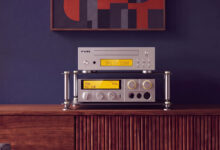
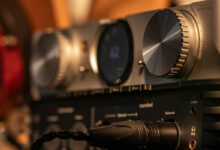
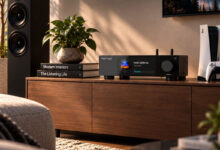
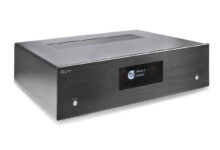

The Métronome Le DAC 3 belongs to the Métronome Classica Series, but it is not merely a conservative DAC in a handsome metal case. It is, rather, a thoroughly modern digital component dressed in the calm visual grammar one expects from the brand. The front panel is restrained, the proportions are classic, and nothing shouts for attention. That is part of its appeal. The Le DAC 3 looks like a serious piece of equipment before it tries to look expensive.
Inside, however, the agenda is ambitious. The central converter is an ESS ES9026PRO from ESS Technology Inc., supported by a digital platform capable of handling Linear PCM up to 32 Bit and 768 kHz and DSD up to DSD1024 via USB. Add two I2S inputs, USB, AES/EBU, coaxial S/PDIF, TOS-Link, balanced XLR and unbalanced RCA outputs, and the Le DAC 3 already looks like a highly capable external DAC for a demanding system.
The version tested here goes further. Equipped with the optional streaming module, the Métronome Le DAC 3 becomes not just a converter, but a complete digital source. Ethernet networking, DLNA/UPnP, Spotify Connect, Deezer, TIDAL Connect, Qobuz Connect, vTuner, Plays with Audirvāna certification, JPLAY Certified status and MQA rendering give it a far broader role in a contemporary High-end system. This matters. In such a configuration, the Le DAC 3 can be the central digital authority of a system rather than simply the final decoding stage for other sources.


Design and build
The Métronome Le DAC 3 has the physical assurance one expects from a serious High-end component. At 12 kg, with a width of 450 mm, a height of 120 mm and a depth of 420 mm, it has presence without theatricality. It is broad, low, solid and cleanly proportioned. The casework gives the impression of something designed for long service rather than short-term showroom impact.
That restraint is not a lack of character. Quite the opposite. Métronome Technologie understands that digital components benefit from a kind of visual stillness. The Le DAC 3 does not compete with loudspeakers, amplifiers or turntables for visual dominance. It sits in the rack with quiet authority, its front panel cleanly organised and its display placed where it should be: central, useful and unobtrusive.
The 3,9 inch display with 480 × 128 pixels provides the necessary information without turning the DAC into a screen-led device. There is no attempt here to imitate a tablet or make the front panel perform tricks. The Le DAC 3 remains a classic High-end DAC in its handling and appearance, but one whose digital capabilities are thoroughly contemporary.
That combination is important. Too many modern digital products appear to be designed around software first and hardware second. The Métronome Le DAC 3 feels different. It has the solidity, weight and tactile seriousness of traditional High-end audio, but it does not behave like a relic from the pre-streaming age.
Connectivity – a very complete digital brief
One of the strongest practical arguments for the Métronome Le DAC 3 is its connectivity. There are DACs whose appeal lies in a form of deliberate minimalism. That can be elegant, even persuasive, but it can also become restrictive in a real system. Métronome Technologie has taken the more useful route. The Le DAC 3 offers USB, AES/EBU, coaxial S/PDIF, optical TOS-Link and two I2S inputs via HDMI. That is not a token selection. It is a serious digital input suite.
The two I2S inputs deserve particular attention. In the upper reaches of digital audio, I2S has become increasingly relevant, especially for owners of dedicated CD transports, digital bridges and music servers designed to exploit that interface. Its appeal lies in the potential for a more direct transmission of digital audio data between compatible components. Not every user will need it, but those who do will be pleased to find not one but two such inputs.
USB remains essential for computer audio, specialist music servers and modern digital sources. AES/EBU and coaxial S/PDIF remain important for traditional digital transports and professional or semi-professional digital sources. TOS-Link adds flexibility for sources where electrical isolation or simple system integration is useful. The Le DAC 3 is therefore not tied to one narrow vision of digital replay. It accepts the reality that serious listeners often use several types of source.
On the analogue side, balanced XLR and unbalanced RCA outputs allow the Métronome Le DAC 3 to be used with a wide range of amplifiers and preamplifiers. This is a DAC that can sit confidently in a fully balanced High-end system, but it is not limited to one type of analogue architecture.
The real value of this connectivity becomes apparent in daily use. One does not have to reorganise a system around the DAC. Instead, the DAC allows each source to be connected in the way that makes most sense.
Technology – ESS Technology Inc. at the centre, but not the whole story
The ESS ES9026PRO from ESS Technology Inc. sits at the heart of the Métronome Le DAC 3, but it would be a mistake to reduce this product to its converter chip. In digital audio, the choice of DAC chip is important, but it is never the whole matter. Clocking, board layout, power supply, signal routing, mechanical stability, grounding and analogue output design all influence whether a technically capable converter becomes a musically convincing one.
Métronome Technologie has long understood this. The Le DAC 3 does not present itself as a collection of fashionable parts. It feels like a complete digital architecture, with the converter chip serving the wider design rather than defining it alone.
The published technical figures are strong. Métronome Technologie specifies a signal-to-noise ratio of 124 dB and a THD+N figure of -110 dB. Such numbers do not describe the sound in themselves, but they indicate an architecture built for low noise, low distortion and generous dynamic headroom. In listening, this did not translate into a hard, forensic or showily analytical presentation. Instead, the Le DAC 3 produced a sound of notable calm and order.
Format support is equally extensive. Via USB, the Métronome Le DAC 3 handles Linear PCM from 44,1 kHz up to 768 kHz at 32 Bit and native DSD from DSD64 to DSD1024. The two I2S inputs support Linear PCM from 44,1 kHz to 384 kHz at 32 Bit and native DSD up to DSD256. AES/EBU and coaxial S/PDIF support Linear PCM up to 32 Bit and 384 kHz and DSD up to DSD128 via DoP. TOS-Link handles Linear PCM up to 32 Bit and 192 kHz and DSD64 via DoP. MQA rendering is supported up to 32 Bit and 384 kHz.
This is not just specification inflation. It makes the Le DAC 3 open to a wide range of digital sources, from computers and music servers to specialist transports and network audio solutions. More importantly, it gives the user freedom to build a system without immediately encountering format limitations.
The analogue output stage is sensibly specified. Balanced XLR and unbalanced RCA outputs are available, both with a maximum output level of 3 V at 0 dB. Output impedance is stated at 150 Ohm via XLR and 100 Ohm via RCA. Those figures make the Le DAC 3 easy to integrate with a broad range of preamplifiers and integrated amplifiers.
Power supply and the importance of silence
Métronome Technologie has always placed emphasis on power supply design, and the Le DAC 3 appears to follow that line. In a DAC of this class, the power supply is not a supporting actor. It is part of the sound.
High-resolution digital conversion requires more than the ability to process large numbers. The system must remain electrically stable, mechanically quiet and internally disciplined. Sensitive digital and analogue sections must be prevented from interfering with each other. Signal paths must remain clean. Timing must be managed with precision. The result, when done properly, is not a sound that draws attention to itself, but the removal of a certain electronic tension.
That was exactly what the Le DAC 3 suggested during listening. It did not sound artificially softened. Nor did it sound etched. It simply allowed musical events to appear with a steadiness that made many recordings easier to follow. Images remained stable, instrumental outlines were clean, and complex passages did not collapse into digital congestion.
This is where serious digital engineering becomes musically meaningful. The listener is not invited to admire the power supply, the converter chip or the interface options. Instead, one hears less strain, less blur and a more convincing relationship between instruments, voices and space.
Streaming in the fully equipped version
The Métronome Le DAC 3 tested here included the optional streaming platform, and that changes the character of the product considerably. Without it, the Le DAC 3 is a high-grade external DAC. With it, it becomes a complete digital control centre.
Network connection is provided via RJ45 Gigabit Ethernet. There is no WiFi. Some may see that as a limitation; in this context, it is more accurately a statement of intent. A wired connection is still the more stable and predictable solution for a serious High-end streaming component. It is less about convenience and more about reliability, noise management and consistency.
Two USB 2.0 ports are provided for external storage media, extending the practical usefulness of the streaming platform. Supported services and protocols include DLNA/UPnP, Spotify Connect, Deezer, TIDAL Connect, Qobuz Connect and vTuner. This gives the Le DAC 3 the ability to operate across several realistic listening scenarios rather than forcing the user into a single software ecosystem.
Qobuz Connect and TIDAL Connect are particularly valuable in daily use. Both allow the listener to control playback from the familiar service app while the stream is handled directly by the device. The smartphone or tablet becomes the remote control, not the audio transport. That is precisely how premium streaming should work: convenient at the surface, technically cleaner underneath.
DLNA/UPnP keeps the Le DAC 3 compatible with local libraries and network servers. vTuner covers internet radio and podcasts. Spotify Connect and Deezer broaden the product’s appeal beyond strictly audiophile listening. This is not a narrow streaming implementation. It is comprehensive enough to serve as the main digital source in a modern system.
Two certifications are especially relevant for serious digital listeners. Plays with Audirvāna confirms compatibility with Audirvāna Studio from Audirvāna SAS, both via USB and over the network. For listeners who use Audirvāna as their main software environment, this is a meaningful benefit rather than a decorative badge.
JPLAY Certified status is equally important. JPLAY has become one of the more interesting software solutions for audiophile network playback on Apple iOS, and certification indicates optimised compatibility with the JPLAY App. For users who want to control streaming services, local libraries and network playback from a refined app environment, this adds considerable practical value.
In use, the streaming platform did not feel like an afterthought. That is crucial. Some DACs gain streaming by way of a module that feels bolted on to an otherwise conventional converter. The Métronome Le DAC 3 is more coherent than that. In the tested version, the streaming capability feels like an extension of the same design philosophy: stable, quiet, controlled and aimed at quality rather than novelty.
Operation and daily use
The Métronome Le DAC 3 is not a device that tries to impress the user with endless menus. Its operation is clear and calm. Inputs can be selected without fuss, the display provides the necessary information, and the product avoids the trap of becoming digitally overcomplicated.
This matters more than it may seem. Many modern digital components are powerful but fussy. They demand attention. They involve apps, settings, firmware, filters, network behaviour and compatibility questions that can begin to dominate the listening experience. The Le DAC 3 is capable, but it does not make that capability feel heavy.
In a well-sorted system, it becomes a quiet authority. Digital sources can be connected and managed logically. Streaming functions are available without appearing to take over the product. The front panel remains legible and restrained. The Le DAC 3 behaves like a High-end component should: it does its job with confidence and then gets out of the way.
Test system
The Métronome Le DAC 3 was tested with a Technics SU-R1000 Stereo Integrated Amplifier and Sonus faber Amati futura loudspeakers. Digital sources included an Eversolo DMP-A6, a Roon NUCLEUS+, the Métronome DSAS Digital Sharing Audio Server and an Apple MacBook Pro. An Apple iPhone 14 Pro was used for mobile control.
Qobuz served as the main streaming service. Wireworld Series 10 signal cables and Wireworld Series 10 speaker cables were used, with power supplied via a KECES IQRP-1500 Isolated Quantum Resonance Power Conditioner.
Sound quality – accuracy without sterility
The Métronome Le DAC 3 does not announce itself with spectacle. Its first impression is not brightness, not bass mass, not exaggerated depth. It is correctness. Not in a cold or academic sense, but in the way musical information appears properly placed, properly scaled and properly weighted.
That quality is harder to sell than fireworks, but far more valuable over time. The Le DAC 3 does not try to make recordings sound bigger, richer or more impressive than they are. It organises them. Voices occupy believable space. Instruments have body without bloom. Rhythmic structures remain taut without becoming mechanical. The upper frequencies are open and finely drawn, but they do not harden. The midrange is clear without becoming thin. The bass is deep, articulate and controlled.
Some DACs mistake resolution for brightness. Others compensate for digital anxiety by adding warmth. The Le DAC 3 avoids both habits. It is accurate, but not clinical. It is composed, but not dull. It has the particular virtue of making technical sophistication feel musically ordinary, in the best sense of the word.
Chris Rea – Road to Hell Part 1 & Part 2
Chris Rea’s “Road to Hell Part 1 & Part 2” quickly reveals the character of the Métronome Le DAC 3. The opening section needs atmosphere, but not artificial darkness. It requires tension, space and a sense of narrative weight. The Le DAC 3 built that atmosphere with admirable restraint. The voice, the environmental sounds and the slow emergence of the track were clearly placed, yet never dissected.
When Part 2 arrives, with its familiar groove and guitar figure, the Métronome kept the rhythm firm and lucid. The bass line had weight without thickness. Chris Rea’s voice carried its dry, weathered quality without being pushed forward for effect. What impressed most was the DAC’s refusal to modernise the recording. It did not polish it into audiophile gloss. It preserved its drive, patina and studio atmosphere.
Cristina Branco – Alfonsina y el Mar
Cristina Branco’s “Alfonsina y el Mar” is a test of nuance. It asks whether a DAC can convey small inflections without turning them into a hi-fi demonstration. The Métronome Le DAC 3 answered with a beautifully poised vocal presentation. Breath, articulation and slight dynamic shifts were easy to follow, yet the voice remained corporeal and human.
This was one of the moments where the Le DAC 3 showed that precision and emotion are not enemies. It clarified the structure of the performance without compromising its fragility. The soundstage opened naturally, giving the recording air while retaining intimacy. The result was not analytical distance, but emotional access through order.
Curtis Stigers – Things Have Changed
Curtis Stigers’ “Things Have Changed” depends on timing, vocal presence and a certain laid-back tension. The Métronome Le DAC 3 handled the rhythmic architecture with considerable ease. Bass and drums locked together well, the voice remained present but not inflated, and the supporting instruments were cleanly layered.
The lower midrange was particularly well judged. Some converters add too much warmth to this kind of recording; others remove too much body in pursuit of detail. The Le DAC 3 found the line. Curtis Stigers sounded sonorous but not swollen, relaxed but not softened. The recording acquired poise, and one could hear not only the voice, but the space around it.
Dean Martin – Everybody Loves Somebody, Dream with Dean Version
Dean Martin’s “Everybody Loves Somebody” in the “Dream with Dean” version is about intimacy. It must not become too large. It needs charm, proximity and the impression of a voice telling a story rather than projecting one. The Métronome Le DAC 3 understood that very well.
Dean Martin’s voice was stable, warm and finely contoured between the loudspeakers. The accompanying ensemble was balanced with delicacy, never intruding on the vocal line. Most pleasing was the way the Le DAC 3 preserved the timing of the performance. Small hesitations, phrasing, the unhurried swing of the music – all of it remained intact. The DAC did not turn the track into an audiophile exhibit. It allowed it to remain a musical scene.
Doug MacLeod – A Soul to Claim
Doug MacLeod’s “A Soul to Claim” is a fine test of body, space and authenticity. The guitar must have physical presence. The voice must carry weight. Yet the performance must not become heavy or sluggish. The Métronome Le DAC 3 delivered a direct, tactile reading. Each pluck of the strings was clearly resolved, with the guitar gaining body and purpose. The voice stood in space with a rough timbral honesty and clear articulation.
Microdynamics were especially convincing. The Le DAC 3 showed small shifts in level and pressure without underlining them. One could sense how the musician shaped phrases, increased tension and then released it. This is a high-level quality because it does not draw attention to detail as detail. It draws the listener further into the performance.
Editors – Ocean of Night
With Editors and “Ocean of Night”, the Métronome Le DAC 3 had to prove that its precision could survive a denser, modern production. It did. The track has width, pressure and a dark elegance, but can become flattened through less controlled systems. The Le DAC 3 kept the layers distinct. Synth textures, drums, bass and voice remained readable, yet the song did not fall apart into separate elements.
The bass region benefited particularly from the Métronome’s discipline. It had pressure but not sprawl. That gave the track structure and momentum without reducing its atmospheric density. The result was large, shadowed and controlled, with enough air to prevent congestion.
Enya – Orinoco Flow
“Orinoco Flow” by Enya can easily become too much: too much reverb, too much sheen, too much synthetic space. The Métronome Le DAC 3 again showed its gift for order. The layered voices and synth textures were cleanly arranged rather than smeared together. The recording gained scale without becoming artificially monumental.
The treble remained fine, and the depth of the stage was impressively stable. Crucially, the Le DAC 3 did not strip away the magic of the production. It revealed the construction, but without killing the illusion. The sound remained floating, airy and expansive, yet sufficiently defined to avoid becoming a mere cloud of sound.
Esther Ofarim – Pavane
Esther Ofarim’s “Pavane” brought vocal reproduction back into focus. The Métronome Le DAC 3 drew the voice with delicacy, but not as an exaggerated close-up. There was air, nuance and a kind of physical vulnerability that gave the performance its particular force. The recording sounded present, not sterile.
Again, tonal colour was one of the Métronome’s strengths. It did not brighten the voice to show detail, nor did it warm it artificially to create emotion. The colour came from the recording itself. That may be the most important quality of this converter. It allows music to retain its own tone.
Ian Anderson – The Pax Britannica
Ian Anderson’s “The Pax Britannica” brings different demands: rhythmic agility, the distinctive colour of the flute, dynamic accents and clear instrumental structure. The Métronome Le DAC 3 played it with impressive movement. The flute had body and air without becoming sharp. Rhythmic changes were precise, but not mechanical.
This showed that the Métronome’s accuracy is not static. It does not mean stiffness. It means agility under control. Even with busier arrangements, the Le DAC 3 remained calm. It held the musical architecture together while allowing room for character and wit. The result felt mature and musically alert.
Johann Strauss – Die Fledermaus Overture, Carlos Kleiber, Bayerisches Staatsorchester
The overture to “Die Fledermaus” with Carlos Kleiber and the Bayerisches Staatsorchester was one of the decisive listening moments. This recording requires lift, timing, elegance and orchestral clarity. The Métronome Le DAC 3 delivered a fine balance of precision and musical flow.
The strings had sheen without a cutting edge. Woodwind and brass emerged clearly without disrupting the whole. Dynamic turns were swift and controlled. The waltz impulse had buoyancy, and Kleiber’s famous mixture of discipline and risk remained audible. The Le DAC 3 did not make the performance sound tidied up or domesticated. It let the orchestra breathe while keeping its internal lines firm.
This is what accuracy should mean in music reproduction. Not dry exactitude for its own sake, but the ability to keep musical events in their proper relationship. The overture had elegance, spring, gloss, momentum and Esprit. It never became heavy.
In practice – strengths and limits
The Métronome Le DAC 3 is one of those components whose greatest virtue is not immediately spectacular. It does not transform a system through obvious tricks. Instead, it improves the foundations: spatial order, tonal truth, dynamic stability and the relationship between musical lines. The result is more convincing than showy.
Its strongest quality is plausibility. The French DAC rarely leaves the listener wondering whether something has been exaggerated, highlighted or smoothed over. Chris Rea retains his dusty darkness. Cristina Branco keeps her suspended melancholy. Dean Martin remains intimate rather than inflated. Carlos Kleiber’s Johann Strauss has lift, precision and theatrical sparkle. The Le DAC 3 does not impose a personality on these recordings. It removes uncertainty from the signal.
The combination of conversion quality and full streaming capability is a major practical advantage. With the streaming module installed, the Métronome Le DAC 3 is not merely a DAC with a network feature attached. It is a digital centrepiece. Qobuz Connect, TIDAL Connect, Spotify Connect, Deezer, DLNA/UPnP, Audirvāna compatibility, JPLAY Certified status, vTuner, MQA rendering and USB storage support cover a broad and useful field.
Connectivity is another strength. Two I2S inputs, USB, AES/EBU, coaxial S/PDIF and TOS-Link make the Le DAC 3 unusually flexible for digital sources. Balanced XLR and unbalanced RCA outputs complete the picture on the analogue side. Owners of serious digital transports, music servers or multi-source systems will find very little missing.
There are, of course, points to consider. The Métronome Le DAC 3 is not inexpensive, and the streaming option raises the investment significantly. Yet in the tested configuration, the price must be weighed against what the device replaces or consolidates: a DAC, a network streamer, a digital hub and a high-quality source architecture. The absence of WiFi may disappoint users who place convenience above all else, but in a component of this level the Ethernet-only approach is defensible and, arguably, preferable.
All advantages at a glance
- Highly precise, natural, and authoritative D/A conversion
- Outstanding accuracy without analytical harshness
- Linear PCM up to 32-bit/768kHz and DSD up to DSD1024 via USB
- Full range of digital interfaces including two I2S inputs
- Balanced XLR and unbalanced RCA outputs
- Optional streaming module with broad platform support
- Qobuz Connect, TIDAL Connect, Spotify Connect, Deezer, DLNA/UPnP, and vTuner
- Plays with Audirvana via USB or network
- JPLAY Certified for the JPLAY app on Apple iOS
- MQA renderer up to 32-bit/384kHz
- High-quality, solid construction
- Exceptionally cohesive, calm, and controlled sound
- A truly compelling digital control center when fully equipped
FAQ for the Métronome Le DAC 3
What is the Métronome Le DAC 3?
The Métronome Le DAC 3 is a High-end digital-to-analogue converter from the Métronome Classica Series. It converts digital signals into analogue audio signals and, in the optional fully equipped version, can also be used as a streaming centre.
What resolutions does the Métronome Le DAC 3 support?
Via USB, the Métronome Le DAC 3 supports Linear PCM up to 32 Bit and 768 kHz as well as native DSD up to DSD1024. Via I2S, it supports Linear PCM up to 32 Bit and 384 kHz as well as native DSD up to DSD256.
What digital inputs does the Métronome Le DAC 3 offer?
The Métronome Le DAC 3 features USB, AES/EBU, coaxial S/PDIF, Toslink and two I2S inputs. This allows it to be connected very flexibly to CD transports, music servers, streamers, computers and other digital sources.
Which streaming services does the Métronome Le DAC 3 support with the streaming module?
With the streaming module, the Métronome Le DAC 3 supports Qobuz Connect, TIDAL Connect, Spotify Connect, Deezer, DLNA/UPnP and vTuner, among others. It also works as an MQA renderer up to 32 Bit and 384 kHz.
What does Plays with Audirvāna mean on the Métronome Le DAC 3?
Plays with Audirvāna means that the Métronome Le DAC 3 is certified for use with the Audirvāna playback software. Integration can take place both via USB and over the network, and is particularly interesting for users who manage their music library through software and want to use an audiophile playback environment.
What does JPLAY Certified mean on the Métronome Le DAC 3?
JPLAY Certified indicates that the Métronome Le DAC 3 is designed for optimised operation with the JPLAY App for Apple iOS. This is particularly relevant for users who want high-quality app control for streaming, network playback and local music libraries.
Is the streaming module important on the Métronome Le DAC 3?
Yes, for many users it is even decisive. Without the streaming module, the Métronome Le DAC 3 is a classic High-end DAC. With the streaming module, it becomes a fully fledged digital control centre for modern HiFi systems.
What analogue outputs does the Métronome Le DAC 3 offer?
The Métronome Le DAC 3 offers balanced XLR outputs and unbalanced RCA outputs. This allows it to be integrated both into fully balanced High-end systems and into classic amplifier configurations.
How does the Métronome Le DAC 3 sound?
The Métronome Le DAC 3 sounds exceptionally precise, controlled, natural and coherent. Its greatest strength is its ability to present music accurately, calmly and credibly, without sounding analytical or cool.
Who is the Métronome Le DAC 3 suitable for?
The Métronome Le DAC 3 is suitable for demanding listeners who are looking for a high-quality digital source for a High-end system. It is especially interesting for users who want to use both classic digital sources and modern streaming at a very high level.
Price and availability
The Métronome Le DAC 3 is offered at a recommended retail price of € 8.300,-. The optional streaming module, which turns the converter into a fully fledged network and streaming centre, is priced at € 2.200,-. The fully equipped version tested here therefore comes to € 10.500,-.
Distribution is handled through authorised specialist dealers. Audio Exclusive GmbH is responsible for Austria, H.E.A.R. GmbH for Germany and Portier Hi-Fi for Switzerland.
Conclusion – Métronome Le DAC 3 is more than a digital-to-analogue converter
The Métronome Le DAC 3 is a DAC that impresses not through spectacle, but through discipline. Its outstanding quality lies in an accuracy that brings music into focus with striking naturalness. It is precise without sounding cold, highly resolving without becoming nervous, controlled without draining life from the performance. This is not digital sound dressed up as musicality. It is digital engineering placed firmly in the service of music.
In the fully equipped version tested here, with the integrated streaming module, the Métronome Le DAC 3 becomes a genuinely persuasive digital centrepiece. The streaming option is not a casual extra. For many users, it will be central to the product’s appeal. Qobuz Connect, TIDAL Connect, Spotify Connect, Deezer, DLNA/UPnP, Plays with Audirvāna, JPLAY Certified status, vTuner and MQA rendering make it highly capable in real-world use. The input and output provision is similarly strong: USB, AES/EBU, coaxial S/PDIF, TOS-Link, two I2S inputs, balanced XLR and unbalanced RCA.
Sonically, the Métronome Le DAC 3 convinced through a rare mixture of precision, calm, dynamic command and musical rightness. It does not sound like a perfect digital demonstration. It sounds like control in the service of expression. That, perhaps, is the most recognisable Métronome Technologie quality here. In this price class, one may certainly find alternatives that sound different. Less expensive options, too. But demonstrably better? That becomes a much narrower field.
| Product | Métronome Le DAC 3 |
|---|---|
| Price | Métronome Le DAC 3 € 8.300,- Optional streaming module € 2.200,- |
Technical Specifications
| Product | Métronome Le DAC 3 |
|---|---|
| Device type | High-end digital-to-analogue converter |
| Series | Métronome Classica Series |
| D/A converter | ESS ES9026PRO |
| Dynamic range | S/N 124 dB |
| THD+N | -110 dB |
| USB | Linear PCM up to 32 Bit and 768 kHz, DSD up to DSD1024 native |
| I2S | Linear PCM up to 32 Bit and 384 kHz, DSD up to DSD256 native |
| AES/EBU, coaxial S/PDIF | Linear PCM up to 32 Bit and 384 kHz, DSD up to DSD128 DoP |
| Toslink | Linear PCM up to 32 Bit and 192 kHz, DSD64 DoP |
| Digital inputs | USB, AES/EBU, coaxial S/PDIF, Toslink, 2 × I2S |
| Analogue outputs | Balanced XLR, unbalanced RCA |
| Output level | 3 V at 0 dB |
| Output impedance | XLR 150 Ohm, RCA 100 Ohm |
| Streaming option | Ethernet 10 / 100 / 1000, 2 × USB 2.0 for external storage |
| Streaming support | DLNA/UPnP, Spotify Connect, Deezer, TIDAL Connect, Qobuz Connect, vTuner |
| Certifications | Plays with Audirvāna, JPLAY Certified |
| MQA | Renderer up to 32 Bit and 384 kHz |
| Display | 3,9 inch, 480 × 128 pixels |
| Power consumption | 50 W |
| Standby | 40 W |
| Dimensions | 450 × 120 × 420 mm |
| Weight | 12 kg |

An outstanding high-end DAC with exceptional accuracy, a full range of interfaces, and fully featured, impressive streaming integration. The Métronome Le DAC 3 is among the most powerful digital-to-analog converters in its price range.
Positive
- Exceptionally precise D/A conversion
- Very natural, controlled, and musically coherent playback
- Full range of digital interfaces
- Two I2S inputs
- Excellent streaming options including Qobuz Connect, TIDAL Connect, Spotify Connect, Deezer, DLNA/UPnP, Plays with Audirvana, JPLAY Certified, and vTuner
- MQA rendering
- XLR and RCA outputs
- Solid construction
- Extensive format support up to 32-bit/768kHz Linear PCM and DSD1024
Negative
- Streaming module comes at a rather hefty price
- No Wi-Fi connectivity
Test Environment
- Technics SU-R1000 Stereo Integrated Amplifier
- Sonus faber Amati futura
- Eversolo DMP-A6
- Roon NUCLEUS+
- Métronome DSAS Digital Sharing Audio Server
- Qobuz
- Audirvāna Studio
- Wireworld Series 10 Signal Cable
- Wireworld Series 10 Speaker Cable
- KECES IQRP-1500 Isolated Quantum Resonance Power Conditioner
- Apple iPhone 14 Pro
- Apple MacBook Pro
| Brand | Métronome Technologie |
|---|---|
| Manufacturer | Métronome Technologie |
| Distribution Austria | Audio Exclusive GmbH |
| Distribution Germany | H.E.A.R. GmbH |
| Distribution Switzerland | Portier Hi-Fi |
| More about this manufacturer at HiFi BLOG |
Conclusion
Sound
Design
Handling
Price/Performance
Excellent
With the Le DAC 3, Métronome Technology impressively demonstrates why the brand is considered a digital audio specialist. Precision, quiet operation, comprehensive features, and a compelling sonic performance make it one of the most convincing solutions in its price range.