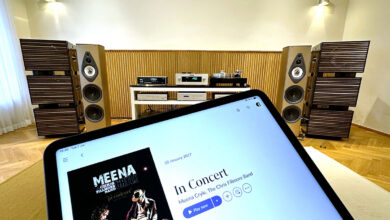


Planning Room Acoustics Properly – Why Good Acoustics Now Matter Across Pro Audio, Business and the Home
For a long time, room acoustics was treated as a specialist concern, something reserved for studios and highly committed HiFi enthusiasts. That view no longer holds. In modern architecture, hospitality, offices and contemporary living spaces alike, acoustics have become one of the defining factors of whether a room merely looks impressive or actually works.


- A room is never neutral in the acoustic sense: it always shapes what we hear, how we speak, and how comfortable we feel. That is why room acoustics has moved from technical afterthought to essential planning discipline.
There are aspects of spatial planning that remained surprisingly undervalued for far too long, even though their effect is felt every single day. Room acoustics belongs firmly in that category. Architecture, materials, lighting, furniture and technical equipment usually receive enormous attention. By contrast, how a room actually sounds often becomes a subject only once something starts to irritate: when conversations become tiring, when a beautifully designed restaurant feels oppressively loud, when an office no longer supports concentration, or when even very capable audio equipment in the home sounds unexpectedly flat, hard or vague.

That is precisely why room acoustics has become more relevant than ever. Contemporary architecture favours openness, reduction, glass, concrete, stone and large continuous surfaces. Visually, those choices can be deeply impressive. Acoustically, they often create very real challenges. At the same time, expectations of modern spaces have risen. A room is no longer expected merely to look good. It also needs to perform – for conversation, focused work, rest, media use, music, hospitality and everyday comfort.




Room acoustics is therefore no longer a niche topic reserved for recording studios or committed HiFi enthusiasts. It has become a genuine quality factor that affects professional applications, business environments and domestic life alike. Anyone who wants to think about rooms in a truly holistic way can no longer treat sound as an afterthought.
Key Facts
- Room acoustics affect speech intelligibility, concentration, calm, comfort and the reproduction of music and film sound.
- Open architecture, hard surfaces and large glazed areas often lead to reverberation and acoustic unrest.
- Absorbers, diffusers, low-frequency modules and careful planning serve different purposes and need to be combined appropriately.
- The relevance of good acoustics now extends from Pro Audio to offices, hospitality and gastronomy, all the way into the home.
- Modern acoustic solutions can be integrated into a wide range of environments in ways that are both technically sound and visually convincing.
Why room acoustics has become such an important subject
The growing importance of room acoustics is no accident. It reflects several developments that have gained real weight in recent years. Architecture is one part of that story. Open floor plans, high ceilings, sparse furnishing, exposed concrete, glass and smooth surfaces define many new buildings as well as modernised existing properties. What communicates visual clarity, generosity and elegance often creates long reverberation times and an unsettled acoustic character.
The way we use rooms has also changed. In the office, traditional workstations now merge with communication zones, meeting areas and hybrid video-conferencing environments. In gastronomy and hospitality, atmosphere is no longer decorative background but an integral part of the concept. In the home, open-plan living spaces are expected to handle multiple demands at once: cooking, dining, conversation, media use, retreat, work, music and home cinema.
Added to that is a broader shift in how quality is judged. Anyone investing in architecture, furnishing and technology quite reasonably expects a room to work in everyday life as well. This is exactly where acoustics proves decisive. It is not merely a side effect of design, but an active factor in how a room functions and how it feels.


The fundamentals of room acoustics
Room acoustics describes the way sound behaves within an enclosed space: how it spreads, reflects, decays or builds up. Every room influences what is spoken, heard or played inside it. That is why the room is always part of the result, whether the subject is speech, music, film sound or general comfort.
One of the central parameters is reverberation time. This describes how long a sound remains audible in a room after the source has stopped. If that time is too long, information begins to overlap. Speech loses clarity, noises accumulate, music becomes diffuse and the room as a whole feels restless. This is especially common in spaces dominated by acoustically hard surfaces.
A key method of controlling reverberation is absorption. Absorptive materials take in sound energy and prevent reflections from travelling unchecked through the room. That reduces reverberation and improves calm and speech intelligibility. Yet absorption alone is not the whole answer. A room that is overly damped can quickly feel dull or lifeless.
That is where diffusion comes in. Diffusers scatter sound in a controlled way rather than merely swallowing it. This helps preserve acoustic energy in the room, but in a more ordered form. It becomes particularly important wherever naturalness, spaciousness and openness are meant to survive.
Things become more complex at low frequencies. Bass behaves strongly in relation to room dimensions and can generate standing waves, known as room modes. The result is familiar: bass becomes excessive in one position and almost disappears in another. In music rooms, home cinema environments and living spaces with capable loudspeakers or subwoofers, this is a central issue.
There are also flutter echoes between parallel hard surfaces, early reflections from walls and ceilings, and the wider question of whether a room should support speech or separate sound more clearly between zones. Good room acoustics therefore never happens by accident, and almost never through a single measure. It depends on using the right combination of tools for the intended purpose.
Room acoustics and sound insulation – two very different tasks
When people talk about acoustics in everyday life, they often mean very different things. One of the most common misunderstandings is to treat room acoustics and sound insulation as though they were the same subject. They are not, and the distinction matters because each one follows a different planning goal.
Room acoustics is concerned with how a room sounds internally. It looks at how speech, music, film sound or everyday noise behaves within the space, how it reflects, how it is perceived and whether it supports or undermines the intended use of the room. Typical issues include reverberation time, speech intelligibility, disturbing reflections, flutter echoes and low-frequency problems. If a living room feels echoic, a restaurant seems unpleasantly loud, or a conference room fails to reproduce speech clearly, the issue belongs to room acoustics.
Sound insulation has a different aim. Here the question is how much sound is transmitted from one area to another. Put simply, room acoustics improves how a room sounds inside, while sound insulation limits how strongly sound travels out of it or into it. If the goal is to stop road noise entering a bedroom, conversations leaking from the neighbouring office, or home cinema bass travelling into adjacent rooms, then sound insulation is the primary concern.
The two fields are related in everyday practice, but they are not the same in planning terms. A room can sound pleasant internally and still be poorly protected from outside noise. Equally, a room can be excellently insulated from its surroundings yet remain echoic, aggressive or imprecise inside. That is why the two disciplines need to be considered separately and weighted according to the actual objective.
This distinction becomes especially relevant in modern living and working environments. An open-plan home typically needs room-acoustic solutions to improve speech, calm and sound quality inside the house. By contrast, reducing sound transmission between a home office and the living area, between hotel rooms or between different usage zones within a building belongs to sound insulation. Only once both aspects are properly understood can a room be planned in a way that convinces not just visually, but acoustically as well.
Pro Audio – where modern room acoustics was sharpened
Anyone seeking to understand why room acoustics now matters in so many different contexts should first look at its professional roots. The subject was developed with particular rigour wherever precise listening is indispensable: recording studios, control rooms and mastering suites. In these spaces, the room must not impose an uncontrolled character of its own. Every intrusive reflection, every inaccurate bass response and every poorly structured decay pattern would distort the decisions being made.
In the Pro Audio world, the room is never mere background. It is a vital part of the toolset. Recording engineers and producers need to trust that speech, voices, instruments, dynamics and spatial information are presented with the highest possible precision. Much of the knowledge now used far beyond the studio comes directly from that demand.
Particularly important in this context are the control of early reflections, the deliberate shaping of reverberation time and the treatment of low frequencies. In control rooms, the objective is to create a space that behaves reliably and repeatably. That does not automatically mean extreme dryness. It means a clearly defined acoustic response that makes analytical listening possible.
Across decades, those requirements gave rise to standards, methods and materials that are now widely used in other environments. Their transfer into offices, hospitality, living spaces and specialist audio rooms is entirely logical. What makes precision possible in a studio improves intelligibility, concentration, calm and comfort elsewhere.


Business – when acoustics decides concentration, atmosphere and quality
Office and working environments
In contemporary working environments, room acoustics is one of the decisive factors for concentration and usability. Open-plan offices, co-working spaces and communication-oriented layouts have shown very clearly how strongly sound shapes the working day. The problem is not merely general noise level, but above all the intelligibility of other people’s voices and the constant presence of unwanted information.
If phone calls, meetings and spontaneous conversations remain permanently audible in the immediate surroundings, focused work becomes noticeably harder. The brain continues to filter information that is not actually relevant. That consumes energy and makes the room tiring over time. For that reason, acoustically effective measures in office environments are not a comfort detail but a functional necessity.
Ceiling baffles, wall treatments, textile elements, acoustically effective zoning and carefully distributed surface treatment help control the spread of sound. Conference rooms add another layer, because speech must remain natural and intelligible, both in the room and in video conferences. Since hybrid working has become standard practice, good speech intelligibility within the room matters more than ever.
Retail and sales environments
Acoustics also plays a larger role in retail than many assume at first glance. Sales floors are often intended to feel open, contemporary and premium. Materials such as glass, stone, metal and smooth flooring deliver exactly that visual language, but they can quickly become acoustically problematic. Once conversations, footsteps, technical sounds and background music begin to overlap without control, the shopping experience suffers.
In retail, acoustics is closely tied to dwell quality. A space should feel alive, but not hectic. Customers need to orient themselves, consultation must remain possible and the environment should not create unnecessary stress. Particularly in premium retail, good acoustics becomes part of the overall credibility of the concept.
Hotel industry
In hotels, room acoustics is a core element of atmosphere. Reception areas, lounges, restaurants, spa zones and event spaces each demand different solutions, yet all benefit from rooms that sound controlled and balanced. A lobby may feel lively, but it should not become loud. A lounge should communicate openness without dissolving into acoustic vagueness. In spa areas, by contrast, calm is part of the actual experience.
Hospitality makes one point especially clear: planning has to be differentiated. Not every room needs the same reverberation time, and not every zone requires the same degree of damping. What matters is that the acoustics supports the intended function of the space. Where communication and hospitality matter, speech should remain pleasant and natural. Where retreat is desired, quiet needs to become tangible.
Gastronomy
Restaurants, bars and cafés depend heavily on atmosphere. At the same time, they are among the most acoustically demanding spaces of all. Voices, crockery, circulation routes, open kitchens and technical noise build up very quickly into a sound level that has a profound effect on the overall experience. Many modern gastronomic concepts illustrate exactly this tension: visually persuasive, acoustically too often hard and too loud.
Once a room is not under control, the vocal level rises almost automatically. Guests speak louder in order to understand each other, the overall level continues to climb, and the intended atmosphere slips into unrest. Good room acoustics interrupts precisely this process. It allows conversation at the table to remain comfortable without charging the entire room acoustically.
In fine dining in particular, that is a relevant quality factor. An evening is shaped not only by cuisine, service and design, but equally by the ease with which guests can speak, listen and move within the room.
Domestic environments – why good acoustics changes everyday life so much
Modern living spaces and open architecture
In the home, room acoustics is often noticed only when something feels wrong. Yet it shapes daily life in countless ways. This applies especially to modern living concepts with open floor plans, long sightlines and reduced material palettes. What creates architectural openness, light and elegance often causes exactly the effects later perceived as irritating: echo, hardness, uncontrolled sound spread and general unrest.
Open-plan living now brings multiple functions together in one connected area. Cooking, dining, relaxing and media use happen side by side. At the same time, there are often no doors, fewer textiles and fewer small-scale room divisions of the kind that used to provide natural acoustic separation. The result is a space that feels generous visually but is often significantly more demanding acoustically.
Living room
The living room is no longer just a TV room or traditional sitting room. It is a meeting point, a place of retreat, a communication zone, a media room and often the part of the home where music is meant to be enjoyed properly. That is why poor acoustics tends to become obvious very quickly. Dialogue on television loses clarity, the room sounds harder, voices project more aggressively than comfortably, and music fails to unfold with the natural ease one expects from a high-quality domestic environment.
With targeted acoustic treatment, this area can be improved very significantly. Reflections from critical surfaces can be reduced, hardness can be softened and the overall calm of the room can be increased. The living room remains homely, but it gains clearly in perceived quality — and in daily use, that often matters more than any spectacular isolated measure.
Dining room and open dining areas
The dining room, or the dining area within an open-plan space, is especially sensitive because conversation is central to its purpose. At the same time, hard table surfaces, smooth flooring, glass and open transitions towards the kitchen often all come together. Without acoustic balance, the result is a room in which conversation becomes effortful and the overall level rises sharply as more people gather.
Good acoustic design strengthens this area as a social centre. Speech remains intelligible without turning sharp. The room feels lively, but not loud. That matters especially in open floor plans, where the dining area often sets the acoustic tone for the entire living environment.
Kitchen
In contemporary homes, the kitchen is fully part of the living space. That raises its acoustic demands considerably. Worktops, fronts and appliances, together with smooth and hard materials, create an environment that reflects sound strongly. And the kitchen is full of sound generation, from crockery handling and cooking noise to water and extractor systems. If this area is not considered acoustically, it can contribute heavily to the overall sonic load of the home.
Acoustically effective measures on adjacent surfaces, ceilings or within the zoning of the room can help ease these effects. Especially where kitchen and dining area are directly connected, good planning becomes highly valuable.
Children’s room
In a children’s room, room acoustics presents itself differently again. The issue is not simply quietness, but also energy, movement and real-life usability. Playing, laughing, running and talking naturally create high sound levels. In rooms dominated by hard surfaces, that effect is amplified. The room itself becomes louder, and sound spreads more strongly into neighbouring parts of the house.
Intelligent acoustic design can bring noticeable relief here. It does not deaden the room into unnatural silence, but makes it more usable, less sharp and generally more pleasant. For families, that can make a meaningful difference to everyday living quality.
Staircases and hallways
Staircases and hallways are frequently underestimated in planning, even though they can have a strong acoustic influence. In multi-level homes in particular, the staircase often functions as a vertical sound link. Voices, steps and noise from the living area travel across floors and shape the sense of calm throughout the house.
Acoustically effective measures in these areas can achieve surprisingly much. They reduce sound propagation, soften hard reflections and improve the perceived calm of adjacent rooms without sacrificing the openness of the architecture.
Bedroom, bathroom and retreat spaces
In the bedroom, calm naturally takes priority. Hard surfaces and an overly lively acoustic can make even small noises feel disproportionately present. A balanced acoustic approach helps the room feel quieter and more sheltered.
Bathrooms and private wellness areas, by contrast, are often dominated by tile, glass and stone — exactly the materials that reflect sound strongly. The result is often a hard, cool acoustic impression. Modern moisture-resistant solutions show that these spaces too can be made more pleasant without demanding aesthetic compromise.
HiFi and Home cinema – specialist cases within the home
While good room acoustics in general living spaces is primarily about calm, intelligibility and comfort, the demands become markedly higher in HiFi and home cinema. Here, the room becomes an active part of the replay chain. It influences imaging, spatial impression, tonal balance, speech intelligibility and bass control in direct and unmistakable ways.
In a classic HiFi environment, early reflections, loudspeaker placement, reverberant behaviour and the treatment of low-frequency issues all play decisive roles. Even excellent loudspeakers and carefully chosen electronics cannot show what they are capable of if the room works against them. What is necessary for precision in the studio becomes the key to convincing replay in the domestic music room or ambitious living space.
Home cinema adds a further layer, because speech intelligibility, surround precision and especially bass behaviour need to be controlled. Low frequencies should feel powerful, but must not boom or mask other ranges. In multi-channel systems in particular, clean room acoustics is not an optional refinement. It is the precondition for hearing the mix and the technical quality as intended.
The tools of room acoustics
Broadband absorbers
Broadband absorbers are among the essential foundations of acoustic planning. They reduce reflections across a wide frequency range and help lower reverberation and hardness within a room. They are commonly used on walls, ceilings and other relevant reflection points.
Diffusers
Diffusers scatter sound in a controlled way and help a room remain open and natural even while under control. They are especially useful wherever spaciousness and liveliness should be preserved without allowing hard reflections to dominate.
Bass traps and low-frequency modules
Low-frequency problems demand dedicated solutions. Bass traps and comparable low-frequency modules help reduce room modes and excessive bass excitation. In music rooms, home cinema environments and spaces with powerful loudspeakers or subwoofers, this is a central concern.
Resonators
Resonators are used for the targeted fine-tuning of specific problematic frequency regions. They are typically employed where a room already works well in principle, but particular resonances remain disruptive.
Acoustic plasters, ceiling sails and integrated surface solutions
Alongside classic modules, architecturally integrated solutions now play an increasingly important role. Acoustic plasters, ceiling sails, textile panels and wood-based surface systems allow acoustic function to be combined with design ambition. Particularly in offices, hospitality and the home, this marks a major step forward.
Planning, design and architectural integration
One of the most important developments of recent years is that room acoustics is no longer understood as a purely technical discipline. It has increasingly become part of interdisciplinary planning, where architecture, interior design, use and technical requirements are brought together. That is one of its real strengths today.
Good room acoustics does not need to look visibly technical. On the contrary, many contemporary solutions are designed either to disappear discreetly into the architecture or to function as deliberate architectural detail. Wood, textile, textured plaster, relief surfaces and carefully conceived ceiling elements demonstrate that acoustic performance and high-quality design are not mutually exclusive.
This is especially important in demanding projects. Rooms must do more than function; they also have to communicate their quality visually and atmospherically. Room acoustics is therefore no longer merely a technical correction, but a meaningful part of good design.
A compact glossary of room acoustics
Absorber
An acoustically effective element that absorbs sound energy and thereby reduces reflections and reverberation.
Diffuser
A component with a structured surface that deliberately scatters sound in order to preserve spaciousness and avoid hard reflections.
Reverberation time
The time a sound event takes to decay in the room after the source has fallen silent.
Room modes
Standing waves in the low-frequency range caused by room dimensions and reflections, which can lead to booming or cancellations.
Bass trap
An acoustic measure used to reduce low-frequency resonances and excessive bass excitation.
Flutter echo
Rapid successive reflections between parallel, hard surfaces that can sound metallic or unpleasant.
First reflection point
The surface in the room where the sound from a loudspeaker arrives as the first relevant reflection after the direct sound.
Acoustically hard surface
A material such as glass, concrete, tile or smooth plaster that predominantly reflects sound rather than absorbing it.
UniVicoustic as an example of the development of modern room acoustics
The breadth of the subject today can be illustrated clearly by companies such as UniVicoustic with the brand Vicoustic. Its background in Professional Audio remains an important reference point, but the field has long since expanded far beyond that. Offices, hospitality, education, residential projects, HiFi and home cinema all show that acoustic planning is now relevant across very different types of environment.
This is not simply about individual products or isolated specialist solutions. It reflects a more fundamental shift: room acoustics is now understood as part of modern spatial quality. That is exactly why it makes sense that expertise from the studio and Pro Audio worlds increasingly reappears in business settings and domestic life. It is a sign of a broader and more mature understanding of architecture, use and comfort.
FAQ about room acoustics
-
Why is room acoustics more important today than it used to be?
Because modern architecture often relies on openness, reduction and an emphasis on materials. This creates visually attractive spaces, but acoustically it often brings more reverberation and sound reflections than earlier living and working environments with a more defined structure.
-
Is room acoustics only relevant for music rooms or home cinema?
No. It affects the quality of a room wherever speech, calm, concentration or comfort matter — which means offices, hotels, restaurants, shops and everyday life at home as well.
-
How can you recognise poor room acoustics?
Typical signs include tiring conversations, poor speech intelligibility, hard or echoic sound, unpleasantly loud rooms despite moderate use, and booming bass with music or film sound.
-
Can good room acoustics also be achieved in design-led spaces?
Yes. Modern solutions can now be integrated very discreetly or used deliberately as an architectural detail. Function and design do not have to be a contradiction.
-
Are carpets, curtains and furnishing enough to improve room acoustics?
They can make a positive contribution, especially in the upper frequency range. However, fundamental problems involving reverberation, speech intelligibility or low-frequency behaviour can often only be solved partially in this way.
-
What is the difference between room acoustics and sound insulation?
Room acoustics deals with how a room sounds inside. Sound insulation aims to reduce sound transmission from one room to another. Both are important, but they pursue different goals.
A final important note
This feature has deliberately approached room acoustics from a broad and practical perspective. The aim has been to make the central relationships in Pro Audio, business and domestic environments easier to understand, while showing that the subject matters far beyond classical specialist applications. What such an overview cannot replace, however, is individual planning for a specific room. Every space behaves differently depending on volume, proportions, materials, furnishing and intended use.
Anyone aiming to implement room acoustics to a high standard should therefore always consider it on a project-specific basis and, ideally, plan it with proper technical expertise.
Readers looking to explore the subject in greater depth will find numerous further articles, reports and background features on room acoustics in the coming weeks on sempre-audio.at. We would also point to our platform the LUXURY HOME guide, where we will be giving the topic greater attention as well, with particular focus on how acoustic solutions can be integrated into modern living environments.
Conclusion
Room acoustics is no longer a peripheral subject. It plays a direct role in how we work, communicate, listen, relax and perceive spaces as a whole. At a time when architecture increasingly favours openness, reduction and high-quality materials, its importance becomes especially clear. A room may be visually persuasive, but if it fails acoustically, a decisive part of its quality remains unrealised.
From the world of Pro Audio to offices, retail, hospitality, gastronomy and the home, the picture is now unmistakable: good acoustics improves far more than sound alone. It enhances intelligibility, supports concentration, creates calm and makes the quality of a space fully experienceable in the first place. Anyone who wants to think about rooms properly should therefore not leave sound until the end of a project, but address it from the outset.
| Theme | Room acoustics – Why good sound makes a room complete |
|---|---|
| Visound Acústica SA |
| Brand | Vicoustic |
|---|---|
| Manufacturer | Visound Acústica SA |
| Distribution Austria | 4 Audio Musikelektronik Vertriebsgesellschaft mbH |
| Distribution Germany | Audio Reference GmbH |
| More about this manufacturer at HiFi BLOG |