

Marantz CINEMA Series 2 – New Home Cinema Generation with Marantz CINEMA 50 Series 2, Marantz CINEMA 60 DAB Series 2 and Marantz CINEMA 70s Series 2
Marantz is renewing the part of its home cinema portfolio that stretches from discreet living-room systems to ambitious 11.4-channel installations. The Marantz CINEMA 70s Series 2, Marantz CINEMA 60 DAB Series 2 and Marantz CINEMA 50 Series 2 share several important technical advances, but remain clearly separated by power, processing capacity and connectivity. Prices range from € 1.100,- to € 2.100,-, with market launches scheduled between mid-September and mid-October 2026.


- The Marantz CINEMA Series 2 gives buyers three clearly defined ways to build a contemporary home cinema without forcing every system into the same chassis or channel count. Even the slim Marantz CINEMA 70s Series 2 can now be upgraded with Dirac Live, while the Marantz CINEMA 50 Series 2 supports 11.4-channel processing, four independently controlled subwoofers and Marantz’s most extensive room-correction options. Shared upgrades include 32-bit DACs, 1440p passthrough, AMD FreeSync, browser-based configuration and improved HDMI diagnostics.
Marantz is approaching its second CINEMA generation as a carefully tiered product family. Rather than changing every home cinema component at once, Harman International Industries Inc. is initially concentrating on three models that cover a particularly broad range of applications: the slimline Marantz CINEMA 70s Series 2, the conventional Marantz CINEMA 60 DAB Series 2 and the considerably more capable Marantz CINEMA 50 Series 2.

Their differences remain deliberate. Seven or nine internal power amplifiers, output ratings from 50 W to 110 W per channel and processing capacities extending as far as 11.4 channels allow each model to address a different scale of installation. The more significant change, however, is what now connects them: a new DAC architecture, access to Dirac Live, updated gaming functions and a set of configuration and diagnostic tools intended to make increasingly complex AV systems easier to manage.

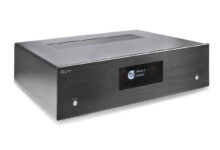


Key Facts Marantz CINEMA Series 2
- Three models: Marantz CINEMA 50 Series 2, Marantz CINEMA 60 DAB Series 2 and Marantz CINEMA 70s Series 2
- New 32-bit eight-channel DAC architecture
- Seven or nine discrete amplifier channels
- Output power from 50 W to 110 W per channel into 8 Ohms
- Dolby Atmos and DTS:X supported by all three models
- Audyssey MultEQ XT or Audyssey MultEQ XT32
- Optional paid Dirac Live upgrade across the entire range
- 8K 60 Hz, 4K 120 Hz, 1440p passthrough and AMD FreeSync
- HEOS Built-in, Apple AirPlay 2, Roon Ready, TIDAL Connect, Spotify Connect and Qobuz Connect
- Web Control 2.0, HDMI Diagnostics 2.0 and a channel-level monitor
- Bluetooth LE Audio scheduled through a future firmware update
- Multichannel preamplifier outputs on every model
Three Models, Three Different System Priorities
The new range is easiest to understand by beginning with the intended installation rather than with the shared specification sheet.
The Marantz CINEMA 70s Series 2 is designed for rooms in which a conventional full-height AV receiver would be difficult to accommodate. The Marantz CINEMA 60 DAB Series 2 provides the familiar proportions, power and radio facilities expected of a traditional 7.2-channel receiver. At the top of this trio, the Marantz CINEMA 50 Series 2 moves into larger speaker configurations with nine power amplifiers, 11.4-channel processing and more extensive integration facilities.
This separation allows Marantz to retain a common operating and streaming platform without pretending that a compact living-room system and a dedicated home cinema have identical requirements.


Marantz CINEMA 70s Series 2 – Slimline Does Not Mean Closed-ended
At only 109 mm high, the Marantz CINEMA 70s Series 2 remains the most living-room-friendly model in the range. Its compact format nevertheless accommodates seven discrete power amplifiers, each rated at 50 W into 8 Ohms.
The receiver processes up to 7.1 channels and provides complete 7.2-channel preamplifier outputs. It can therefore operate as a self-contained AV receiver initially, while retaining the option of adding external power amplifiers if the loudspeakers or listening levels eventually demand more output.
Six HDMI inputs are provided, three of which accept signals up to 8K 60 Hz or 4K 120 Hz. The single HDMI output supports eARC. Dolby Atmos, Dolby Atmos Height Virtualization, Dolby TrueHD, DTS:X and DTS Virtual:X cover the principal immersive and virtualised surround formats.
Room correction begins with Audyssey MultEQ XT, but the decisive Series 2 upgrade is the option to purchase Dirac Live Room Correction. Bringing this facility to a receiver of such modest height makes the Marantz CINEMA 70s Series 2 particularly interesting for installations where space is limited but careful acoustic optimisation still matters.
Its audio connections comprise three analogue line inputs, an MM phono input, one optical and one coaxial S/PDIF input, together with two subwoofer outputs.


Marantz CINEMA 60 DAB Series 2 – The Conventional 7.2-channel Choice
The Marantz CINEMA 60 DAB Series 2 follows a more traditional AV-receiver format. Seven internal power amplifiers deliver 100 W per channel into 8 Ohms, while full 7.2-channel preamplifier outputs make it possible to hand individual channels – or the entire speaker system – over to external amplification.
It supports Dolby Atmos, Dolby Atmos Height Virtualization, Dolby TrueHD, DTS:X and DTS Virtual:X. Audyssey MultEQ XT is included as standard, with Dirac Live Room Correction available as a paid upgrade. Speaker Setup Presets also allow two different loudspeaker configurations to be stored.
Of the six HDMI inputs, three support 8K 60 Hz and 4K 120 Hz signals. Two HDMI outputs are provided, one with eARC. The integrated tuner receives DAB, DAB+ and FM radio with RDS, giving this model a feature not offered by the other two members of the trio.
Four analogue line inputs and an MM phono stage are joined by two optical and two coaxial S/PDIF inputs. Two subwoofer outputs complete the conventional audio connectivity.


Marantz CINEMA 50 Series 2 – The Platform for Larger Installations
Nine discrete power amplifiers establish the Marantz CINEMA 50 Series 2 as the most capable model in the new range. Each channel is rated at 110 W into 8 Ohms from 20 Hz to 20 kHz, with 0.08 per cent distortion and two channels driven.
Its processing platform extends to 11.4 channels. Owners can therefore use external power amplifiers to build a loudspeaker configuration that goes beyond the nine internally amplified channels. Complete 11.4-channel preamplifier outputs and four independently controlled subwoofer outputs provide the necessary flexibility.
The range of immersive formats is also broader. Alongside Dolby Atmos and DTS:X, the Marantz CINEMA 50 Series 2 supports Auro-3D, IMAX Enhanced, 360 Reality Audio and MPEG-H Audio.
A new Dolby Atmos Channel Expander is exclusive to this model. With channel-based Dolby Atmos material, it can involve all loudspeakers available within the selected configuration. A dedicated centre-channel bi-amping mode has also been added, while the established option of bi-amping the front loudspeakers remains available.
All six HDMI inputs support signals up to 8K 60 Hz or 4K 120 Hz. Three HDMI outputs are fitted, including a Zone 2 output. RS-232, IP Control, a 12 V Trigger and HDMI Diagnostics further reflect the model’s role in more elaborate home cinema and custom-installation projects.
Dirac Live Moves beyond the Flagship Model
In the previous generation, the more extensive use of Dirac Live within this part of the Marantz range was primarily associated with the Marantz CINEMA 50. Series 2 changes that hierarchy in an important way.
Both the Marantz CINEMA 60 DAB Series 2 and Marantz CINEMA 70s Series 2 can now be upgraded with Dirac Live Room Correction through a separately purchased licence. Measurements taken around the listening position can be used to create digital filters that adapt the system’s response to the acoustic behaviour of the room.
The Marantz CINEMA 50 Series 2 retains a clear advantage in the breadth of its options. In addition to Dirac Live Room Correction, it supports Dirac Live Bass Control and Dirac Live Active Room Treatment, again subject to the purchase of the respective licences.
Audyssey remains the standard calibration system throughout the range. The Marantz CINEMA 50 Series 2 includes Audyssey MultEQ XT32, while the Marantz CINEMA 60 DAB Series 2 and Marantz CINEMA 70s Series 2 use Audyssey MultEQ XT.
A Shared 32-bit DAC Foundation
The digital audio platform is one of the principal technical links between all three models. Marantz now employs 32-bit eight-channel DACs intended to convert the individual channels simultaneously at high resolution.
According to the manufacturer, this parallel approach is designed not only to improve channel separation, but also to reduce timing deviations between channels and permit a more direct signal path. Whether it produces a meaningful sonic difference from the preceding models will require a direct comparison. As an architectural change, however, it represents one of the most substantial distinctions between the original CINEMA models and Series 2.
Marantz states that the circuitry and selected components have once again been tuned by the Marantz Sound Master. The familiar objective remains intact: these components are intended to handle dynamic film soundtracks while also serving as the central music and streaming system in the home.
Gaming Support Extends beyond 4K 120 Hz
The Marantz CINEMA Series 2 retains support for video signals up to 8K 60 Hz and 4K 120 Hz, but adds 1440p passthrough and AMD FreeSync.
With compatible gaming PCs and consoles, AMD FreeSync synchronises display output with the frame rate generated by the source. This can reduce visible tearing and help motion appear smoother. The addition is particularly relevant to PC gaming, where 1440p remains a widely used resolution.
VRR, ALLM and QFT are also supported, as are HDR, HLG, Dolby Vision, HDR10+ and Dynamic HDR. Every model includes HDMI eARC for returning audio from a compatible television.
The Series 2 is consequently designed not only for film and music playback, but also for current consoles and gaming computers. Buyers should note that the number of HDMI inputs capable of accepting the highest video resolutions varies between the three models.
Configuration without Constant Reliance on a Television
Web Control 2.0 allows installation, configuration and everyday control to take place through the web browser of a smartphone, tablet or computer. A connected television is therefore no longer required for many setup procedures.
HDMI Diagnostics 2.0 is intended primarily to help dealers and custom installers examine HDMI connections and locate faults in more complicated signal chains. A new channel-level monitor complements it by showing the activity of individual audio channels in real time.
This makes it easier to establish which channels are actually present in the incoming format and whether the connected loudspeakers are being addressed as intended. In a large multichannel installation, that is considerably more useful than another feature buried in a specification list.
HEOS Built-in, Hi-res Audio and Future Bluetooth LE Audio
HEOS Built-in integrates all three models into compatible multiroom audio systems. Streaming options include Spotify Connect, TIDAL Connect, Qobuz Connect, Apple AirPlay 2 and TuneIn. The receivers are also designated Roon Ready.
FLAC, WAV and ALAC files are supported at resolutions up to 24 Bit 192 kHz, while DSD playback extends to 5.6 MHz. Network access is available through Ethernet or WiFi.
Bluetooth can be used both to receive audio and to transmit sound to compatible headphones. Marantz plans to add Bluetooth LE Audio through a future firmware update. The company places particular emphasis on its lower latency when used with suitable headphones and mobile devices, since even a modest delay between picture and sound can become distracting during films and games.


Familiar Marantz Design, Revised in Detail
The exterior design continues the visual language introduced with the first Marantz CINEMA generation. Its defining elements include a symmetrical fascia, the central circular OLED display and controls framed at either side.
The Marantz CINEMA 50 Series 2 retains its substantial metal front panel. The two less expensive receivers use a simpler front construction, preserving the family resemblance while reflecting their respective price positions.
Internally, Marantz refers to selected components, copper-plated parts and a series of constructional refinements. The packaging has also been revised to reduce the use of plastic and make greater use of recyclable paper materials.
The Most Important Advantages at a Glance
- Dirac Live across all three product classes: Even the slimline Marantz CINEMA 70s Series 2 can now be upgraded with more extensive room correction.
- A common digital foundation: Every model uses the new 32-bit eight-channel DAC architecture.
- Room to expand the system: Complete multichannel preamplifier outputs allow external power amplifiers to be added to any model.
- Better support for gaming systems: 1440p passthrough and AMD FreeSync complement 8K 60 Hz, 4K 120 Hz, VRR, ALLM and QFT.
- Browser-based setup: Web Control 2.0 permits configuration and control from a smartphone, tablet or computer.
- More useful fault-finding tools: HDMI Diagnostics 2.0 and the channel-level monitor simplify installation and troubleshooting.
- Comprehensive music streaming: HEOS Built-in, Apple AirPlay 2, Roon Ready, TIDAL Connect and Qobuz Connect are directly integrated.
- A properly differentiated range: Buyers can choose between a slim living-room receiver, a conventional 7.2-channel model and an 11.4-channel home cinema centre.
Price & Availability
The Marantz CINEMA 60 DAB Series 2 is scheduled to reach specialist retailers in mid-September 2026. Its recommended retail price is € 1.450,-. The Marantz CINEMA 50 Series 2 is expected to follow at the beginning of October 2026, priced at € 2.100,-. The compact Marantz CINEMA 70s Series 2 is due in mid-October 2026 and will carry a recommended retail price of € 1.100,-. All three models will be available in Black and Silver-Gold finishes.
Getting to the Point
The Marantz CINEMA Series 2 is not simply a cosmetic revision accompanied by a handful of new software features. Its common DAC platform, the extension of optional Dirac Live support to every model and the new setup and diagnostic functions amount to a coherent technical update.
The Marantz CINEMA 70s Series 2 is arguably the most distinctive proposition. A slim 7.2-channel AV receiver with complete preamplifier outputs and optional Dirac Live remains far from commonplace. At the other end of the range, the Marantz CINEMA 50 Series 2 reinforces its position as the central component for ambitious installations through 11.4-channel processing, four independently controlled subwoofers, Dirac Live Bass Control and Dirac Live Active Room Treatment.
Series 2 is therefore best understood as a focused development of an existing platform. Marantz has retained the recognisable structure of the range while making substantial changes in precisely those areas that determine how flexibly these receivers can be configured, calibrated and expanded.
| Product | Marantz CINEMA Series 2 |
|---|---|
| Price | Marantz CINEMA 50 Series 2 € 2.100,- Marantz CINEMA 60 DAB Series 2 € 1.450,- Marantz CINEMA 70s Series 2 € 1.100,- |
Technical Specifications
| Product | Marantz CINEMA 50 Series 2 | Marantz CINEMA 60 DAB Series 2 | Marantz CINEMA 70s Series 2 |
|---|---|---|---|
| Product type | AV amplifier | AV receiver with DAB+ | Slimline AV receiver |
| Integrated power amplifiers | 9 | 7 | 7 |
| Maximum signal processing | 11.4 channels | 7.1 channels | 7.1 channels |
| Output into 8 Ohms | 110 W per channel, 20 Hz to 20 kHz, 0.08%, two channels driven | 100 W per channel, 20 Hz to 20 kHz, 0.08%, two channels driven | 50 W per channel, 20 Hz to 20 kHz, 0.08%, two channels driven |
| Output into 6 Ohms | 150 W per channel, 1 kHz, 0.7% | 140 W per channel, 1 kHz, 0.7% | 70 W per channel, 1 kHz, 0.7% |
| DAC | 32-bit eight-channel DAC | 32-bit eight-channel DAC | 32-bit eight-channel DAC |
| Multichannel pre-outs | 11.4 | 7.2 | 7.2 |
| Subwoofer outputs | 4, independently controlled | 2 | 2 |
| Standard room correction | Audyssey MultEQ XT32 | Audyssey MultEQ XT | Audyssey MultEQ XT |
| Dirac Live | Room Correction, Bass Control and Active Room Treatment as paid upgrades | Room Correction as a paid upgrade | Room Correction as a paid upgrade |
| Surround formats | Dolby Atmos, DTS:X, Auro-3D, IMAX Enhanced, 360 Reality Audio, MPEG-H Audio | Dolby Atmos, DTS:X, Dolby Atmos Height Virtualization, DTS Virtual:X | Dolby Atmos, DTS:X, Dolby Atmos Height Virtualization, DTS Virtual:X |
| HDMI inputs | 6, all supporting 8K | 6, including 3 supporting 8K | 6, including 3 supporting 8K |
| HDMI outputs | 3, including Zone 2 | 2 | 1 |
| HDMI eARC | Yes | Yes | Yes |
| Maximum video resolution | 8K 60 Hz, 4K 120 Hz | 8K 60 Hz, 4K 120 Hz | 8K 60 Hz, 4K 120 Hz |
| Gaming | 1440p passthrough, AMD FreeSync, VRR, ALLM, QFT | 1440p passthrough, AMD FreeSync, VRR, ALLM, QFT | 1440p passthrough, AMD FreeSync, VRR, ALLM, QFT |
| HDR | HDR, HLG, Dolby Vision, HDR10+, Dynamic HDR | HDR, HLG, Dolby Vision, HDR10+, Dynamic HDR | HDR, HLG, Dolby Vision, HDR10+, Dynamic HDR |
| Analogue inputs | 5 × line level, 1 × MM phono | 4 × line level, 1 × MM phono | 3 × line level, 1 × MM phono |
| Digital audio inputs | 2 × optical, 2 × coaxial S/PDIF | 2 × optical, 2 × coaxial S/PDIF | 1 × optical, 1 × coaxial S/PDIF |
| Streaming | HEOS Built-in, Apple AirPlay 2, Spotify Connect, TIDAL Connect, Qobuz Connect, Roon Ready | HEOS Built-in, Apple AirPlay 2, Spotify Connect, TIDAL Connect, Qobuz Connect, Roon Ready | HEOS Built-in, Apple AirPlay 2, Spotify Connect, TIDAL Connect, Qobuz Connect, Roon Ready |
| Network | Ethernet, WiFi, Bluetooth | Ethernet, WiFi, Bluetooth | Ethernet, WiFi, Bluetooth |
| Bluetooth LE Audio | Via a future firmware update | Via a future firmware update | Via a future firmware update |
| Hi-res Audio | FLAC, WAV and ALAC up to 24 Bit 192 kHz; DSD up to 5.6 MHz | FLAC, WAV and ALAC up to 24 Bit 192 kHz; DSD up to 5.6 MHz | FLAC, WAV and ALAC up to 24 Bit 192 kHz; DSD up to 5.6 MHz |
| Tuner | FM/AM | DAB, DAB+ and FM with RDS | FM/AM |
| Control | App, IP, Web Control 2.0, RS-232, HDMI Diagnostics 2.0 | App, IP, Web Control 2.0, RS-232, HDMI Diagnostics 2.0 | App, IP, Web Control 2.0, HDMI Diagnostics 2.0 |
| Dimensions | 442 × 404 × 165 mm | 442 × 354 × 165 mm | 442 × 384 × 109 mm |
| Weight | 13,5 kg | 10,9 kg | 8,7 kg |
| Finishes | Black, Silver-Gold | Black, Silver-Gold | Black, Silver-Gold |
| Brand | Marantz |
|---|---|
| Manufacturer | Harman International Industries |
| Distribution Austria | Marantz Deutschland D&M Germany GmbH |
| Distribution Germany | Marantz Deutschland D&M Germany GmbH |
| Distribution Switzerland | B&W Group Schweiz GmbH |
| More about this manufacturer at HiFi BLOG |