

Hegel H200 Streaming Amplifier – Integrated Amplifier with Spotify Connect Lossless, Qobuz Connect and Roon Ready
Hegel Music Systems AS is offering two answers to the same question with the Hegel H200 and Hegel A200. Both use a 2 × 150-watt Class AB amplifier platform, yet only the H200 is intended to replace several source components at once. Its repertoire extends from Spotify Connect Lossless, TIDAL Connect and Qobuz Connect to Roon Ready, USB playback, MM phono amplification and Smart Home integration.


- Choosing the Hegel H200 could considerably simplify a modern HiFi system: loudspeakers, a record player, television and perhaps a local USB library are enough to make use of most of its capabilities. Streaming services remain accessible through their familiar apps, while DAC Loop preserves the option of adding an external converter later. The result is a connected integrated amplifier that reduces the number of components without forcing the listener into a closed playback ecosystem.
The decisive specification of the Hegel H200 is not its output of 2 × 150 watts. The purely analogue Hegel A200 delivers exactly the same figure. What defines the H200 is everything that can disappear from the equipment rack around it: a network player, D/A converter, MM phono preamplifier and, depending on the system, further control hardware. Hegel has therefore used one amplifier platform to create two products for fundamentally different approaches to building a HiFi system.

Key Facts Hegel H200 Streaming Amplifier
- Streaming integrated amplifier with Class AB output stage
- 2 × 150 watts into 8 ohms and minimum loudspeaker impedance of 2 ohms
- Hegel SoundEngine2 and damping factor above 4,000
- Integrated DAC supporting signals up to 24 Bit 192 kHz
- Spotify Connect Lossless, TIDAL Connect and Qobuz Connect
- Apple AirPlay, Google Cast, Roon Ready and UPnP
- Internet radio and podcasts via airable
- USB-A playback for libraries containing up to 10,000 tracks
- Integrated MM phono stage derived from the Hegel V10
- Coaxial S/PDIF output with DAC Loop
- Control4, Crestron Home and Crestron SIMPL
- Black or white finish, 43 × 41 × 12 cm and 13,6 kg
What Can the Hegel H200 Replace?
A network player is the most obvious answer, but not the only one. The Hegel H200 also contains a DAC, accepts music directly from USB storage, provides an MM phono input and includes a headphone output on its front panel. Analogue and digital sources can therefore coexist without requiring a separate component for each task.
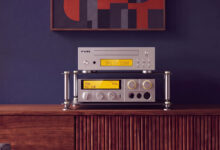
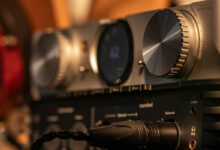
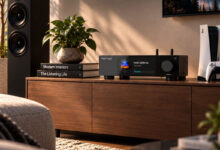
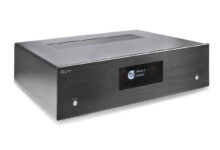
This breadth does not turn the H200 into a digital-only amplifier. A balanced XLR input and two unbalanced RCA inputs remain available for line-level sources. Record players equipped with a Moving Magnet cartridge connect to a phono stage based on the MM section of the separate Hegel V10 Phono Preamplifier. Hegel specifies selected FET transistors and selected operational amplifiers for this part of the circuit.
The output side is equally useful when the system grows. One fixed and one variable RCA output can supply another audio component, an active subwoofer or an additional power amplifier. The H200 may reduce the initial number of boxes, but it does not define a permanently closed configuration.
The Actual Choice Is H200 or A200
Hegel Music Systems introduces the H200 alongside the Hegel A200. Their common Class AB amplifier platform explains why the two models appear closely related, yet their intended roles could hardly be clearer.
The A200 omits digital circuitry altogether. It leaves streaming and D/A conversion to separate components and concentrates on analogue sources. The H200 assumes responsibility for both sides of the system, combining the same rated amplifier output with digital inputs, network services, local file playback and additional control facilities.
This also places the new model in its proper context within the Hegel range. It succeeds the Hegel H190v, retaining its nominal 2 × 150 watts into 8 ohms while substantially extending streaming, DAC, USB and operating functions.
Hegel has used the H200 designation before. The earlier amplifier carrying that name has since been discontinued, and the new model shares nothing with it beyond the model number.


Streaming without Learning Another Music Platform
There is no single proprietary Hegel service through which every streaming source must pass. Spotify Connect with Spotify Lossless, TIDAL Connect and Qobuz Connect can be operated from their respective apps. Listeners therefore retain the interfaces and libraries they already use.
Apple AirPlay and Google Cast open the amplifier to playback from numerous other apps and devices. Roon Ready and UPnP address organised music libraries on the local network, while airable supplies Internet radio and podcasts.
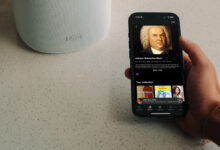
Hegel’s own Control App concentrates on the amplifier rather than replacing every service application. It handles input selection, volume and playback control, while also providing access to UPnP libraries and directly connected USB media.
A USB Drive Can Become a Source Component
USB-A 2.0 gives the H200 a second route to locally stored music. A USB stick or externally powered hard drive can hold a library of up to 10.000 tracks, which the amplifier indexes for navigation through the Hegel Control App.
The supported formats are MP3, WAV, FLAC, ALAC, AIFF, AAC, PCM and Ogg. This facility is particularly relevant to listeners who want local playback without operating a computer, network storage system or separate music server for every listening session.
USB-B serves a different purpose. It accepts an external digital source such as a computer and supports audio signals up to 24 Bit 192 kHz.


The Shared Foundation: 2 × 150 Watts
Once the digital facilities are set aside, the H200 and A200 return to the same starting point. The H200 employs an analogue Class AB output stage rated at 2 × 150 watts into 8 ohms. Hegel states that it can operate with loudspeaker impedances down to 2 ohms.
A quoted damping factor above 4.000 indicates the emphasis Hegel places on electrical control of the connected loudspeakers. SoundEngine2 is intended to reduce distortion near the stage in which it arises instead of allowing it to continue through the amplifier circuit.
The technical figures include a frequency response from 5 Hz to 100 kHz and a signal-to-noise ratio exceeding 100 dB. Channel separation is specified at less than -100 dB. Total harmonic distortion is quoted below 0,01 per cent at 50 watts into 8 ohms and 1 kHz, with intermodulation distortion also below 0,01 per cent at 19 kHz and 20 kHz.
These are manufacturer specifications rather than findings from a listening test. They do, however, show that the extensive source section has not replaced the amplifier as the technical core of the product.
Different Digital Connections for Different Sources
The H200 divides its digital inputs according to their likely use. One coaxial S/PDIF input and USB-B accept signals up to 24 Bit 192 kHz. Two optical TOSLINK inputs handle resolutions up to 24 Bit 96 kHz, while network playback also reaches 24 Bit 192 kHz.
That arrangement covers computers, CD transports, televisions, network storage and other digital components. It also leaves the optical connections available for devices where electrical isolation or simple television integration matters more than the highest supported sampling rate.
Hegel does not reduce the DAC design to the choice of converter chip. The company describes power supply, clocking, grounding, signal routing and analogue output filters as interdependent parts of the digital section.
One Enclosure, Two Very Different Electrical Environments
The H200 places network processing and digital control circuitry close to an analogue preamplifier and power amplifier. This creates a design problem that does not exist in the digital-free A200: high-frequency switching interference must be prevented from reaching the analogue signal path.
Hegel has placed essential digital functions on separate circuit boards and arranged the grounding and internal signal routes accordingly. The purpose is to isolate interference generated by the digital section before it affects the amplifier stages.
This distinction between H200 and A200 runs deeper than their connection panels. In one model, avoiding digital interference is achieved by omitting the relevant circuits; in the other, it becomes part of the internal engineering.
DAC Loop Keeps the Digital Section Open to Change
An integrated DAC is convenient when assembling a system, but it can become an obstacle if the owner later wants to use a different converter. Hegel’s DAC Loop provides a route around that limitation.
The coaxial S/PDIF output sends digital audio at up to 24 Bit 192 kHz to an external D/A converter. Its analogue output can then return to one of the H200’s line inputs. The amplifier continues to provide streaming, source selection, volume control and loudspeaker drive, while the external device takes over conversion.
DAC Loop therefore changes the meaning of “integrated”. The internal DAC is available from the start, but using it does not have to remain compulsory throughout the life of the system.
A Practical Role in Television and Home Cinema Systems
Digital Input Sense allows the H200 to react when a source becomes active. It can switch on and select the relevant digital input automatically. The amplifier can also learn volume commands from a television remote, reducing the number of handsets required for routine viewing.
For Home Cinema integration, a fixed volume level can be assigned to an input. An AV receiver can then control the overall playback level while the H200 powers the front loudspeakers.
There is one notable limitation. Hegel’s connection list contains no HDMI eARC input. Television audio must reach the amplifier through an optical digital input or another external route. The H200 accommodates TV use, but it does not adopt the connection that has become the most direct solution for many current televisions.
Beyond a Conventional HiFi Remote
Support for Control4, Crestron Home and Crestron SIMPL allows the H200 to participate in professionally planned building and media-control systems. This is relevant wherever the amplifier is expected to respond as part of a larger installation rather than operate as an isolated HiFi component.
Everyday behaviour can also be tailored without such a system. The user can define the power-on volume, restrict the maximum level, activate Auto Standby and adjust display dimming. Firmware, functional and app updates are scheduled for automatic installation, giving Hegel a means of developing the streaming platform after the amplifier reaches customers.
The H200 measures 43 cm wide, 41 cm deep and 12 cm high. It weighs 13,6 kg and will be offered in black or white.
The Most Important Advantages at a Glance
- Fewer separate components: Streaming, D/A conversion, MM phono amplification and headphone listening are incorporated alongside the integrated amplifier.
- Freedom of service choice: Spotify, TIDAL and Qobuz remain controllable through their established apps.
- Direct lossless Spotify playback: Spotify Connect Lossless is part of the streaming platform.
- Useful support for local collections: UPnP and USB storage allow network-based and directly connected libraries to coexist.
- Broad loudspeaker compatibility: The amplifier provides 2 × 150 watts and is specified for impedances down to 2 ohms.
- Room for a later DAC upgrade: DAC Loop retains the H200’s control and streaming functions when an external converter is added.
- Straightforward Home Cinema integration: A fixed input level allows an AV receiver to assume control of the complete system volume.
- Installation-ready control: Control4 and Crestron support extend the H200 beyond a conventional standalone HiFi system.
Price & Availability
The Hegel H200 Streaming Amplifier is scheduled to reach the market at the end of August 2026. Customers can choose between black and white finishes. The recommended retail price is € 3.995,-.
Conclusion
The important decision between the Hegel H200 and A200 is made before either amplifier drives a loudspeaker. It concerns the architecture of the entire system.
Owners of a carefully selected streamer and DAC may find the A200’s deliberate restraint more appropriate. The H200 addresses listeners who want one component to manage streaming services, digital and analogue sources, vinyl playback, headphones and system control without surrendering the option of later expansion. DAC Loop is especially significant in that respect: it prevents the convenience of an internal converter from becoming a long-term restriction.
Hegel has also avoided weakening the amplifier specification to make room for the connected features. The H200 retains the same 2 × 150-watt platform as its analogue sibling. Its omission of HDMI eARC is therefore the conspicuous gap, particularly given the otherwise considered TV and Home Cinema functions. Even so, the H200 presents a coherent answer for anyone who wants a powerful HiFi system with fewer separate components and several ways to use it.
| Product | Hegel H200 Streaming Amplifier |
|---|---|
| Price | € 3.995 |
Technical Specifications
| Product | Hegel H200 Streaming Amplifier |
|---|---|
| Product type | Streaming stereo integrated amplifier |
| Amplifier principle | Class AB |
| Output power | 2 × 150 watts into 8 ohms at 1 kHz and 1 per cent THD |
| Minimum impedance | 2 ohms |
| Amplifier technology | Hegel SoundEngine2 |
| Analogue inputs | 1 × balanced XLR, 2 × unbalanced RCA |
| Phono input | 1 × RCA for Moving Magnet cartridges |
| Digital inputs | 1 × coaxial S/PDIF up to 24 Bit 192 kHz, 2 × TOSLINK up to 24 Bit 96 kHz, 1 × USB-B up to 24 Bit 192 kHz, 1 × USB-A 2.0, 1 × network up to 24 Bit 192 kHz |
| Digital output | 1 × coaxial S/PDIF up to 24 Bit 192 kHz |
| Line outputs | 1 × variable RCA, 1 × fixed RCA |
| Headphone output | Available |
| Streaming | Spotify Connect Lossless, TIDAL Connect, Qobuz Connect, Apple AirPlay, Google Cast, Roon Ready, UPnP |
| Internet radio and podcasts | airable |
| Streaming formats | MP3, WAV, FLAC, ALAC, AIFF, AAC, PCM and Ogg |
| USB playback | Storage devices containing up to 10,000 tracks |
| Control | Hegel Control App, system remote control, TV remote control |
| Smart Home | Control4, Crestron Home, Crestron SIMPL |
| DAC Loop | Via coaxial S/PDIF output |
| Frequency response | 5 Hz to 100 kHz |
| Signal-to-noise ratio | More than 100 dB |
| Channel separation | Less than -100 dB |
| Total harmonic distortion | Less than 0,01 per cent at 50 watts into 8 ohms and 1 kHz |
| Intermodulation distortion | Less than 0,01 per cent at 19 kHz and 20 kHz |
| Damping factor | More than 4.000 |
| Convenience functions | Digital Input Sense, fixed input levels, power-on volume, maximum-level limit, Auto Standby, display dimming |
| Software updates | Automatic |
| Mains voltage | 100, 120 or 230 V AC |
| Finishes | Black and white |
| Dimensions | 43 × 41 × 12 cm |
| Weight | 13,6 kg |
| Brand | Hegel Music Systems |
|---|---|
| Manufacturer | Hegel Music Systems |
| Distribution | GP Acoustics GmbH |
| More about this manufacturer at HiFi BLOG |