

iFi iCAN Phantom 1.5 – Reference Headphone Amplifier for IEMs, Planar Magnetic and Electrostatic Headphones
iFi audio's iCAN Phantom 1.5 is a reference-grade headphone and preamplifier built around switchable solid-state and valve input stages, an integrated electrostatic driver stage good for up to 640 V, and symmetrical output exceeding 15.000 mW into 16 ohms. This revised version brings finer gain steps, an extended IEMatch attenuator, a new VU-meter display and a Nexis app aligned with the flagship iDSD Phantom. Priced at € 3.749,- across Europe, it arrives with the low-noise iFi iPower Elite power supply included.


- The iFi iCAN Phantom 1.5 is a high-end headphone and preamplifier that houses separate solid-state and valve amplification stages alongside a built-in electrostatic energiser, letting one box drive everything from sensitive IEMs to electrostatic flagships. Refined gain settings, a wider-range IEMatch, a new VU-meter interface and Nexis app control round out the update, with the unit available now across Europe for € 3.749,-, iPower Elite power supply included.
Anyone who has built up a headphone collection over several years knows how wildly the demands can differ from one pair to the next. A sensitive in-ear monitor wants near-silent noise floors and delicate volume control; a serious planar magnetic design wants serious current on tap; and an electrostatic headphone typically insists on its own dedicated energiser altogether. iFi audio’s answer to that scattered equipment rack is the iCAN Phantom 1.5, an evolution of its reference-class analogue headphone amplifier that consolidates all three worlds into one chassis. Rather than reinventing the platform, the British brand has used this update to sharpen the details that matter most in daily use — gain structure, attenuation, display and control — while leaving intact the amplifier’s distinctive dual Class-A architecture and its built-in support for electrostatic headphones.

Key Facts iFi iCAN Phantom 1.5
- Analogue reference headphone amplifier and preamplifier
- Separate Class-A transistor and Class-A valve input stages
- Solid-State, Tube and Tube+ operating modes
- Two selected General Electric 5670 valves
- PureWavePRO true differential balanced circuit topology
- Over 15.000 mW into 16 ohms via the balanced outputs
- Built-in iESL technology for electrostatic headphones, up to 640 V
- Gain settings of 0 dB, 12 dB and 24 dB
- IEMatch attenuation up to 12 dB single-ended / 24 dB balanced
- XBass and XSpace analogue tone-shaping
- New VU-meter display and redesigned user interface
- Control and status monitoring via the iFi Nexis app
A do-it-all amplifier, not a shelf of specialists
iFi audio isn’t shy about its ambitions for this update: the iCAN Phantom 1.5 is pitched as the last headphone amplifier a serious collector will need to buy, regardless of how their headphone line-up evolves over the years. That claim rests on genuinely broad output capability. Through the balanced outputs, the amplifier is rated at more than 15,000 mW into 16 ohms, with over 5,760 mW available single-ended into the same load. Into a 600-ohm load it can deliver upwards of 27 V, and for electrostatic headphones the ceiling rises to 640 V.





That last figure points to one of the Phantom’s more unusual traits. The iESL circuitry that once shipped as a standalone electrostatic energiser has been folded directly into the amplifier, meaning owners of electrostatic headphones need no separate box, power supply or set of cables to get them running — the Phantom 1.5 drives them on its own.


Two amplifier characters, plus a third in between
The internal architecture remains just as unconventional as the output figures suggest. Inside the iCAN Phantom 1.5 sit two entirely separate, switchable Class-A input stages: one built from discrete solid-state components, the other running a pair of selected General Electric 5670 valves. A third mode, Tube+, dials back loop gain and negative feedback to let the valve stage’s character come through more strongly still.
The result is a genuine choice between three distinct signal paths rather than simple tone-shaping presets. iFi audio describes the solid-state path as quick and direct, the standard Tube mode as smoother and more relaxed, and Tube+ as leaning further still into warmth. According to the distributor, the GE5670 valves fitted as standard should last around 10.000 hours of use, and the smoked-glass panel on the top of the chassis can be removed when the time comes to replace them; the amplifier is also compatible with 6922-type valves for those wanting to experiment.
Where version 1.5 actually changes things
The most meaningful revisions in this update sit in the fine print rather than the headline specification. Gain now steps through 0 dB, 12 dB and 24 dB, replacing the previous model’s 0 dB, 9 dB and 18 dB settings — a change aimed squarely at owners juggling headphones with very different sensitivities, giving each a usable portion of the volume dial rather than a knob that’s either barely moving or maxed out.
IEMatch has been extended alongside it, now offering up to 12 dB of attenuation single-ended and 24 dB in balanced mode. That’s aimed at the most sensitive in-ear monitors on the market, where excess gain and a cramped usable volume range can otherwise make fine adjustments frustrating.
The analogue tone controls carry over unaltered in philosophy, if not necessarily in outcome given the wider gain range around them. XBass offers three stages of low-end lift, whilst XSpace runs separate matrices for headphone and speaker use to widen the sense of space without ever touching digital signal processing.
A new face and a friendlier way to drive it
Beyond the signal path, iFi audio has given the Phantom 1.5 a new VU-meter display for at-a-glance level monitoring, and reworked the interface to bring it into line with the flagship iDSD Phantom — a move that suggests the brand wants a shared operating logic across its top-tier products going forward. The volume knob itself has been revised too, now running on buffered pads that give the rotation a more damped, controlled feel, whilst both the glass fascia and the display have gained an anti-fingerprint coating.
The companion Nexis app has grown in step. Alongside remote control, diagnostics and over-the-air firmware updates, the new generation adds a reset command, the ability to give the unit a custom name, and a real-time readout of valve condition.


More than a headphone amp: preamp duties included
Nothing about the iCAN Phantom 1.5 confines it purely to headphone duty. Its analogue preamp outputs can drive a power amplifier or active speakers directly, making it a workable central hub for a system that mixes speaker and headphone listening under one roof. On the input side sit a pair of balanced XLR connections and three pairs of RCA inputs, with preamp outputs offered in both XLR and RCA. Headphone connectivity on the front panel spans 4-pin XLR, 4,4 mm Pentaconn, and 6,3 mm and 3,5 mm jacks, alongside dedicated Normal Bias and Custom Bias connections for electrostatic headphones.
A two-tier chassis built to match the ambition
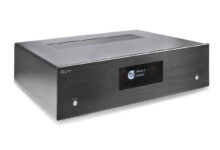
The design stays just as distinctive as the electronics inside it. What at first looks like two separate components stacked one atop the other is in fact a single aluminium chassis with a multi-layered internal build: connections live on the lower tier, controls and the OLED display on the upper one. A flush-mounted smoked-glass panel offers a view of part of the internal electronics and the glowing valves, whilst unused connectors can be hidden behind a magnetically attached aluminium cover that also houses the bias setting cards for electrostatic headphones. An aluminium remote control is included in the box.
All benefits at a glance
- One box replaces several: IEMs, dynamic headphones, planar magnetics and electrostatics can all be driven from the same amplifier, with no need to swap equipment as a collection grows.
- Genuine headroom: Balanced output beyond 15.000 mW and over 27 V into 600 ohms cover even the most demanding planar and dynamic designs with room to spare.
- No separate energiser required: Integrated iESL circuitry drives electrostatic headphones directly, up to 640 V, without additional boxes or cabling.
- Three distinct amplifier characters: Solid-State, Tube and Tube+ offer genuinely different signal paths rather than a single tone control.
- Sensible gain staging for extremes: Revised 0/12/24 dB gain and an extended IEMatch attenuator make both ultra-sensitive IEMs and low-efficiency headphones easier to set correctly.
- Dual-purpose system hub: Full preamp outputs mean the same unit can also feed a power amplifier or active speakers.
- Everyday usability improvements: A new VU-meter, damped volume control, anti-fingerprint coatings and an expanded Nexis app make the flagship noticeably nicer to live with day to day.
Price and availability
The iFi iCAN Phantom 1.5 is available now, priced at € 3.749,- across the European market. The package includes iFi’s low-noise iPower Elite power supply as standard.
Getting to the Point
The iCAN Phantom 1.5 isn’t really about reinventing a formula that already worked — it’s about pushing that formula’s unusual versatility further still. Pairing a powerful balanced headphone amplifier with separate transistor and valve stages, a built-in electrostatic driver and full preamp functionality was already an unusually broad remit for one component. With finer gain steps, a wider-ranging IEMatch, a new display and reworked controls, version 1.5 from ifi audio addresses precisely the details that matter most when a system is asked to do this much. At € 3.749,-, the iCAN Phantom 1.5 sits firmly in high-end territory, but its real appeal lies in bringing several otherwise separate specialist solutions together under one roof.
| Product | iFi iCAN Phantom 1.5 |
|---|---|
| Price | € 3.749,- |
Technical Specifications
| Product | iFi iCAN Phantom 1.5 |
|---|---|
| Device type | Analogue headphone amplifier and preamplifier |
| Amplifier stages | Discrete Class-A solid-state, Class-A valve |
| Valves | 2 × selected General Electric 5670 |
| Operating modes | Solid-State, Tube, Tube+ |
| Circuit topology | True Differential Balanced, PureWavePRO |
| Gain | 0 dB, 12 dB, 24 dB |
| Frequency response | 0.5 Hz to 500 kHz (-3 dB) |
| Output power, balanced | > 15.000 mW into 16 ohms |
| Output power, single-ended | > 5.760 mW into 16 ohms |
| Output voltage | > 27 V into 600 ohms |
| Electrostatic output voltage | Up to 640 V |
| IEMatch | Up to 12 dB single-ended, up to 24 dB balanced |
| THD+N, Solid-State | ≤ 0.0015% balanced; ≤ 0.007% single-ended |
| THD+N, Tube | ≤ 0.002% balanced; ≤ 0.006% single-ended |
| THD+N, Tube+ | ≤ 0.012% balanced; ≤ 0.2% single-ended |
| Signal-to-noise ratio | < 145 dB(A) balanced; < 130 dB(A) single-ended |
| Analogue inputs | 1 × XLR pair, 3 × Cinch pairs |
| Preamp outputs | 1 × XLR pair, 1 × Cinch pair |
| Headphone connections | 3-pin XLR L/R, 4-pin XLR, 4,4 mm Pentaconn, 2 × 6,3 mm, 3,5 mm |
| Electrostatic connections | 5-pin Normal Bias, 5-pin Custom Bias |
| Tone controls | XBass, XSpace |
| Display | Colour display with VU-meter readout |
| Control | Front controls, remote control, iFi Nexis app |
| Power supply | DC 12V/4A or 15V/3A |
| Power consumption | < 27 W, 75 W maximum |
| Dimensions | 256 × 185 × 120 mm |
| Weight | 4,2 kg |
| Brand | iFi Audio |
|---|---|
| Manufacturer | Abbingdon Music Research |
| Distribution | WOD Audio |
| More about this manufacturer at HiFi BLOG |