

Spotify Connect, TIDAL Connect and Qobuz Connect Explained
Music streaming has evolved far beyond simple playback from a mobile device. With Spotify Connect, TIDAL Connect and Qobuz Connect, modern streaming protocols place the network player at the center of the audio chain. This approach promises greater reliability, seamless HiFi integration and access to lossless and high-resolution audio formats.


- Connect-based streaming protocols redefine how music is delivered in modern HiFi systems. By separating control from playback, they turn streaming into a stable, high-quality and system-friendly audio source.
The evolution of music streaming closely follows the development of networked HiFi hardware. As dedicated network players, streaming amplifiers and active loudspeakers have become standard components in modern systems, the limitations of smartphone-centric playback have become increasingly apparent. Against this backdrop, Spotify Connect, TIDAL Connect and Qobuz Connect represent a decisive step forward, redefining how streaming services interact with HiFi equipment.

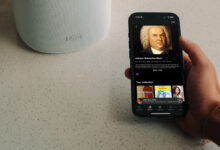
Rather than treating the smartphone as the audio source, these protocols elevate the playback device itself to a fully independent network source. In doing so, the leading platforms Spotify, TIDAL and Qobuz translate classic HiFi principles into the cloud-based world of modern music services.


Key Facts
- Cloud-based streaming protocols that control compatible playback devices directly
- The smartphone acts solely as a remote control and is not part of the audio signal path
- Audio data is streamed directly from the service’s servers to the network player
- Significantly higher playback stability compared to Bluetooth or traditional casting methods
- Playback continues independently of the smartphone, even when it is switched off or leaves the network
- Spotify Connect established the concept and remains the most widely supported solution
- TIDAL Connect and Qobuz Connect focus on lossless and high-resolution audio playback
- Designed for seamless integration with network players, streaming amplifiers and active loudspeakers
- Acts as a key interface between streaming platforms and modern HiFi hardware
- A core building block for contemporary HiFi, multiroom and high-end streaming systems
Historical Context: Spotify Connect as the Pioneer
Spotify Connect was the first technology to consistently implement this approach and remains the most widespread solution to date. Early on, Spotify introduced the idea that music should be streamed directly from the cloud to the playback device, rather than being relayed through a smartphone.
In practice, this proved to be highly effective. Playback devices could be switched on the fly, multiple users could control the same stream, and music continued uninterrupted even if the controlling device was no longer active. Spotify Connect effectively set a benchmark that later solutions would follow.
Spotify Connect: Convenience as a Design Principle
Spotify Connect’s strength lies not in pushing technical limits, but in its exceptional ease of use and broad device support. From smart speakers and televisions to AV receivers and dedicated HiFi streamers, Spotify Connect is nearly ubiquitous and defines the reference for convenience-driven streaming.
For an accurate assessment, it is important to distinguish between Spotify’s available audio formats. Alongside its long-established lossy streaming based on Ogg Vorbis, Spotify Premium includes Spotify Lossless, offering lossless FLAC streaming at up to 24 Bit and 44,1 kHz. While the sampling rate remains conservative, the increased word length exceeds classic CD quality. Crucially, Spotify Connect itself is format-agnostic: both lossy and lossless streams are delivered directly to the playback device. According to the manufacturer, the server-managed stream is designed to remain stable even under challenging network conditions.
TIDAL Connect: Focus on Studio-Grade Audio
TIDAL Connect follows a similar architectural concept but targets listeners with higher sonic expectations. The emphasis is on delivering lossless and high-resolution content directly to the playback device without additional protocol layers. Depending on hardware capabilities, Linear PCM streams of up to 24 Bit and 192 kHz are supported.
A key advantage lies in the direct access to the playback device’s internal digital-to-analog conversion and signal processing. The smartphone never becomes part of the audio path, allowing the hardware to determine how the stream is processed. This approach is intended to ensure consistent playback quality regardless of the controlling device and to preserve the sonic character of high-quality HiFi components.
Qobuz Connect: Consistent HiFi Integration
Qobuz Connect represents the most recent addition and is explicitly designed for classic HiFi applications. Qobuz has long positioned itself as an audiophile-oriented platform, emphasizing lossless audio quality, extensive metadata and editorial content.
With Qobuz Connect, this philosophy is implemented on a technical level. The app functions purely as a control interface, while the audio stream flows directly from Qobuz servers to the network player. This is particularly relevant in advanced streaming setups where users rely on dedicated DACs, digital signal processing or room correction. Qobuz Connect is intended to ensure that audio data reaches the playback device unaltered, allowing optimal downstream processing.
Underlying Technology
All Connect-based systems share a strict separation between control and data transmission. The mobile device authenticates the user and sends playback commands to the selected device. From that point onward, the network player establishes a direct connection to the streaming service’s servers and receives the audio stream independently.
Technically, these are cloud-based control protocols tightly integrated into the respective apps. Compatible playback devices announce themselves within the local network and are detected automatically. Playback status, volume and playlists are synchronized in real time via the internet, while the audio stream itself remains independent of the smartphone, contributing to improved stability and sound quality.
Practical Benefits for Users
From a user perspective, Connect technologies offer tangible advantages. Convenience is paramount: playback continues uninterrupted even if the smartphone is switched off, receives calls or leaves the WiFi network. System notifications and operating system limitations no longer interfere with music playback.
Integration is another key benefit. Network players, streaming amplifiers and active loudspeakers can be addressed directly, without relying on proprietary control apps. In multiroom environments or high-end systems with external DACs, Connect protocols become the central link between streaming services and hardware. Finally, sound quality benefits from the elimination of mobile-device constraints, particularly when using lossless and high-resolution formats via TIDAL Connect and Qobuz Connect.
Positioning Within the HiFi Ecosystem
Spotify Connect, TIDAL Connect and Qobuz Connect do not compete with manufacturer-specific platforms such as BluOS, HEOS or MusicCast. Instead, they complement them by providing a direct interface to the streaming service itself. While proprietary ecosystems manage device networking and multiroom functionality, Connect protocols form the bridge between app, cloud and playback hardware.
UPnP remains the only truly open industry standard in audio streaming. However, inconsistent implementation and limited usability have restricted its appeal. Connect technologies counter this with consistent, cloud-based control, albeit at the cost of being tied to specific streaming platforms.
Conclusion
Spotify Connect, TIDAL Connect and Qobuz Connect exemplify the ongoing maturation of music streaming. By clearly separating control from playback, these protocols deliver greater stability, improved system integration and more effective use of high-quality audio components.
Spotify Connect pioneered this concept and remains a cornerstone of everyday streaming thanks to its broad adoption and ease of use. With Spotify Lossless, a lossless option is now available without sacrificing convenience. TIDAL Connect and Qobuz Connect go a step further, targeting listeners who view streaming as a high-quality source and expect lossless and high-resolution audio alongside maximum control over signal processing. Together, these technologies demonstrate that modern streaming is no longer merely about access, but about performance, reliability and seamless integration within contemporary HiFi systems.
Technical Specifications
| Product | Spotify Connect | TIDAL Connect | Qobuz Connect |
|---|---|---|---|
| Basic principle | Cloud-based device control | Cloud-based device control | Cloud-based device control |
| Role of smartphone | Controller only | Controller only | Controller only |
| Data transmission | Direct from streaming service to playback device | Direct from streaming service to playback device | Direct from streaming service to playback device |
| Audio formats | Lossy Ogg Vorbis or lossless FLAC | Lossless FLAC | Lossless FLAC |
| Maximum resolution | up to 24 Bit and 44,1 kHz | up to 24 Bit and 192 kHz | up to 24 Bit and 192 kHz |
| Linear PCM support | Yes | Yes | Yes |
| Hi-res Audio | Yes (extended word length, conservative sampling rate) | Yes | Yes |
| Device support | Very broad, including consumer devices | Focus on HiFi hardware | Strong focus on HiFi and High-end hardware |
| Platform focus | Convenience, reach, everyday usability | Studio quality, sonic accuracy | Audiophile integration, editorial depth |
| Typical target audience | Broad user base with quality expectations | Demanding music listeners | Audiophile HiFi users |
| Typical use cases | Everyday listening, Multiroom, mixed systems | Critical listening, high-quality systems | Dedicated HiFi and High-end setups |