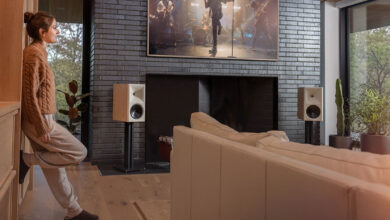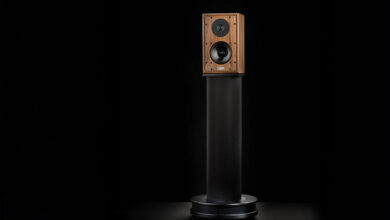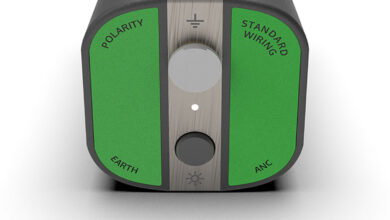



- The S25 Cable Series follows a system-based approach, covering speaker, analogue, digital and subwoofer connections within one consistent technical framework. Its focus on electrical stability and interference resistance makes it particularly relevant for modern, digitally dense listening environments.
in-akustik GmbH & Co. KG has built its reputation on treating signal transmission as a technical discipline rather than a marketing exercise. Based in Ballrechten-Dottingen, the German manufacturer has spent decades developing connection solutions that prioritise measurable electrical integrity, manufacturing precision and long-term reliability.

The in-akustik S25 Cable Series is positioned within the growing demand for affordable yet technically sound high-end infrastructure. As modern HiFi systems increasingly rely on high-resolution digital sources, powerful amplification and complex home environments filled with potential interference sources, the quality and consistency of the signal path have become more relevant than ever.


Key Facts
- Complete cable family for speakers, analogue audio, subwoofers and digital S/PDIF connections
- Fully manufactured and assembled in Germany with individual quality control
- Multicore speaker cable design to reduce inductance and stabilise transient response
- Air-foamed polyethylene insulation for low capacitance and stable signal behaviour
- High-purity OFC copper conductors for consistent conductivity and durability
- Dense copper shielding to protect against electromagnetic interference
- Connectors either hand-soldered or mechanically crimped with high contact pressure
- Robust yet flexible construction suitable for real-world installations
- Positioned as a technically grounded entry point into the high-end segment
in-akustik GmbH & Co. KG – A specialist with decades of experience
The German company in-akustik GmbH & Co. KG has been among the manufacturers that approach the topic of an optimal signal path with particular seriousness for decades. The specialists from Ballrechten-Dottingen develop and manufacture cables not for effect-driven showmanship, but solely for signal integrity – a philosophy reflected across all of the brand’s product lines. The new in-akustik S25 Cable Series marks another step forward, one intended to make the move into the audiophile segment easier and, at the same time, more substantial for as many HiFi enthusiasts as possible.


The in-akustik S25 Cable Series – philosophy, ambition and an audiophile foundation
The in-akustik S25 Series is not conceived as a collection of individual products, but as a continuous connection system designed to ensure consistent, interference-free and sonically neutral signal transfer in modern HiFi environments. While many cable manufacturers present their ranges as sound-shaping components, in-akustik takes a different approach: the in-akustik S25 line is not meant to “sound” a certain way, but to prevent the signal from losing anything along the way.
In addition, the technical environment of modern living spaces is becoming increasingly complex: Wi-Fi, Bluetooth, switching power supplies and smart-home devices create an electromagnetic noise floor that can affect sensitive audio signals. This makes connection technology all the more important – technology that not only withstands these influences, but also serves as a reliable, unobtrusive foundation for the entire playback chain. This is precisely where in-akustik’s new S25 Series comes in.
What defines the series is its clearly technical character. Every design decision – from conductor cross-section and material selection to shielding – follows the goal of electrically stabilising the signal path. The S25 Series is therefore a deliberately purist solution: no exotic materials, no extravagant outer sleeves, no aesthetic exaggerations of “sound.” Instead, it relies on high-quality raw materials, precise manufacturing and a focus on physical parameters.
Another key aspect is its manufacturing quality. Every cable in the S25 Series is made in Germany – from assembly to final inspection. That means no mass production, but craft-built connections designed for long-term stability. It is an approach grounded in engineering yet unmistakably audiophile: if a cable takes nothing away, a system can deliver more.


The technology behind the in-akustik S25 Series
Conductor material – OFC copper as a stable foundation for signal transfer
The technical substance of the in-akustik S25 Series does not reveal itself through buzzwords, but through the interaction of its design elements. It begins with the conductor material. in-akustik deliberately uses high-purity OFC copper – not for marketing reasons, but because of its consistently high conductivity, ageing stability and resistance to corrosion. Copper of this purity minimises basic resistance and retains its electrical properties even under years of use. The defined cross-sections of the three speaker cable variants also ensure that both compact systems and high-powered setups are supplied with the appropriate current-carrying capability.
Multicore principle – inductive stability for precise dynamics
The S25 speaker cables use a multicore structure in which many finely stranded individual conductors are grouped into a single composite. This is not an optical gimmick, but a physically meaningful method of reducing inductance. Because the magnetic fields of the individual conductors partially compensate each other, the cable remains more stable at high frequencies and during fast transients. Highly impulsive music – such as drum attacks, percussive elements or rapid synth runs – benefits because signal edges are less “slowed down.” The result is not a change in tonal character, but the most unadulterated transfer possible of dynamic fine detail.
Graduated cross-sections – electrical consistency for different systems
The stepped cross-sections of 2,5, 4,0 and 5,0 mm² are another aspect of the series’ carefully considered architecture. While slimmer cross-sections are ideal for smaller to mid-sized loudspeakers, the larger variants provide sufficient current capability for power-hungry systems. This differentiated concept allows the cables to be matched to the demands of the individual chain – a point that proves more relevant in practice than is often assumed.
Air-foamed PE – low-capacitance signal transfer without tonal intervention
The analogue interconnects and digital cables in the S25 Series use an air-foamed PE dielectric that significantly reduces capacitance. The high proportion of air minimises the dielectric’s influence on the electric field – an important contribution to stable phase and frequency behaviour. With analogue interconnects, fine spatial gradations remain intact; subtle reverberation tails and micro details are less masked. With digital cables, the benefits include steeper edges and a defined characteristic impedance – crucial for low-interference, low-jitter transmission of digital impulses.
Shielding – protection against modern RF interference sources
In today’s listening environments, numerous RF interference sources compete for space: Wi-Fi routers, Bluetooth connections, LED drivers, switching power supplies, televisions, laptops or smart-home hubs. The tightly woven copper shielding of the S25 analogue and digital cables reliably protects signals against electromagnetic ingress that often does not appear as audible noise, but can subtly shift the operating point of input stages. These “invisible” effects are what can alter the perceived character of a system – and this is exactly where the S25 Series demonstrates its technical seriousness.
Digital cable design – precise 75-ohm impedance as a key success factor
With digital S/PDIF signals, characteristic impedance is the decisive parameter. If it does not match, reflections occur that can distort the clocking and cause jitter. The S25 Connect 212 Digital is constructed geometrically so that the 75-ohm impedance is maintained precisely across the entire cable length. The cable does not “improve” the signal – but it reliably prevents errors that could otherwise have audible effects, for example as restlessness in the soundstage or a diffuse sense of space.
Mechanical construction – stability that preserves electrical values over time
The mechanical construction of the S25 Series is an underestimated part of its technical concept. The cables are flexible enough for easy routing, yet shape-stable to protect the conductor bundle from structural change. Very tight bend radii should be avoided – not because the cable is fragile, but because geometric integrity secures electrical consistency. The connectors are either crimped under high force or precisely soldered to ensure permanently low contact resistance. These seemingly mechanical details are, in fact, sound-relevant factors, because every contact point influences dynamics and microstructure in a recording.


Product variants within the S25 Series
The S25 Series covers a fully thought-out spectrum of connection cables that addresses all relevant signal paths in modern HiFi systems. In the speaker cable range, three variants are available, differing in conductor cross-section and therefore tuned to different performance requirements. The Speaker 225 model with a 2,5 mm² cross-section targets broadly usable systems with moderate cable lengths and loudspeakers that do not demand extraordinary current reserves. Above it sits the Speaker 415 with a 4,0 mm² conductor design, aimed especially at more powerful amplifier–speaker combinations where dynamic load changes play a greater role. The top of the series is the Speaker 425 with a 5,0 mm² cross-section, providing an optimal foundation for demanding, power-hungry loudspeakers thanks to its high conductor area.
For analogue signal transfer, the S25 range includes the Connect 212 Audio interconnect, available in both RCA and XLR versions. It uses the same technical foundation as the other cables in the series: an air-foamed PE dielectric to reduce capacitance and a high-quality, tightly braided shield that reliably protects analogue signals from external interference. Its design is deliberately neutral and suits connections between DAC and amplifier as well as classic CD players or high-quality phono stages with line output.
For digital signal paths, the Connect 212 Digital | RCA is designed precisely for a 75-ohm characteristic impedance. It transfers S/PDIF signals with stable pulse shape and serves as a reliable link between digital source devices and DACs – an aspect that is becoming increasingly important with high-resolution formats, since even minor impedance deviations can influence clocking.
The series is complemented by specialised solutions for the low-frequency domain. The Connect 212 Mono and Y subwoofer cables feature a robust, well-shielded construction that enables long cable runs without susceptibility to interference. Their flexibility simplifies integration in living spaces where subwoofers are often positioned far from the equipment rack.
Taken as a whole, the S25 Series forms a complete signal ecosystem that not only covers all typical connection paths in high-quality HiFi systems, but does so at a technical level that is by no means a given in the entry-level high-end segment. Each cable follows the same design principles and ensures that the playback chain remains coherent, neutral and interference-free.
In the listening room – a representative cross-section in practice
For the practical part of our test, we used a combination of three S25 Series cables, deliberately chosen to represent a meaningful cross-section of the overall product line. With the in-akustik S25 Speaker 425 as a high-capacity speaker cable, the in-akustik S25 Connect 212 Audio in the RCA version for analogue signal transfer, and the in-akustik S25 Connect 212 Digital | RCA for digital transport, this set covered all relevant signal stages of a modern HiFi chain. This combination can be regarded as a solid basic configuration as found in many high-quality systems: a digital cable for precise handover of source information, an analogue interconnect for interference-free transfer of the line-level signal, and a speaker cable that delivers available amplifier power to the loudspeakers in a stable, low-loss manner.
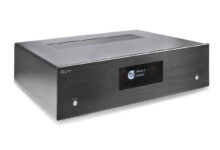
The test chain itself consisted of components that reflect the ambitions of the S25 Series very well. The Arcam SA45 served as a powerful streaming integrated amplifier, while a pair of Monitor Audio Gold 100 speakers converted the electrical signals into precise sound images. Digital sources included an Eversolo DMP-A6 Master Edition as well as a Roon NUCLEUS+ in combination with Qobuz. An Apple iPhone 14 Pro acted as a mobile control hub, and a Samsung OLED in 77 inches served as a visual interface. This combination of modern streaming technology, high-quality amplification and precise compact loudspeakers provided an ideal environment to assess how the S25 cables perform objectively and subjectively, and to understand their role within a finely balanced HiFi system.
Musical impressions – the S25 Series in the context of the full HiFi chain
A cable is not a sound-shaping component, but a connecting element that enables a playback chain to realise its full potential. Accordingly, this listening test is not an analysis of individual cable models, but an evaluation of the system as a whole with the S25 Series in place. The key question is whether the system becomes freer, more precise, spatially clearer or dynamically more coherent – in other words, whether the connection technology fulfils its task of transferring music unadulterated, interference-free and stable.
To answer these questions, we used a deliberately broad musical spectrum that places different demands on dynamics, space, structure, transient behaviour and tonal balance.
Hans Theessink – Jedermann Remixed
With this earthy, intimate album, it was immediately noticeable how unobtrusively yet present the voice stood in the room. The playback chain conveyed an immediate character that felt deeply anchored without being artificially inflated. Instrumental structures such as guitars and fine percussive accents integrated organically, while the background remained pleasantly quiet. In particular, the spatial calm that unfolds with acoustic music underlined the chain’s ability to reproduce without haste and without artificial emphasis.
Queen – The Works
Rock productions of this era are defined by dense arrangements and powerful impulses. Here, the system impressed with a presentation that remained both forceful and structured. Dynamic outbursts were cleanly controlled; guitar riffs retained their characteristic bite, but without restlessness or aggressive peaks. The rhythmic energy was carried in a way that clearly shows: clean signal guidance does not reveal itself through effects, but by preventing complex productions from collapsing into undifferentiated energy masses.
Peter Murphy – Silver Shade
Murphy’s intimate, dark vocal colour challenges any system, as it can quickly sound dull or overly hard. Here, the playback was finely nuanced and well balanced. Spatial cues, reverb and subtle tonal shading remained fully intact. The chain delivered a coherent, convincingly three-dimensional image that neither artificially expanded nor narrowed. The music flows – and that is a sign of unobstructed signal transfer.
Black Eyed Peas – Monkey Business
Electronic productions with strong bass foundations and steep transients are ideal for testing system interaction. Here, the presentation was powerful, fast and clearly structured. The bass did not appear as a single block, but as a shaped, differentiated foundation in which rhythmic details remained easy to follow. Synth layers unfolded cleanly without smearing. Even at higher levels, the system maintained composure and control.
Jennifer Warnes – Famous Blue Raincoat
This album is famous for its openness and high transparency. The playback convinced with a sensitive rendering that treated voice and accompaniment with equal respect. The voice stood freely in space without exaggerated sharpness or excessive smoothing. The atmosphere of the recording, fine reverb tails and open instrumentation were reproduced in natural balance – a reliable indication that the signal chain adds no artefacts of its own.
Beth Hart – Better Than Home
Hart’s intense vocals demand stability and fine dynamics. The system conveyed the emotional directness of her voice without hardness in the upper mids and without losing subtle dynamic gradations. The music felt immediate but not intrusive; powerful but not “loud for effect.” The chain’s ability to combine energy with control was particularly tangible here.
Albrecht Mayer – Bonjour Paris
Delicate acoustic instruments such as oboe quickly reveal whether a system can differentiate subtle tonal colours. The oboe was rendered warmly, with calm breath and excellent intelligibility. The orchestra opened wide and deep without drifting into the diffuse. The proportional relationship between solo and ensemble remained credible at all times – a strong example of how precise signal guidance protects musical expression.
Carlos Kleiber – Die Fledermaus (Deutsche Grammophon)
A full orchestra under a conductor like Kleiber is the ultimate test of resolution, separation and dynamic coherence. Here, the system delivered remarkable clarity even within dense orchestral structures. String sections retained transparency, brass kept their characteristic attack, and the space remained open and clearly organised. The music unfolded with an ease that suggests the signal path creates no artificial bottlenecks.
In practice – strengths and potential limitations
In everyday use, the S25 Series proved pleasantly straightforward. The cables feel high-quality, are easy to route, and the connectors fit precisely, conveying confidence in long-term reliability. Sonically, the series impressed through neutrality: no tendency toward “beautification,” no thinning out, no effect-driven emphasis. In particular, the calmness of the soundstage and control with impulsive music highlight the technical background.
Possible limitations are not deficiencies, but the result of solid construction. The cables require a certain minimum bend radius because their robust build relies on shape stability. Visually, the series is deliberately understated – anyone looking for “high-end bling” will not find it here. And anyone hoping to create a specific tonal signature through cables will likewise not be catered for.
Price and availability
The in-akustik S25 Series is widely available through authorised specialist retailers. Pricing is, measured against manufacturing depth and material quality, notably well balanced: digital cables start at a recommended retail price of € 80,-, subwoofer variants from € 100,-. Analogue interconnects are available from € 149,-, and speaker cables start at € 245,- depending on version and conductor cross-section. This positions the S25 range in a segment that deliberately bridges solid midrange and ambitious high-end – with a price-to-performance ratio that is by no means a given in this form.
Conclusion
In testing, the in-akustik S25 Cable Series proved to be a thoroughly convincing connection solution for modern HiFi systems: technically cleanly designed, precisely crafted, and free of any esoteric exaggeration. It follows a clear principle: a cable should add nothing, but it should not take anything away either. The S25 range achieves this with impressive consistency. Signal transfer remains stable, neutral and interference-free, whether dealing with the finest dynamic shading, complex transients or detailed spatial imaging.
Particularly notable is the price-to-performance ratio. In a market where high-quality connection technology often comes with significant premiums, the S25 Series positions itself as a fair, technically justified alternative between ambitious midrange and classic high-end. Being manufactured 100% in Germany, the well-considered material choices and consistent construction across all cable types reinforce that ambition. Overall, the S25 Series achieves a rating of 9 out of 10 points – reflecting how consistently, balanced and practical in-akustik has executed this project.
In short, the in-akustik S25 Series from the German specialist in-akustik GmbH & Co. KG delivers everything high-quality connection technology should offer – and leaves out everything it does not need.
| Product | in-akustik S25 Kabel-Serie |
|---|---|
| Price | Speaker cables of the in-akustik S25 series from € 245,- Interconnect cables of the in-akustik S25 series from € 149,- Digital cables of the in-akustik S25 series from € 80,- Subwoofer cables of the in-akustik S25 series from € 100,- |
Technical Specifications
| Product | in-akustik S25 Cable Series |
|---|---|
| Construction | Multicore (speaker cables) |
| Conductor | High-purity OFC copper |
| Insulation | Foamed polyethylene (PE) |
| Speaker cable cross-section | Up to 5,0 mm² |
| Shielding | High-density copper braid |
| Connectors | Full-metal RCA, XLR, mechanically crimped (1,5 t) or soldered |
| Variants | Speaker, analogue, subwoofer and digital cables |
| Characteristics | Flexible construction, understated design |
| Origin | Made in Germany, hand-assembled |

The in-akustik S25 series impresses with its neutral, clean, and interference-free signal transmission, as well as a build quality that sets standards in this price range. It offers solid technical performance without unnecessary gimmicks and helps hi-fi systems reach their full sonic potential. A highly recommended solution for discerning music lovers.
Positive
- Excellent workmanship, 100% Made in Germany
- Neutral, precise sound
- No artificial sonic signature for “sound tuning”
- Interference-free signal transmission
- Dimensional stability and flexibility
- Particularly attractive price for the quality offered
Negative
- Requires minimum bending radius
- Designed to be visually understated
Test Environment
- Arcam SA45 Streaming Integrated Amplifier
- Monitor Audio Gold 100
- Eversolo DMP-A6 Master Edition
- Roon NUCLEUS+
- Apple iPhone 14 Pro
- Samsung OLED 77 Zoll
- in-akustik S25 Speaker 425 BFA SW (2 × 5,0 m)
- in-akustik S25 Connect 212 Audio | RCA (1,5 m)
- in-akustik S25 Connect 212 Digital | RCA (1,5 m)
| Brand | in-akustik GmbH & Co. KG |
|---|---|
| Manufacturer | in-akustik GmbH & Co. KG |
| Distribution | in-akustik GmbH & Co. KG |
| More about this manufacturer at HiFi BLOG |
Conclusion
Sound
Design
Handling
Price/Performance
Excellent
The S25 cable series combines sophisticated design with reliable everyday usability and an exceptionally good price-performance ratio. It integrates discreetly yet effectively into high-quality systems, preserving their authentic sonic character. This makes it an ideal choice for listeners who value technical reliability and long-term quality.