

Arcam ST25 Review – A Streamer That Keeps Things Simple
The Arcam ST25 does not attempt to become the digital centre of an entire entertainment system. It concentrates on streaming, D/A conversion and delivering a high-quality analogue signal to an existing amplifier. That clear division of labour pays off in daily use and, even more decisively, in its refined and emotionally persuasive sound.


- Designed as a dedicated network source for an established HiFi system, the Arcam ST25 combines an ESS ES9027PRO DAC with a six-layer digital platform, a linear power supply and direct access through the most relevant streaming services. Operation is disarmingly simple, while the large display provides useful visual feedback from across the room. Its greatest strength is a calm, finely differentiated performance that reveals detail without turning listening into analysis.
The most striking thing about living with the Arcam ST25 is how little of the experience feels like operating a computer. It may contain a network platform, software, clocking circuitry, digital processing and a high-resolution DAC, but none of that machinery dictates how music must be selected or organised.

TIDAL users remain in TIDAL. Qobuz users remain in Qobuz. Roon continues to behave like Roon. The ST25 appears as the playback destination, takes over the stream and otherwise stays out of the way.
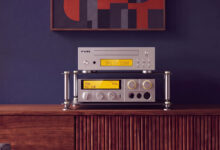
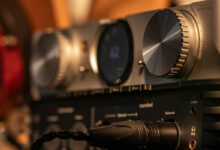
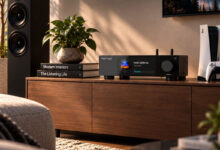
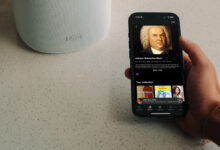
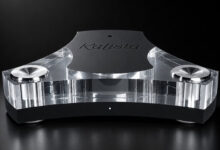
That quality should not be confused with technical simplicity. Making a network player unobtrusive requires its hardware, software and control logic to work together without repeatedly demanding attention. Arcam has managed exactly that. More importantly, it has accompanied this operational clarity with a sound that is quiet, spatially assured and rich in tonal character.
Key Facts Arcam ST25 Streamer
- Dedicated High-end network player from the Arcam Radia Series
- ESS ES9027PRO DAC with Hyperstream IV topology in a balanced configuration
- Six-layer digital and streaming platform with a continuous ground plane
- Linear power supply with toroidal transformer
- Separate switch-mode power supply for standby operation
- Linear PCM up to 32 Bit 384 kHz
- DSD playback up to DSD256
- TIDAL Connect, Qobuz Connect and Spotify Connect
- Apple AirPlay, Google Cast and Roon Ready
- UPnP, Internet Radio, podcasts and USB-A media playback
- Ethernet and dual-band WiFi 6
- Stereo RCA analogue output
- Coaxial S/PDIF and optical TOSLINK digital outputs
- Four selectable DAC filters
- Fixed, variable and external output-level modes
- 6.5-inch colour display
- Dimensions of 432 × 329 × 99 mm
- Weight of 5 kg
- Recommended retail price of € 1.799,-
Table of Contents
One Purpose, Clearly Defined
The Arcam ST25 makes most sense once it is understood for what it is – and equally for what it is not. This is a network player with an integrated D/A converter and analogue output stage. It is not a universal digital preamplifier designed to accommodate every source in the home.
There is no HDMI eARC connection, nor are there coaxial S/PDIF or optical TOSLINK inputs. The two digital interfaces on the rear panel are outputs, allowing the network signal to be passed to an external DAC if desired. A television, disc transport or games console cannot therefore access the internal ESS converter.
A comparison based purely on socket count might interpret this as a shortage. In the system for which the ST25 has been conceived, it feels more like a deliberate boundary. Connect it to an integrated amplifier, select a streaming platform and use it as a high-quality source. Its resources are not spread across input stages and additional operating roles that many owners would never need.
This focused design also fits Arcam’s history. The company began as A & R Cambridge Ltd. in 1976 and was already developing digital source components long before network audio became a domestic reality. The Arcam Delta 70 CD Player arrived in 1986, followed in 1988 by the Arcam Delta Black Box, one of the early separate D/A converters intended for home HiFi systems.
The medium has changed, but the underlying approach remains recognisable: define the task first, then optimise the circuitry around it.
The Listening Took Place at HeimkinoWelt
Rather than assessing the Arcam ST25 in isolation from the kind of system it is likely to join, we reviewed it as the digital source in a revealing conventional stereo chain. The listening sessions took place in the carefully designed rooms of HeimkinoWelt “1080p” Audiovisuelle Systeme GmbH in Vienna.
The player’s stereo RCA output was connected to an Accuphase E-4000 Integrated Stereo Amplifier through a Wireworld Gold Eclipse 8 Interconnect. Monitor Audio Platinum 200 3G loudspeakers, partnered with Wireworld Silver Eclipse 8 loudspeaker cables, completed the main signal path.
This combination has sufficient resolution to expose changes in tonal balance, spatial depth, low-level information and background noise, yet it does not dismantle music into a clinical exercise. That balance proved particularly useful with the ST25.
Wireworld cables were also employed for the mains supply and wired network connection. TIDAL via TIDAL Connect and Roon served as the music sources, with the Arcam enabled as a Roon Ready endpoint. An Apple iPad handled control duties.
The ST25 operated in Fixed output mode throughout the principal listening sessions, leaving volume adjustment entirely to the Accuphase E-4000. It was therefore used as a dedicated source rather than as a digital preamplifier.


What Remained After the First Impression
Some digital sources reveal their character within seconds because they emphasise a particular aspect of the recording. They may sharpen treble detail, enlarge the soundstage or give the bass additional weight. The Arcam ST25 does none of these things for effect.
What remains after the first few tracks is a sense of composure. Music begins against an unusually clean background, spatial positions settle quickly and fine information emerges without an obvious spotlight being placed upon it.
This does not result in a cool or emotionally distant presentation. The ST25’s tonal balance tends very slightly towards smoothness, but it retains speed, contrast and definition. Treble is open without becoming glassy, while the midrange combines clarity with convincing physical substance. Bass reaches low, starts and stops cleanly and remains rhythmically articulate.
The absence of nervousness is crucial. The Arcam does not make the listener work through layers of digital grain or an unsettled soundstage to find the music. Details are easier to perceive because the surrounding presentation remains ordered.
At the same time, the ST25 avoids the opposite mistake. It does not create calmness by softening attacks, reducing contrast or smoothing away texture. Its presentation has structure and precision, but neither quality becomes an end in itself.
Voices Without a Spotlight
Voices proved especially revealing during the review because the Arcam repeatedly preserved their individual character without pushing them artificially forwards.
Cyndi Lauper’s “True Colors” can become uncomfortable when a digital source exaggerates the upper midrange. Her voice must remain delicate and exposed, but it should not acquire a hard edge. Through the ST25, it occupied a clearly defined central position while retaining its fragile, floating quality. Changes in phrasing and the surrounding ambience remained easy to follow, yet the presentation never became sharp.
The same underlying balance produced a very different result with Dean Martin’s “Everybody Loves Somebody” from Dream with Dean. His relaxed baritone had believable size, warmth and texture. Breath and articulation were clearly audible, but the recording was not subjected to exaggerated scrutiny.
Martin also occupied a tangible position within the acoustic image. There was space behind the voice and sufficient separation for the accompaniment to retain its own colour. The Arcam neither flattened the recording nor coated it in nostalgic softness.
Esther Ofarim’s “Pavane” placed still greater demands on purity through the midrange and treble. Her voice remained clear and free, with small dynamic shifts and controlled note shaping left intact. Most importantly, there was no sibilant haze, glassy outline or forward pressure. The ST25 demonstrated how much information can be preserved without compromising naturalness.
Johnny Cash presented the opposite tonal challenge. “Solitary Man” from American III: Solitary Man can easily become excessively dark and massive. The Arcam retained the authority and weight of Cash’s voice but also revealed its age, fragility and uneven texture. It sounded large without overwhelming the accompanying instruments or collapsing the rest of the soundstage.
With Gianmaria Testa’s “Come al Cielo Gli Aeroplani” from Solo dal Vivo, voice and instrument needed to belong to the same recorded moment. Testa’s rough, warm vocal tone remained unmistakable, while the guitar combined clean attacks with the resonance of its body and the natural decay of its strings. Subtle information about the venue appeared without the ST25 artificially enlarging the space.
These recordings share little in production style or vocal character. What connected them was the Arcam’s refusal to impose one generic presentation upon them.
Space That Serves the Recording
The ST25 creates a generous soundstage, but it does not attempt to impress by stretching every recording beyond the loudspeakers. Width, depth and image size depend on the material.
Loreena McKennitt’s “The Gates of Istanbul” from An Ancient Muse opened across a broad, richly populated stage. The sound extended beyond the loudspeakers and remained clearly organised from front to back. McKennitt’s voice was precisely focused but did not appear detached from the instruments surrounding it.
The many tonal colours within the arrangement stayed recognisable as the density increased. Percussion arrived quickly, lower-register instruments retained substance and the stage never dissolved into an indistinct wash.
Dean Martin’s recording required nothing like this scale, and the Arcam did not give it one. Instead, it created a smaller, more intimate acoustic picture with convincing depth behind the singer. That ability to follow the dimensions of the recording, rather than applying a fixed spatial signature, is one of the ST25’s more mature qualities.
Even on Gianmaria Testa’s live recording, ambience was presented as part of the performance rather than as a separate special effect. The room was perceptible because timing, decay and low-level information were preserved, not because the image had been made unnaturally expansive.
Control When the Music Becomes Dense
Composure is relatively easy to admire in quiet acoustic recordings. The more revealing question is what happens when level, density and dynamic pressure increase.
Disturbed’s “The Sound of Silence” from Immortalized begins in a restrained fashion before developing into a large, heavily layered climax. The difficulty lies not simply in reproducing the change in volume, but in preserving order as the arrangement grows.
The Arcam handled that progression without losing its grip. David Draiman’s voice carried weight, roughness and a strong physical presence, yet it was not enlarged out of proportion. As piano, strings, percussion and voice converged, individual elements remained intelligible. The ST25 maintained the structure while allowing the emotional force of the track to develop fully.
Editors’ “Karma Climb” from EBM demanded something different: deep electronic bass, overlapping textures and a rhythm that depends on immediacy. Here, the Arcam’s cultivated balance did not translate into politeness.
Bass impulses were deep, dry and clearly shaped. Attacks arrived without hesitation and decayed cleanly. Electronic layers retained separation, while Tom Smith’s voice remained anchored within the arrangement rather than being artificially lifted above it.
At higher levels, the track continued to move forwards. The ST25 kept the presentation readable, but never at the expense of pressure or momentum.
These two recordings make an important point about its sound. The player’s calmness is not a reduction of energy. It is control over that energy.
Why the Presentation Sounds So Unforced
The sonic result cannot be attributed to the DAC chip alone. Arcam uses an ESS ES9027PRO with Hyperstream IV topology in a balanced configuration, accompanied by measures intended to suppress jitter before conversion.
The converter forms part of a newly developed digital-audio and streaming platform built on a six-layer circuit board. A continuous ground plane is intended to reduce interference and prevent high-frequency noise from reaching sensitive audio sections.
Such measures are relevant in a component containing a network processor, display controller, multiple clock domains and digital signal processing. All of these areas operate simultaneously and can place considerable demands on the analogue section if layout and grounding are not carefully controlled.
Arcam has taken a similarly deliberate approach to power. During normal operation, the internal circuits are supplied by a linear power supply with a toroidal transformer. A separate switch-mode power supply is reserved for standby, where efficiency and low power consumption become the priorities.
The two supplies therefore address different operational requirements. One is intended to create a low-noise environment for music replay; the other keeps standby consumption under control.
Four digital filters allow the conversion behaviour to be adjusted:
- Minimum Phase
- Linear Phase Apodizing
- Linear Phase Slow Roll-off
- Minimum Phase Slow Roll-off
The differences are deliberately modest and do not alter the player’s fundamental character. We found the factory-selected Linear Phase Apodizing setting the most consistently balanced and used it for the majority of the review.
Streaming Becomes a Choice of Apps, Not a Choice of Ecosystem
Initial network configuration can be handled through Ethernet or dual-band WiFi 6 according to IEEE 802.11 a/b/g/n/ac/ax. Wireless installation requires the Arcam Radia App, while a wired connection allows the player to appear on the network with minimal preparation.
From there, control largely moves to the platforms the listener already knows. TIDAL Connect, Qobuz Connect and Spotify Connect allow the Arcam to be chosen directly within their respective applications. The mobile device controls playback, while the ST25 retrieves the stream independently.
Apple AirPlay and Google Cast extend access to compatible smartphones, tablets and computers. Roon users can enable the ST25 as a fully certified Roon Ready playback zone, combining local libraries and streaming content within the familiar Roon environment.
The Arcam Radia App has not been rendered redundant by these options. It remains responsible for configuration and presets and provides access to Internet Radio, podcasts, UPnP shares and files stored on a USB-A device connected to the player.
What it does not need to do is replace every established music platform with a closed Arcam environment. That decision proves highly beneficial in daily use. The ST25 gives the listener several direct routes to the same destination without insisting that one of them is the correct route.
Roon can handle extensive music libraries, metadata and comparisons between releases. TIDAL and Qobuz remain the quickest way to browse their own catalogues. Apple AirPlay and Google Cast provide immediate access from other compatible applications.
The player does not confuse flexibility with complexity.


A Display Designed to Be Seen from the Sofa
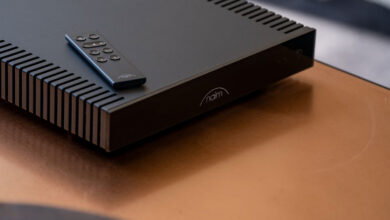
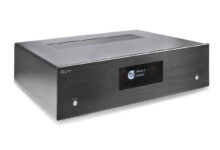
The Arcam Radia Series has a recognisable visual identity without relying on decorative excess. The ST25’s black casework is complemented by a ribbed top panel, gently rounded side sections and restrained yellow details.
It measures 432 mm wide, 329 mm deep and 99 mm high including the feet. At 5 kg, it feels substantial enough for a component in this price class without becoming visually heavy.
The defining element on the front panel is the high-resolution 6.5-inch colour display. Its bonded construction brings the display and cover together as an optical unit, producing clear artwork, metadata and status information with strong contrast.
Its practical advantage is size. Album artwork and essential information remain legible from the listening position, giving the ST25 a useful visual presence in the rack.
It is not a touchscreen. This was of no consequence during the review because music selection takes place through the relevant apps. Device settings, presets and menu navigation can also be accessed with the supplied infrared remote control. Display brightness is adjustable and the panel can be switched off completely.
Analogue Simplicity and Digital Flexibility
One pair of stereo RCA sockets provides the analogue output. The ST25 can also pass its digital signal to an external converter through coaxial S/PDIF or optical TOSLINK.
Ethernet, USB-A for mass storage, a 12 V Trigger output and an Arcam Control connection complete the physical interfaces. The latter allows coordinated operation with compatible amplifiers from the Arcam Radia Series.
There are three output-level modes. Fixed mode provides a conventional constant line-level signal and is the natural setting for use with an integrated amplifier. Variable mode activates the ST25’s internal volume control, permitting a direct connection to a power amplifier. External mode links level control to a compatible Arcam Radia amplifier through the control cable.
A configurable maximum volume helps prevent unexpected level jumps when one of the variable control options is active.
Balanced XLR outputs are not available. Stereo RCA remains appropriate for a large proportion of integrated amplifiers, including the Accuphase used for our review, but XLR would have widened the ST25’s compatibility with appropriately equipped High-end systems. At € 1.799,-, this omission deserves to be noted.
Linear PCM is supported at 16, 24 and 32 Bit with sampling rates up to 384 kHz. DSD playback extends to DSD256. Compatible file types include FLAC, WAV, AAC, ALAC, AIFF, DSD, MP3, OGG and WMA. Gapless playback is also supported.
Where the Arcam ST25 Draws the Line
The ST25’s limitations follow directly from its specialisation. It cannot convert signals from external digital sources because it has no digital inputs. It does not accept a television signal through HDMI eARC, and it cannot offer a balanced analogue connection.
Anyone seeking one component to control a television, disc transport, games console, network library and power amplifier will therefore need a different type of product.
For a listener who already owns a suitable integrated amplifier and wants to add high-quality streaming, those omissions have far less consequence. The ST25 performs the required task without surrounding it with functions that complicate the interface or internal architecture.
The distinction is important. This is not a poorly equipped digital hub. It is a deliberately focused network source.
The Most Important Advantages at a Glance
- Unusually composed sound: The ST25 reveals fine information without introducing hardness, restlessness or an analytical bias.
- Natural presentation of voices: Vocal character, body and expression remain intact across widely differing recordings.
- Stable spatial organisation: Width and depth follow the recording instead of being artificially enlarged.
- Controlled bass and dynamics: Deep electronic impulses and complex crescendos retain definition and momentum.
- Direct access to established services: TIDAL Connect, Qobuz Connect and Spotify Connect avoid unnecessary changes of interface.
- Open choice of control platform: Roon Ready, Apple AirPlay, Google Cast, UPnP and the Arcam Radia App cover different listening habits.
- Substantial internal engineering: The six-layer platform, linear power supply and toroidal transformer address the electrical demands of network replay.
- Useful visual feedback: Cover artwork and metadata remain easily legible from the listening position.
- Clear system role: The ST25 concentrates its resources on network playback, conversion and analogue signal quality.
FAQ for the Arcam ST25 Streamer
Is the Arcam ST25 a digital preamplifier?
Its variable analogue output means that it can control the level of a directly connected power amplifier. Nevertheless, its primary design remains that of a network player with an integrated DAC rather than a universal digital preamplifier.
Can external digital sources use its ESS DAC?
No. The coaxial S/PDIF and optical TOSLINK sockets are outputs. There are no digital inputs for a CD transport, television or another external source.
Does the Arcam ST25 support direct control from streaming apps?
Yes. TIDAL Connect, Qobuz Connect and Spotify Connect allow the player to be selected from within the respective service apps.
Is the Arcam ST25 Roon Ready?
Yes. It can be enabled as a Roon Ready zone and incorporated into systems using streamed content, local libraries or multiple Roon endpoints.
When is the Arcam Radia App required?
It is needed for the initial WiFi configuration and handles the player’s settings and presets. It also provides access to Internet Radio, podcasts, UPnP servers and music stored on a connected USB-A device.
Is the front display touch-sensitive?
No. The 6.5-inch colour display presents album artwork, metadata and status information. Control is provided through apps and the supplied infrared remote.
Which maximum resolutions does the ST25 support?
It plays Linear PCM up to 32 Bit 384 kHz and DSD up to DSD256.
Can an external D/A converter be connected?
Yes. A coaxial S/PDIF output and an optical TOSLINK output are provided. We used the internal ESS converter and stereo RCA output during the review because the complete internal signal path represents one of the ST25’s central qualities.
Price & Availability
The Arcam ST25 Streamer is available from authorised specialist retailers at a recommended retail price of € 1.799,-. Distribution in Austria is handled by R.M.S. State of the Art Audiovisual Products.
Getting to the Point
The Arcam ST25 makes a convincing argument for keeping a network source focused. It does not try to replace every digital component in the system, and its connection panel will not satisfy anyone looking for a universal control centre. Balanced XLR outputs would also have been a worthwhile addition at this level.
Yet those limitations do little to diminish what the ST25 achieves in its intended role. It is remarkably straightforward to install, works directly with the streaming platforms that matter and does not force the listener into an unfamiliar proprietary environment. Once configured, it behaves like a traditional source component: choose the music and listen.
Its sound elevates that convenience into something much more compelling. The presentation is calm without becoming restrained, detailed without turning clinical and spacious without exaggerating the recording. Voices possess substance and individuality. Bass combines depth with rhythmic precision. Dense arrangements remain intelligible while retaining their power.
Most importantly, the ST25 maintains musical continuity. It allows individual details to emerge, but never encourages the listener to lose sight of the performance as a whole.
The Arcam ST25 is therefore an excellent High-end network player for a high-quality existing HiFi system. Its combination of uncomplicated operation, mature engineering and a refined, involving sound earns it a product rating of 8 out of 10.
| Product | Arcam ST25 Streamer |
|---|---|
| Price | € 1.799,- |
Technical Specifications
| Product | Arcam ST25 Streamer |
|---|---|
| Product type | Network player with integrated D/A converter |
| Series | Arcam Radia Series |
| DAC | ESS ES9027PRO, Hyperstream IV topology, balanced configuration and jitter suppression |
| PCM resolution | 16, 24 or 32 Bit, up to 384 kHz |
| DSD | Up to DSD256 |
| File formats | FLAC, WAV (LPCM), AAC, ALAC, AIFF, DSD, MP3, OGG and WMA |
| Gapless playback | Yes |
| Streaming services | Spotify Connect, TIDAL Connect and Qobuz Connect |
| Further platforms | Apple AirPlay, Google Cast and Roon Ready |
| Arcam Radia App | Configuration, presets, Internet Radio, podcasts, UPnP and USB media |
| Network | Ethernet; dual-band WiFi 6 according to IEEE 802.11 a/b/g/n/ac/ax at 2.4 and 5 GHz |
| USB | 1 × USB-A for mass storage |
| Analogue output | 1 × stereo RCA |
| Digital outputs | 1 × coaxial S/PDIF and 1 × optical TOSLINK |
| Control connections | Arcam Control and 12 V Trigger Out |
| Output modes | Fixed, Variable and External |
| DAC filters | Minimum Phase, Linear Phase Apodizing, Linear Phase Slow Roll-off and Minimum Phase Slow Roll-off |
| Display | 6.5-inch high-resolution colour display, not touch-sensitive |
| Power supply | Linear power supply with toroidal transformer; separate switch-mode power supply for standby |
| Mains voltage | 100 to 120 V or 220 to 240 V, 50/60 Hz |
| Power consumption | 15 W |
| Network standby | Less than 2 W |
| Eco standby | Less than 0.5 W |
| Dimensions | 432 × 329 × 99 mm |
| Weight | 5 kg |
| Supplied accessories | Mains cable, remote control, 2 × AAA batteries, control cable, quick-start guide and safety instructions |

The Arcam ST25 impresses with a very refined, calm, and spatially precise soundstage that never confuses high resolution with analytical harshness. TIDAL Connect, Qobuz Connect, Spotify Connect, Apple AirPlay, Google Cast, and Roon Ready ensure that the streamer integrates seamlessly into a wide variety of usage scenarios with virtually no learning curve. Anyone looking for a dedicated streaming source for an existing high-quality hi-fi system will find an excellent solution here.
Positive
- Extremely fine, balanced and long-term sound
- Very calm background and precise spatial graduation
- Voices with excellent naturalness and substance
- Tight, deep and clearly structured bass
- TIDAL Connect, Qobuz Connect and Spotify Connect
- Completely Roon Ready
- Apple AirPlay and Google Cast
- Simple, reliable commissioning and operation
- Large, easy-to-read color display
- High quality mechanical construction and linear power supply
- Four selectable DAC filters
- Useful analog and digital output options
Negative
- No balanced XLR outputs
Test Environment
- The test took place in the optimally designed listening rooms of HeimkinoWelt “1080p” Audiovisuelle Systeme GmbH in Vienna.
- Accuphase E-4000 Integrated Stereo Amplifier
- Monitor Audio Platinum 200 3G
- TIDAL via TIDAL Connect and Roon
- Apple iPad for control
- Wireworld Silver Eclipse 8 speaker cables
- Wireworld Gold Eclipse 8 signal cable
- Wireworld power and network cables
| Brand | Arcam |
|---|---|
| Manufacturer | Harman International Industries Ltd. |
| Distribution Austria | R.M.S. State of the Art Audio Products |
| Distribution Germany | Harman International Industries Ltd. |
| Distribution Switzerland | Harman International Industries Ltd. |
| More about this manufacturer at HiFi BLOG |
Conclusion
Sound
Design
Handling
Price/Performance
Excellent
The Arcam ST25 is an excellent-sounding, exceptionally uncomplicated high-end streamer in everyday use that focuses entirely on the music and achieves an excellent rating of 8 out of 10 points.