

Perlisten DSP X2.6 – Active Crossover and DSP for the Perfect Integration of Up to Four Subwoofers
The Perlisten DSP X2.6 is a digital active crossover and signal processor with two inputs and six independently adjustable outputs. Each output has its own filters, delay, level, polarity and a parametric equaliser with up to ten bands, so the main speakers and every subwoofer can be tuned individually. We look at how the concept works, where it sits in a separates system and why Perlisten Audio has deliberately kept it away from home cinema.

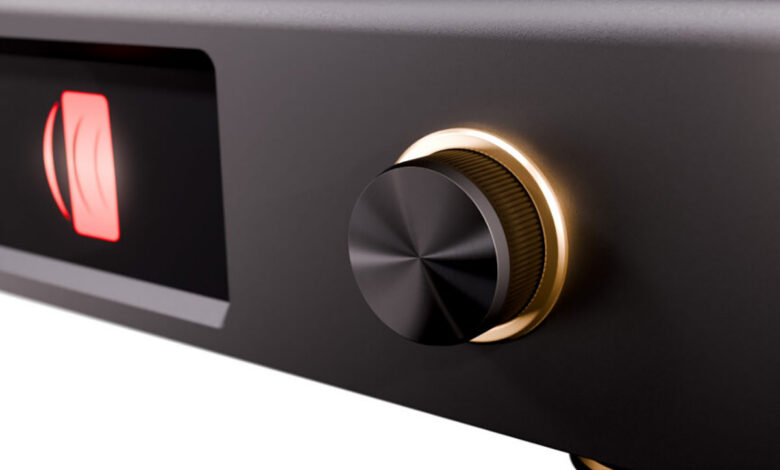
- The Perlisten DSP X2.6 Active Crossover and Digital Signal Processor lets two-channel listeners treat their main speakers and up to four subwoofers as one system, with high-pass and low-pass filters, delay, level, polarity and up to ten parametric EQ bands on each of its six outputs. It sits between preamplifier and power amplifiers, is designed purely for stereo rather than surround, and is available now at a recommended retail price of US$ 6.500,- with no official Austrian or German pricing announced yet.
Bolting a subwoofer onto a good pair of stereo speakers is easy. Making the two sound like a single instrument is another matter, and it has tested HiFi enthusiasts for decades. The new Perlisten DSP X2.6 Active Crossover and Digital Signal Processor from Perlisten Audio is built for exactly that problem. It combines a digital active crossover with a broad set of correction tools and, according to the manufacturer, can control up to six speaker channels individually, with a clear focus on stereo.

Key Facts – Perlisten DSP X2.6 Active Digital Crossover
- Digital active crossover and DSP for high-quality stereo systems
- Two main-speaker channels plus four subwoofer outputs, each configurable on its own
- Separate high-pass and low-pass filters
- Up to ten parametric EQ bands on every output
- Individual delay for all six outputs
- Level and polarity adjustable per output
- Placed between stereo preamplifier and power amplifiers
- Designed for two-channel HiFi, not as a multichannel AV processor
Why main speakers and subwoofers so often fail to blend
Combine a fine pair of stereo speakers with one or more subwoofers and the potential gains are considerable. The lowest octaves become accessible, and the main speakers can be relieved of the deepest bass if the frequency range is divided sensibly between them and the subs.



The catch is that everything has to be matched. Placement, frequency response and, not least, timing all differ between the speakers involved, and where main speakers and subwoofers hand over to one another those differences can stop the signals from adding up cleanly. The usual results are peaks or cancellations in the response and bass that sounds less precise than it should. Perlisten Audio says the DSP X2.6 was developed to give listeners one place from which to control how all the speakers interact.


Two in, six out
The concept is simple on paper: two input channels and six outputs. Two outputs feed the left and right main speakers, while the other four can drive up to four subwoofers.
What matters is that every output has its own signal processing. The main speakers can therefore be set up just as individually as each subwoofer. Perlisten Audio provides separate crossover filters, parametric equalisers, delay, level and polarity for each one.
That is particularly useful in multi-subwoofer setups, because the subs do not have to be driven identically. Each can be adapted to its own position in the room. The processor can be configured for anything from a classic stereo system with a single subwoofer to a more elaborate arrangement of four separately controlled bass units.
Where it sits in the system
In conceptual terms, the DSP X2.6 is inserted between a stereo preamplifier and the power amplifiers driving the main speakers. The subwoofers receive their signals from the dedicated outputs. The processor therefore takes a central role in the playback chain without having to double as a preamplifier or a streaming platform.
This approach looks most appealing for ambitious systems built from separate components. A combination of preamplifier, power amplifiers and passive main speakers can be extended with proper bass management, and the six independent outputs allow far finer tuning than the controls found on the average subwoofer.
Dividing the spectrum
At the heart of the unit is the active crossover, which splits the frequency range between the main speakers and the subwoofers. Suitably configured high-pass filters take the deepest frequencies off the main speakers, while individually adjustable low-pass filters let the subwoofers handle the range they are meant for.
The real benefit is flexibility. Instead of depending on the often limited settings of a subwoofer’s own electronics, the whole speaker configuration is set up centrally. With high-end HiFi systems in particular, that makes it possible to optimise the transition between main speakers and subs and to take account of the characteristics of the speakers actually in use.
Getting the timing right
The manufacturer gives special weight to control over signal delay. Even with a carefully chosen crossover frequency, there is no guarantee that sound from the main speakers and from the subwoofers reaches the listening position at the same moment. Placement can create different acoustic distances, and the speakers’ own characteristics and signal processing also influence timing.
Because delay can be set individually on all six outputs, these differences can be compensated for deliberately, with the aim that the signals from main speakers and subwoofers arrive at the listening position as close to simultaneously as possible. That is what separates a comprehensive central processor from simpler solutions, where perhaps only the phase or delay of a single subwoofer can be adjusted. The stated goal is to merge the individual speakers acoustically into one coherent whole.
Taming the room
Crossover and timing are only part of the story, because the acoustics of the listening room play a decisive role as well. In the bass region especially, room modes, speaker positions and proximity to walls or other boundaries can cause substantial deviations from the response you would like.
For this reason each of the six outputs gets its own parametric equaliser with up to ten freely configurable filters. They allow frequency-dependent corrections, for instance to reduce pronounced bass peaks, and they can also account for differences between several subwoofers. Combined with the separately adjustable levels and polarities, the result is a wide toolkit for adapting playback to the room.
An equaliser is no substitute for well-thought-out speaker placement, of course. Deep cancellations in particular cannot be sensibly fixed by simply boosting the level. Even so, flexible positioning of several subwoofers, active crossover filtering and individual processing together open up considerably more scope than a conventional subwoofer connection.
Stereo by design, not Home cinema
Perlisten Audio is well established in demanding home cinema, so the positioning of the DSP X2.6 is notable. It was expressly conceived for classic two-channel stereo. It is neither an AV preamplifier nor a multichannel processor for surround setups, and for the bass management of complex home cinema systems the manufacturer points to suitably equipped AV receivers or dedicated cinema processors.
That deliberate specialisation underlines the intention to offer a capable tool for integrating subwoofers as precisely as possible into high-quality stereo systems.
All benefits at a glance
- Seamless bass integration: main speakers and subwoofers can be configured as one coherent playback system.
- Room for growth: up to four subwoofers can be driven and tuned independently of one another.
- Lighter load on the main speakers: high-pass filtering keeps the very lowest frequencies away from them.
- Better timing: per-output delay helps to line up every speaker in time at the listening position.
- Room correction: parametric equalisers deal with frequency-dependent deviations caused by the listening room.
- Fits existing systems: the processor drops into a conventional chain of preamplifier and power amplifiers.
- Focused design: concentrating on stereo allows a layout tailored to demanding two-channel HiFi.
Price and availability
According to Perlisten Audio, the new Perlisten DSP X2.6 Active Crossover and Digital Signal Processor is available immediately. The company quotes a recommended retail price of US$ 6.500,-. An official retail price for Austria and Germany has not yet been announced.
Getting to the point
Integrating one or more subwoofers is a task at which even excellent stereo components cannot guarantee a convincing result on their own. With the Perlisten DSP X2.6, Perlisten Audio tackles that challenge head-on and offers something that goes well beyond a simple active crossover. What stands out is that not only each subwoofer can be optimised separately, but the main speakers are fully included in the digital signal processing as well. In ambitious stereo systems with several subwoofers, that degree of control over crossover, timing and level could make a decisive difference. The Perlisten DSP X2.6 is a highly specialised tool for demanding HiFi concepts.
| Product | Perlisten DSP X2.6 Active Digital Crossover |
|---|---|
| Price | US$ 6.500,- |
Technical Specifications
| Product | Perlisten DSP X2.6 |
|---|---|
| Characterisation | Active digital crossover and digital signal processor for stereo systems |
| Product type | Active digital crossover and digital signal processor |
| Application | Two-channel stereo systems |
| Input channels | 2 |
| Output channels | 6 |
| Main speaker outputs | 2, left and right |
| Subwoofer outputs | 4, independently configurable |
| Crossovers | Individual high-pass and low-pass filters |
| Equaliser | Parametric, up to 10 bands per output |
| Delay | Individually adjustable per output |
| Level adjustment | Individually adjustable per output |
| Polarity control | Individually adjustable per output |
| Integration | Between preamplifier and power amplifiers |
| Supported configuration | Stereo with up to four subwoofers |
| Home cinema bass management | Not intended |
| Brand | Perlisten Audio |
|---|---|
| Manufacturer | Perlisten Audio |
| Distribution | Audio Reference GmbH |
| More about this manufacturer at HiFi BLOG |