

A Visit to the Siltech Group – How Research, Precision and Craftsmanship Produce Extraordinary Audio Cables
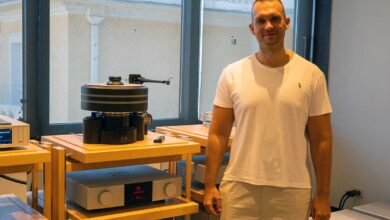
Few subjects provoke as much debate among HiFi enthusiasts as expensive audio cables. Yet the technical knowledge, manufacturing processes and specialist skills behind these products rarely receive the same attention. During a visit to the Siltech Group in Elst, the Netherlands, Michael Holzinger explored the research facilities and production processes behind Siltech Cables, Crystal Cable, HMS Elektronik and Sphinx Audio – discovering a company whose expertise extends considerably further than cable manufacturing.

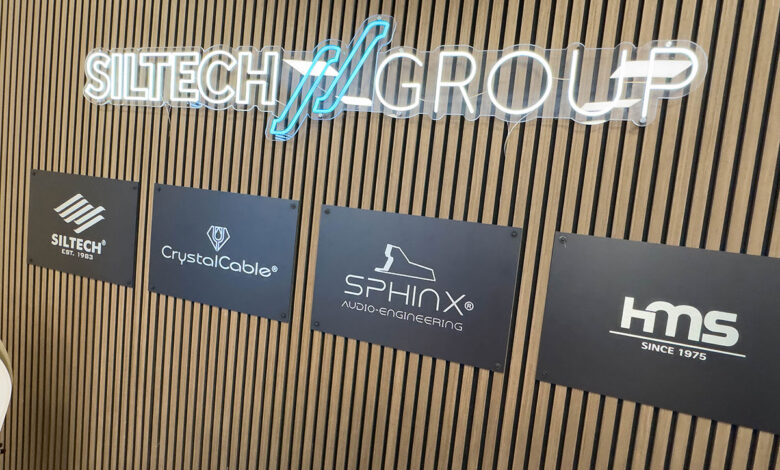
- The Siltech Group has spent more than four decades investigating the electrical, mechanical and metallurgical properties of audio connections. At its headquarters in Elst, the Dutch manufacturer combines advanced simulation and measurement techniques with proprietary silver technologies, highly specialised manufacturing equipment and painstaking manual assembly. A visit organised together with Austrian distributor Audio Tuning Vertriebs GmbH offered a detailed insight into the people, research and production methods behind four distinctive High-end audio brands. What emerged was a fascinating picture of an engineering-led family business in which scientific ambition and practical craftsmanship are inseparable.
There is something rather intriguing about an industry that can devote decades of scientific research to an object whose basic purpose appears so straightforward. An audio cable connects two components and carries an electrical signal between them. Yet within the High-end audio sector, its construction can involve advanced metallurgy, complex geometries, carefully selected dielectric materials and manufacturing techniques requiring considerable expertise.

The resulting products can command remarkable prices, making cables one of the most contentious subjects in HiFi. Discussions generally concentrate on sound quality, perceived differences and value for money. Far less attention is paid to how such products are conceived and manufactured.
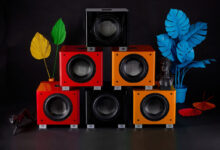
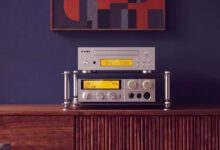
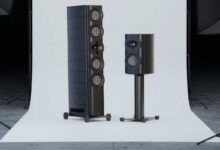
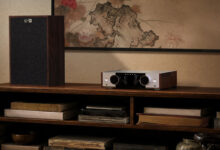

That was precisely what made an invitation to visit Siltech Group B.V. in Elst, the Netherlands, so appealing. Michael Holzinger, Editor-in-Chief of sempre-audio.at, travelled to the company’s headquarters alongside representatives of Audio Tuning Vertriebs GmbH, the Austrian distributor responsible for Siltech Cables.
The opportunity was particularly interesting because Siltech Group is responsible for four brands with quite different identities: Siltech Cables, Crystal Cable, HMS Elektronik and Sphinx Audio. Their products range from sophisticated audio connections and power-conditioning equipment to ambitious loudspeaker and amplifier systems.
What connects them is an unusually extensive engineering and manufacturing operation, developed over more than forty years and guided by a persistent interest in the finer details of electrical signal transmission.
Key Facts Siltech Group B.V.
- Headquarters: Elst, the Netherlands
- Company origins: Siltech was founded in Nijmegen in 1983
- Brands: Siltech Cables, Crystal Cable, HMS Elektronik and Sphinx Audio
- Management: Edwin van der Kley Rynveld, CEO; Viktor de Leeuw, COO
- Core competencies: Metallurgy, conductor technology, cable geometry, insulation, signal transmission and precision manufacturing
- Proprietary conductor technologies: G9 Silver-Gold Technology and S10 Monocrystal Silver Technology
- Development methods: Finite-element analysis, COMSOL Multiphysics, electrical measurements and listening evaluations
- Manufacturing: Specialist production processes, manual assembly and comprehensive quality control
- Additional products: Loudspeakers, amplifiers, mains filters and power-conditioning systems
- Austrian distribution: Audio Tuning Vertriebs GmbH
Table of Contents
The Engineering Behind an Apparently Simple Product
The most revealing aspect of visiting a specialist manufacturer is often the difference between what a finished product suggests and what its production actually requires.
With cables, that contrast is particularly pronounced. The visible result might consist of a length of carefully insulated conductor terminated with two connectors. The decisions leading to that result, however, involve several interdependent electrical and mechanical parameters.
Resistance is only one consideration. Inductance, capacitance, conductor arrangement, insulation properties, screening and contact quality also influence the characteristics of a cable. Material stability and mechanical reliability become relevant when products are expected to retain their properties over many years.
Siltech approaches these questions as parts of a complete engineering problem. A change to the conductor material, for example, cannot necessarily be considered independently of insulation, geometry or manufacturing methods.
This systems-oriented approach explains much of the work taking place at the company’s headquarters. Developing an advanced conductor is only useful if the resulting material can be incorporated into a cable with sufficient consistency and precision.
The relationship between research and production therefore becomes particularly important. It also helps explain why Siltech has developed specialist manufacturing equipment for processes that would be difficult to perform reliably using conventional tools.
One observation deserves emphasis from the outset: the existence of measurable electrical differences between cable designs does not automatically establish that those differences will be audible in every HiFi system.
Their practical significance depends on the application, the connected equipment and the magnitude of the effects involved. Appreciating the company’s engineering expertise does not require abandoning that distinction.
From Nijmegen to Elst – The Making of a Specialist Manufacturer
Siltech’s history began in Nijmegen in 1983, when the company started pursuing sophisticated approaches to audio cable construction.
Its name is derived from Silver Technology, an indication of the importance that silver would assume in the company’s technical development.
A defining change came in 1992, when electronics engineer Edwin van der Kley Rynveld acquired the business. Under his leadership, the company’s work became increasingly focused on materials science, conductor structures and systematic engineering research. That direction has remained central to Siltech’s identity.
Rather than regarding the selection of conductor materials as a relatively straightforward purchasing decision, the company has invested considerable effort in understanding how their physical structure and manufacturing history affect their electrical properties.
Over successive product generations, this work has led to proprietary material technologies and increasingly sophisticated cable constructions. The development of Siltech into a broader group also brought new brands and engineering disciplines into the organisation.
Two Generations, Complementary Responsibilities
The family character of Siltech Group remains an important aspect of its organisation. Edwin van der Kley Rynveld continues to lead the company as CEO. An electronics engineer with a strong personal interest in music, he has been closely involved in establishing the technical direction of the business.
His approach reflects a belief that engineering decisions should be informed by scientific investigation and an understanding of the physical mechanisms involved. That naturally extends beyond selecting expensive materials. It encompasses conductor manufacture, geometry, insulation, measurement methods and the way these elements interact in a complete product.
His son, Viktor de Leeuw, serves as Chief Operating Officer.
While Edwin van der Kley Rynveld remains closely associated with the company’s technological vision, Viktor de Leeuw is responsible for important aspects of its operational management. These include manufacturing organisation, production structures and strategic projects.
The distinction between their responsibilities is particularly relevant in a business where unusual materials and complex designs must ultimately be manufactured in a controlled, repeatable manner.
Sophisticated engineering concepts demand equally sophisticated production management. The respective roles of the two generations reflect that requirement.
Four Brands, Four Distinct Identities
Siltech Group’s development has not been confined to a single brand or product category. In 2004, Gabi Rynveld established Crystal Cable, bringing a noticeably different design philosophy to the technological foundation developed within the group. A trained concert pianist, Gabi Rynveld introduced a musical perspective alongside a particular interest in elegant, practical and visually discreet cable designs.
The result was a brand whose products often appear strikingly different from the substantial cable constructions traditionally associated with the High-end sector. A further important development followed in 2024 with the integration of HMS Elektronik. Founded in Germany in 1975 by Hans M. Strassner, HMS brought its own considerable engineering heritage, particularly in cables, mains filtering and power-conditioning technology.
The fourth brand, Sphinx Audio, reflects the group’s capabilities in loudspeaker and amplifier development. The individual identities have been preserved, while their products benefit from a shared foundation of research, engineering and manufacturing expertise. This makes the group considerably more varied than its association with expensive audio cables might initially suggest.
Research Comes First – From Physical Models to Measurements
A significant part of Siltech’s engineering work takes place long before a cable reaches the production stage. The company investigates electrical behaviour using analytical methods, simulations and specialised measurements. Among its development tools are finite-element analysis and COMSOL Multiphysics. Such software allows engineers to examine complex physical relationships and compare possible constructions before committing to particular manufacturing processes.
The purpose is to understand how materials and geometries influence the electrical characteristics of a connection. Conductor spacing, insulation properties and screening arrangements can all be considered within this process. Siltech has also developed or adapted specialised measurement techniques to investigate parameters relevant to its products.
Listening evaluations form a subsequent part of the development process, rather than replacing the technical investigation. This sequence is worth considering. It establishes an engineering framework in which design decisions can be examined through measurable properties before any subjective listening assessment is introduced.
The relationship between measured differences and perceived sound quality nevertheless requires careful interpretation. An electrical improvement may be entirely valid without necessarily producing an audible difference under all operating conditions. Conversely, some applications impose more demanding requirements on cables than others.
Low-level phono signals, for example, create different challenges from those encountered in digital data transmission or loudspeaker connections. For Siltech, this diversity of applications provides considerable scope for studying the details of conductor and cable design.
Why Silver Matters – And Why Its Structure Matters Too
Silver plays a central role in Siltech’s history and technological identity. At room temperature, pure silver has the highest electrical conductivity of any pure metal. That makes it an attractive starting point for the development of high-performance electrical conductors. Yet conductivity alone does not tell the complete story of a manufactured wire.
Purity, crystal structure, processing conditions and the resulting material characteristics can vary significantly. Siltech has devoted decades to investigating these relationships. The company’s work with silver-gold alloys is particularly characteristic of its approach.
Introduced in 1997, this technology combines silver with small quantities of gold. According to Siltech’s engineering concept, the addition is intended to influence the material’s crystalline structure and the characteristics associated with grain boundaries and defects. Over the following years, the company refined the process through several generations.
Its G9 Silver-Gold Technology represents the ninth generation of this proprietary conductor development. The objective is to produce a conductor material with carefully controlled characteristics and long-term stability.
This is an important distinction. The technical argument does not rest merely on using precious metals, but on how the material is manufactured and controlled.
Whether a particular cable construction offers an audible advantage remains a separate question, but the metallurgical research involved is a genuine and substantial part of the manufacturer’s development work.
S10 Monocrystal Silver – A Different Approach to Conductor Structure
Siltech’s S10 Monocrystal Silver Technology takes the investigation of conductor structure further. Conventional metallic conductors generally contain numerous crystalline regions separated by grain boundaries. Siltech’s monocrystalline approach seeks to minimise these boundaries through carefully controlled production and thermal treatment.
Achieving the desired material structure involves specialised manufacturing processes and close attention to the conditions under which the conductor is produced. The company’s objective is to reduce potentially undesirable effects associated with the internal structure of the metal.
The engineering complexity therefore lies in the treatment and production of the conductor, not simply in its chemical composition. Considering G9 Silver-Gold Technology and S10 Monocrystal Silver Technology together illustrates the depth of Siltech’s interest in metallurgy.
These are not isolated marketing concepts introduced for individual product generations. They represent the results of development programmes pursued and refined over considerable periods.
Insulation – The Material Surrounding the Conductor
The attention given to silver can easily obscure another essential aspect of cable engineering: the dielectric material. Insulation has to perform several tasks simultaneously. It must maintain electrical separation, provide suitable mechanical properties and remain stable under the relevant operating conditions. Its dielectric characteristics also contribute to the overall capacitance and behaviour of a cable.
Consequently, selecting an insulation material involves considerably more than choosing an appropriate protective covering. Siltech employs materials including PTFE, PEEK and polyimide films such as Kapton, depending on the requirements of the particular construction. These substances are familiar from demanding technical and industrial applications, where thermal stability, mechanical behaviour and electrical characteristics can be important.
Their advantages also introduce manufacturing challenges. A material that performs exceptionally well in service may be difficult to cut, shape or process with the precision required for a complex cable. Siltech has consequently developed specialist tools capable of handling particular insulation layers with a high degree of repeatability.
The importance of this work becomes clear when considering the relationship between design and production. A precisely calculated geometry has limited value if the production process cannot reproduce it consistently. Material selection and manufacturing capability must therefore develop together.
Geometry Determines More Than the Cable’s Appearance
Different electrical applications place different demands on the arrangement of conductors. The distance between individual conductors, their orientation, twisting patterns and any screening arrangement contribute to the final electrical behaviour of a cable. This explains why a serious cable portfolio cannot be developed simply by fitting different connectors to an otherwise identical construction.
A phono connection must contend with extremely low signal levels and can be particularly vulnerable to unwanted interference. For a loudspeaker cable, resistance, inductance and conductor cross-section are among the relevant considerations. Digital connections introduce another set of requirements. Depending on the interface, defined electrical transmission parameters must be maintained to ensure reliable operation.
The primary objective of a digital cable is therefore to meet the requirements of its corresponding transmission standard. Siltech applies its engineering approach across analogue interconnects, loudspeaker cables, phono connections, digital cables, network connections, USB cables and mains cables.
Each category demands an appropriate balance of materials, construction and practical characteristics. Understanding these distinctions is also useful when considering the suitability of a cable for a particular system. The most elaborate construction is not automatically the most appropriate choice for every application.


Inside the Elst Manufactory
If Siltech’s research programme explains how the company develops its products, its manufacturing facilities reveal how those ideas become physical objects. At the Elst headquarters, research and development operate alongside production, warehousing and quality control.
The proximity of these activities provides an important practical advantage. Engineers and manufacturing specialists can work within the same organisation, with direct access to the processes needed to realise their designs. The production operation combines specialised equipment, established procedures and extensive manual work. This is an important distinction when discussing craftsmanship in a modern High-end manufactory.
The term does not imply that every task is performed entirely by hand. Neither does the presence of modern machinery diminish the importance of the people operating it. The objective is to use each method where it offers the required precision, reliability and repeatability.
Preparing conductors, processing insulation, assembling cable structures, applying screening and fitting connectors all require particular techniques.
Some stages are best supported by specialised equipment. Others depend heavily on the concentration and experience of trained employees. During the visit, the importance of this relationship between engineering processes and manual skills became particularly evident.
The Human Skills Behind Precision Assembly
Cable termination provides an especially clear example of why manufacturing expertise matters. Cutting conductors to the correct length, removing insulation without damaging the material and creating a secure electrical connection might sound like routine operations. In practice, the tolerances and handling requirements can become demanding when unusual materials and intricate cable constructions are involved.
Depending on the design, employees must perform careful soldering, prepare contact surfaces and assemble connectors in a mechanically reliable manner. Even relatively small inconsistencies can affect the quality of the finished product. The work consequently demands experience, appropriate tools and a detailed understanding of the materials involved.
It also requires clear production instructions and procedures that allow the desired result to be reproduced reliably. The significance of these skills is easily overlooked when attention concentrates exclusively on conductor materials or the appearance of the completed cable.
Yet manufacturing quality is determined by the execution of every individual operation. A sophisticated conductor does not compensate for a poorly executed termination. Likewise, excellent connectors cannot overcome inconsistencies elsewhere in the construction.
At Siltech, the practical competence of the production team is therefore an essential part of the company’s technical capabilities.
Quality Control Is a Continuous Process
A manufacturer’s quality standards are most meaningful when they apply throughout production. Siltech’s approach incorporates inspection of incoming materials, monitoring during manufacturing and final verification of completed products. The company states that every cable is checked before leaving the factory.
Electrical integrity, mechanical assembly and visual finish must comply with the requirements established for the respective product. For cables involving expensive materials and labour-intensive construction, such procedures are particularly important.
The cost of discovering a problem late in production can be considerable, while failures occurring after delivery would be even less acceptable. But final inspection is only one part of the process.
Consistent quality begins with product development and material selection. It continues through component preparation, controlled manufacturing conditions and the careful execution of individual assembly stages.
That is also where the distinction between occasional craftsmanship and a professionally organised manufactory becomes apparent.
The objective is not simply to produce an exceptional individual example. It is to manufacture products that meet the same exacting requirements repeatedly.
The expertise of employees, the suitability of production equipment and the organisation of quality control all contribute to achieving that consistency.
Siltech Cables – The Technological Foundation
The Siltech Cables brand remains the most direct expression of the group’s interest in advanced conductor materials and sophisticated cable construction. Its extensive product portfolio includes the Classic Legend MkII Series, Ruby Crown Series, Royal Crown Series, Royal Triple Crown Series and Master Crown Series.
The different families employ varying combinations of materials, conductor technologies and structural designs. They also illustrate the company’s intention to apply its research findings across several levels of the High-end audio market. The emphasis is not confined to conventional analogue interconnects and loudspeaker cables. Siltech also offers connections for digital audio applications and sophisticated headphone systems.
The latter is significant because serious personal audio has become an important part of the wider High-end market. Headphone connections present their own practical requirements, particularly concerning flexibility, handling and compatibility with the respective equipment. For Siltech, such products provide another opportunity to apply its expertise in materials and electrical construction.
Crystal Cable – High-end Engineering with a Different Sense of Design
Crystal Cable demonstrates how a shared technological foundation can support a substantially different product philosophy. Established by Gabi Rynveld in 2004, the brand became known for cable designs that are often remarkably slender and visually discreet. That approach contrasts with the considerable size and weight sometimes associated with expensive High-end cables.
The intention is to combine demanding technical standards with elegant appearance, flexibility and practical handling. Crystal Cable benefits from the group’s experience in conductor metallurgy, specialised materials and precision manufacturing, while retaining a distinct identity.
Gabi Rynveld’s background as a concert pianist also contributes to the musical perspective behind the brand. Its portfolio extends from sophisticated audio connections to elaborate reference cables and solutions for personal audio. The company has also pursued loudspeaker development through its Minissimo family.
That broader involvement demonstrates how the expertise available within Siltech Group can be applied beyond conventional cable products. Crystal Cable is therefore neither a simple design variation of Siltech nor an exercise in making the same products look different. It represents a separate approach to the relationship between engineering, aesthetics and everyday usability.
HMS Elektronik – German Heritage, Dutch Manufacturing
The acquisition of HMS Elektronik in 2024 added another substantial body of engineering experience to the group. Founded by Hans M. Strassner in 1975, the German company established its reputation through audio cables and equipment designed to address particular aspects of mains power quality. Its portfolio includes cable families such as Gran Finale 50 and Suprema MC², alongside the Energia Series of power-conditioning products.
The latter addresses undesirable disturbances in electrical power supplies. Depending on the particular solution, the technologies involved include approaches to mitigating ground-loop problems and unwanted DC components in AC mains supplies. Such measures are relevant when the corresponding electrical problems actually exist.
This distinction matters because power-conditioning products should be assessed according to the conditions they are intended to address. The integration of HMS Elektronik into Siltech Group brings together engineering traditions that share an interest in measurable electrical behaviour while approaching different areas of audio system operation.
HMS products are now also manufactured in the Netherlands. The brand nevertheless retains its own technical identity and product philosophy, supported by access to the group’s research and manufacturing capabilities.
For Siltech Group, HMS represents an important extension of the business into an area closely related to signal transmission but concerned with a different set of practical engineering challenges.
Beyond Cable Manufacturing – Amplifiers and Loudspeakers
One of the more interesting aspects of the Siltech Group is that its research activities have never been restricted entirely to cables. The company has explored amplifier and loudspeaker development for many years. As early as 1998, Siltech introduced the SEPA, an ambitious valve amplifier. Subsequent developments included the Pantheon XXV loudspeaker system, followed by further work on amplification and loudspeaker technology.
Among these projects are the SAGA Amplifier System and the Siltech Symphony Loudspeaker System. SAGA stands for Structural Amplifier Gain Architecture and describes an amplifier concept developed around a particular approach to signal amplification and the interaction of its functional stages.
The Siltech Symphony Loudspeaker System demonstrates the company’s willingness to undertake similarly ambitious work in loudspeaker engineering. Its development draws upon simulation, materials research and experience gained through the company’s electronic engineering activities.
These projects are relevant because they broaden the perspective from individual connections to complete audio reproduction systems.
A manufacturer involved in electronics and loudspeaker design can investigate signal transmission in the context of the equipment connected to its cables. Equally, materials research and electrical engineering experience can contribute to the development of components beyond cables.
Sphinx Audio – Another Expression of the Group’s Expertise
Sphinx Audio provides a further example of this broader engineering activity. With a history closely connected to Siltech, the brand concentrates on ambitious loudspeaker and amplifier technologies. Its current loudspeaker portfolio includes the Sphinx Audio Element 3 and Sphinx Audio Element 5.
These products place particular emphasis on acoustic engineering and distinctive physical design. Their presence within the group illustrates the range of disciplines represented by its development team.
Loudspeaker engineering requires consideration of mechanical construction, acoustics, electrical behaviour and the interaction of multiple components.
Although the requirements differ significantly from those of cable design, the underlying commitment to analysis, materials knowledge and controlled manufacturing remains relevant.
The group can therefore draw upon engineering experience extending across several important stages of an audio reproduction system.
What Does All This Effort Actually Achieve?
There is an obvious question that should accompany any examination of highly elaborate audio cables. How much engineering effort is reasonable, and where does technical refinement cease to produce benefits that matter in a particular application? The answer cannot be established simply by examining the materials used or the price of the finished product. Cable properties can be measured. The effect of those properties on a connected system can also be investigated.
Whether a particular improvement produces an audible difference is a further question that depends on the circumstances. A reduction in an electrical parameter may be technically demonstrable without necessarily producing a corresponding change in perceived sound quality. Equally, it would be misleading to dismiss genuine engineering development merely because its results are not universally audible.
The Siltech Group’s work encompasses more than attempts to influence the sound of an audio system. It also concerns material stability, manufacturing precision, consistent electrical characteristics, mechanical reliability and long-term durability. These qualities have their own relevance, particularly in products designed for demanding applications and extended service lives.
There is also a fundamental distinction between the cost of a material and the cost of turning it into a finished product. Research, specialist machinery, labour-intensive assembly and extensive quality control all form part of the manufacturing equation. Whether the resulting expenditure represents good value is ultimately a decision for the individual customer. Understanding what lies behind that expenditure, however, makes the discussion considerably more informed.
The Importance of Specialist Distribution
The visit to Elst was arranged together with Audio Tuning Vertriebs GmbH, which has recently assumed responsibility for distributing Siltech Cables in Austria. Such a relationship extends beyond the logistical task of making products available to retailers. Specialist cables must be selected according to their intended use, the connected components and the practical requirements of the installation.
Connector types, electrical characteristics, suitable lengths and system compatibility all deserve consideration. In this context, experienced advice is particularly valuable. The appropriate cable is not necessarily the most expensive available. Its suitability depends on the equipment and application concerned, as well as the customer’s expectations and budget.
Direct familiarity with a manufacturer’s products and engineering principles can help distributors and specialist retailers make more informed recommendations.
For Audio Tuning Vertriebs GmbH, the opportunity to gain a detailed understanding of Siltech’s development and manufacturing processes provides useful background for its work with the Austrian specialist trade.
A Different Perspective on the High-end Audio Industry
Perhaps the most important impression from the visit was the extent to which Siltech Group’s operations challenge the simplistic image sometimes associated with expensive audio accessories. The business employs scientific analysis, advanced engineering software, specialist manufacturing processes and skilled employees to produce products according to its own technical specifications.
Its conductor technologies have developed through numerous generations, while its manufacturing facilities must accommodate demanding materials and complex assembly operations. The involvement in loudspeakers and amplifiers further demonstrates that its engineering interests extend beyond a single product category.
FAQ – Frequently Asked Questions about the Siltech Group
What is the Siltech Group?
The Siltech Group is a Dutch corporate group based in Elst, specializing in the development and manufacture of high-end audio cables and sophisticated hi-fi components. Its roots date back to 1983. A defining characteristic is the close integration of scientific research, proprietary material development, and high-precision manufacturing—combining modern technology with meticulous craftsmanship.
Which brands belong to the Siltech Group?
The Siltech Group comprises four brands: Siltech, Crystal Cable, HMS Elektronik, and Sphinx Audio. While Siltech is best known for its elaborate silver and silver-gold cable technologies, Crystal Cable combines high-quality interconnect solutions with an exceptionally elegant design. HMS Elektronik adds cables and power conditioning solutions to the portfolio, while Sphinx Audio represents expertise in high-end hi-fi electronics and loudspeakers.
Why does the Siltech Group invest so heavily in research and development?
The Siltech Group aims to enhance the electrical properties of high-end audio cables not merely through the selection of suitable materials, but by precisely optimizing every design detail. This includes metallurgy, the crystal structure of the conductors, cable geometry, insulation, and the quality of electrical contacts. Rather than relying on off-the-shelf, standard solutions, the company develops its own technologies and manufacturing processes. This approach requires significant investment in research, measurement technology, and skilled personnel, while simultaneously allowing for extensive control over the characteristics and quality of the finished products.
What makes Siltech cables special?
Siltech utilizes proprietary conductor materials, including specialized silver-gold alloys and monocrystalline silver. In addition, there are carefully calculated cable geometries, high-quality insulation materials, and precise manufacturing processes. The goal of these sophisticated designs is to specifically optimize electrical transmission characteristics and ensure high quality and reliability over the long term.
What is the significance of G9 Silver-Gold Technology and S10 Monocrystal Silver Technology?
G9 Silver-Gold Technology represents the ninth generation of the silver-gold conductor technology developed by Siltech. S10 Monocrystal Silver Technology, by contrast, is based on high-purity silver with a precisely controlled crystal structure, designed to reduce the number of grain boundaries. Both technologies are the result of the company’s long-standing metallurgical research and are employed depending on the specific product series.
Where are Siltech Group products manufactured?
A significant portion of development and manufacturing takes place at the company’s headquarters in Elst, the Netherlands. There, the Siltech Group combines modern production equipment and specialized tools with the expertise of highly trained staff. Particular attention is paid to the precise processing of demanding materials, meticulous assembly, and comprehensive quality control.
Does the Siltech Group manufacture exclusively audio cables?
No. Although high-end interconnect solutions are the primary focus, the Siltech Group has also been involved with amplifier and loudspeaker technologies for many years. Developments include the Siltech SAGA amplifier system, the Siltech Symphony loudspeaker system, and loudspeakers under the Crystal Cable and Sphinx Audio brands. These activities underscore the company’s extensive technical expertise.
Are expensive audio cables inherently superior in terms of sound quality?
It would be irresponsible to make a sweeping generalization. Cables differ in their electrical properties, construction, and mechanical quality. Whether these factors result in audible differences, however, depends on the specific application, the connected components, and the operating conditions in each case. Siltech’s distinct approach lies in scientifically investigating these properties and purposefully optimizing them through the use of appropriate materials and designs. Naturally, however, this level of effort comes at a price…
Conclusion
There is a particular satisfaction in discovering how much knowledge and practical skill can be concentrated in something that appears so unremarkable at first glance. Our visit to Siltech Group B.V. in Elst certainly left a lasting impression, although perhaps not for the reasons that might initially spring to mind.
The precious metals and elaborate cable constructions are interesting, as are the considerable resources devoted to research and development. What impressed us most, however, was the people responsible for turning those engineering concepts into finished products. Particularly in the manufacturing operation, the degree of care, concentration and experience required becomes unmistakable.
It is also reassuring to encounter a company prepared to investigate the underlying physics of its products so thoroughly. That does not oblige anyone to accept every possible claim about audible cable differences without scrutiny. Such questions still deserve careful technical consideration.
But the scientific commitment, sophisticated production methods and quality of craftsmanship we encountered at Siltech Group are impressive in their own right. This is a modern High-end manufactory in the fullest sense, combining advanced engineering with the accumulated expertise of people who understand their materials and their work exceptionally well.
And perhaps that is the most valuable insight we brought home from the Netherlands: exceptional products rarely result from materials or machinery alone. Ultimately, they depend on people who possess both the knowledge and determination to keep refining what they do.
| Theme | A visit to the Siltech Group |
|---|---|
| Siltech Group B.V. |
| Brand | Siltech |
|---|---|
| Manufacturer | Siltech Group B.V. |
| Distribution Austria | Audio Tuning Vertriebs GmbH |
| Distribution Germany | Siltech Deutschland |
| Distribution Switzerland | TrendAudio |
| More about this manufacturer at HiFi BLOG |